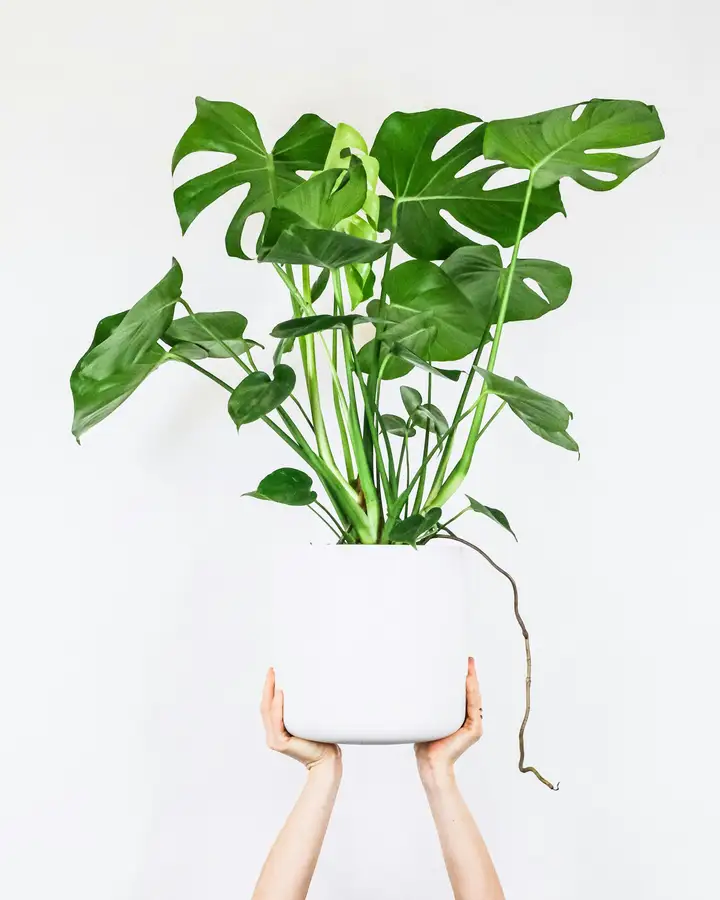
Monstera is sold as the easy beginner’s tropical, and that’s most of the way true. It tolerates a wide range of conditions, recovers from neglect better than most houseplants, and rewards basic care with leaves that get more dramatic the longer you keep it. But the marketing slightly oversells it: per Missouri Botanical Garden, monstera deliciosa is rated Medium for maintenance, not Low. The honest version is that monstera is forgiving for the first year and then starts asking for things (humidity, a climbing pole, a bigger pot) that not every plant in the “easy” category demands. This guide is the honest version.
Quick answer
Monstera plant care comes down to four things: bright indirect light, watering when the top inch of soil dries, warm humid air (60-85°F, 50%+ humidity), and a moss pole as it grows. Per the Missouri Botanical Garden Plant Finder entry on Monstera deliciosa, this is a climbing tropical vine native to Mexico and Central America that grows 30-70 feet outdoors in its range and typically 6-8 feet indoors at Medium maintenance. The plant rewards good light, regular watering, and vertical support; it punishes wet feet, dry air, and dark corners.
For a printable quick-care card and the full troubleshooting walkthrough, keep reading.
Living with cats or dogs?
A note before the care section, because this is the kind of detail most plant-care articles skip and our audience specifically needs to know.
Monstera is toxic to cats and dogs. Per the ASPCA’s entry on Swiss Cheese Plant (Monstera deliciosa), the plant contains insoluble calcium oxalate crystals that cause oral irritation, drooling, and vomiting if chewed. The toxicity is mild to moderate (not life-threatening for most exposures), and the cat or dog usually recovers within 12 to 24 hours. But it is genuinely unpleasant for the pet, and the cleanest answer in a serious-chewer household is to keep the plant out of reach or swap to a cat-safe alternative.
For the full safety guide, symptoms timeline, and emergency phone numbers, see our Monstera and Cats article. For cat-safe alternatives that fill the same statement-plant aesthetic, see our cat-safe houseplants pillar.
The rest of this article assumes you have decided to keep a monstera and you are managing pet access reasonably (high placement, separate room, or your cat is not a chewer).
Where monstera comes from (and why it shapes everything)
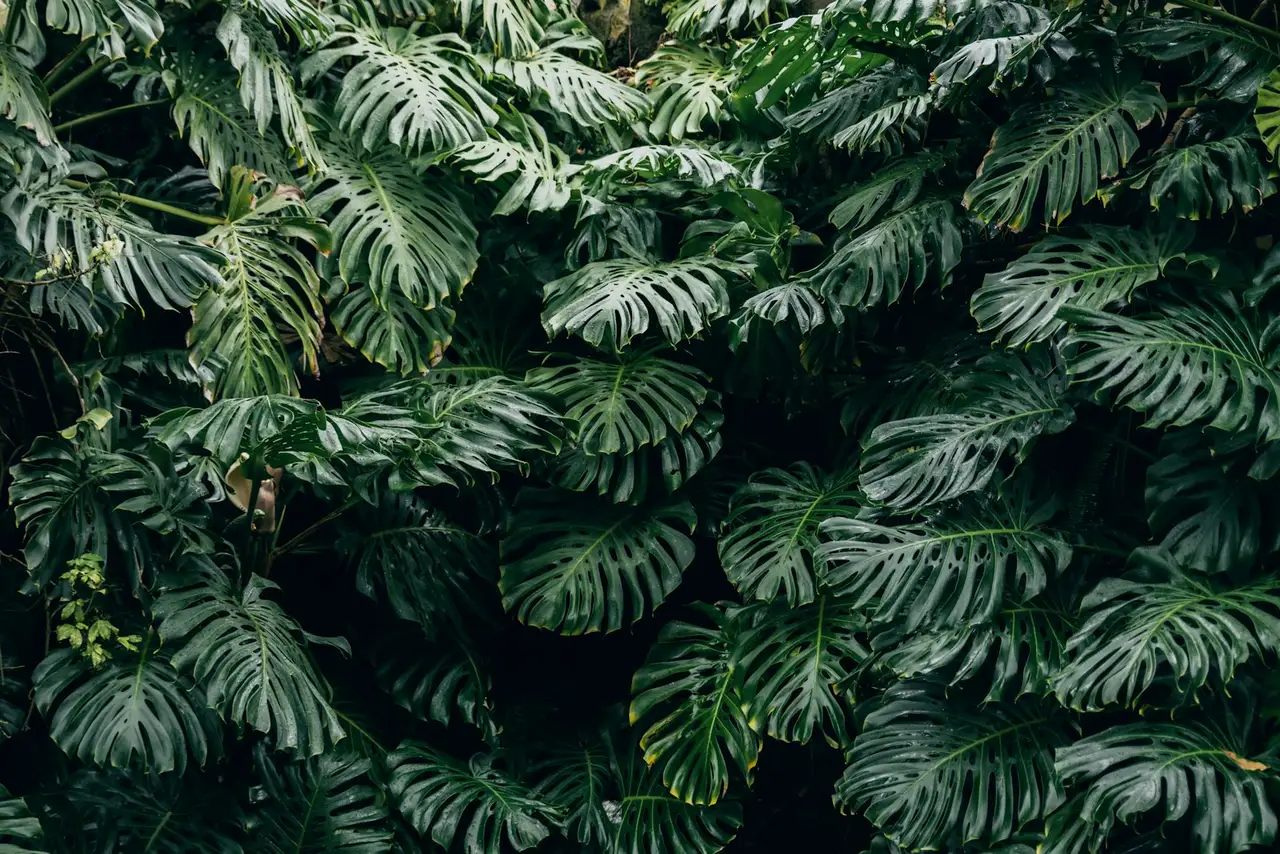
Per Missouri Botanical Garden, Monstera deliciosa is native to the tropical understory of Mexico and Central America. In its native habitat, it climbs tree trunks up to 70 feet using thick aerial roots to grip the bark, with the trunk providing the structural support and the canopy above filtering direct sun into dappled bright light. The fruits (rare indoors) are edible and taste like a mix of pineapple and banana, which is where “deliciosa” comes from.
This origin shapes everything about how monstera wants to be cared for indoors:
- Bright indirect, not direct. In the wild, monstera lives under canopy. Direct sun on indoor leaves burns them.
- Warm and humid. Tropical understory means consistent warm temperatures and high humidity.
- Climbing, not standing. Monstera is a vine that wants vertical support. Without it, plants sprawl horizontally and stay smaller.
- Aerial roots are normal and useful. Those long brown ropes growing out of the stem are not weeds; they are how the plant climbs.
- Fenestrations develop with maturity. The classic splits and holes appear as the plant matures and gets enough light. Juvenile leaves are small and mostly uncut.
Treating your indoor monstera like an understory climber, not a potted houseplant, is the single biggest mental shift that improves care outcomes.
Light
Bright indirect light is the rule. Per Missouri Botanical Garden, monstera wants part shade: “bright indoor light with no strong direct sun.”
What “bright indirect” actually means
A spot is bright indirect if you can read a paperback book in your normal reading posture without turning on a lamp during daylight hours. In practical terms:
- Within 3-6 feet of a south or west-facing window, but not in the direct sunbeam.
- Within 1-3 feet of an east-facing window. Morning sun is gentle enough that an east window can offer slightly more direct exposure without harm.
- Within 1-3 feet of a north-facing window. North windows give weaker but very consistent bright indirect light. Monstera will grow slowly here but stays healthy.
Indoor light is much dimmer than people think. A foot away from a sunny window can deliver 1/10th the light of standing on a porch in the same building.
Tolerance range (and what direct sun does)
Monstera tolerates low light better than most tropical aroids. It will keep its existing leaves and grow slowly even in dim corners. The drawback is that low-light monsteras produce fewer fenestrations and smaller leaves; new growth comes out solid (no splits) and small. Move the plant to brighter light if you want the dramatic fenestrated look.
Direct sun for more than 1-2 hours daily, especially summer afternoon sun through a south-facing window, scorches monstera leaves. Symptoms: pale or yellow patches that develop into brown crispy zones, often on the leaf surface facing the window. Direct morning sun through an east window is generally fine.
Signs your monstera wants more or less light
Wants more light:
- New leaves coming out solid (no fenestrations) on a mature plant
- Long stretches of stem between leaves (etiolation, plant reaching for light)
- Slow growth even in growing season
- Leaves leaning hard toward a single light source
Wants less light:
- Pale or yellowing patches on the side facing a window
- Brown crispy spots on leaves
- Leaves looking washed-out or bleached
Most monsteras under-perform from too little light, not too much. If in doubt, move it brighter (without going direct).
Water
Per Missouri Botanical Garden: “Water regularly during the growing season, allowing soils to dry some between waterings. Reduce watering from fall to late winter.”
When to water (the finger test)
Stick your index finger into the soil up to the first knuckle (about 1 inch). If the soil is dry at that depth, water. If it is damp or wet, wait.
For most indoor monsteras in a 6-10 inch pot with average bright indirect light and average household humidity, this typically works out to:
- Summer (active growth): every 7-10 days
- Spring and fall: every 10-14 days
- Winter (slowed growth): every 14-21 days
These are rough averages, not prescriptions. Your monstera will be different based on pot size, soil mix, light intensity, and humidity. Always use the finger test, not the calendar.
How much to water
Until water runs out the bottom drainage hole. The goal is to fully saturate the root zone, then let the pot drain. Discard any water sitting in the saucer after 15-30 minutes; monstera does not want its roots in standing water.
If your pot does not have a drainage hole, switch pots. Drainage is non-negotiable. A decorative pot without holes works only as an outer cachepot with the plant in a plastic nursery pot inside that you remove to water.
Overwatering vs underwatering (the diagnostic chart)
These two look similar at first glance (drooping leaves) but require opposite responses.
Overwatering signs:
- Yellow leaves, often starting with the lowest/oldest
- Soft, mushy, or limp leaves rather than crispy ones
- Soil stays wet for many days after watering
- Stem feels soft or you smell rot near the base
- Black or brown mushy roots if you check the root ball
Underwatering signs:
- Drooping leaves that perk back up within hours of watering
- Soil pulled away from the sides of the pot
- Crispy dry edges on otherwise healthy leaves
- Soil bone-dry several inches down
- Roots look white or tan and firm, not mushy
If you cannot tell which problem you have, check the soil and the roots. Mushy black roots are root rot from overwatering and require repotting into fresh dry mix. White or tan firm roots in dry soil just need water.
Seasonal adjustment
Per Missouri Botanical Garden, reduce watering from fall to late winter. Monstera slows its growth in low light and cool temperatures (typical for indoor winters), and the plant uses less water as a result. Continuing to water at summer frequency in winter is the single most common path to root rot. Stretch intervals to 2-3 weeks in winter and check soil moisture before each watering.
Soil and pot
The right soil mix
Per Missouri Botanical Garden: “peaty soil-based potting mix.” More precisely, monstera wants what the houseplant community calls an aroid mix: a chunky, well-draining mix that holds some moisture but does not stay soggy.
A reasonable DIY recipe: 2 parts standard potting soil + 1 part orchid bark + 1 part perlite. The bark adds chunkiness and air pockets that mimic the loose forest-floor substrate where monstera grows. The perlite adds drainage.
Commercial aroid mixes (sold by specialty plant retailers) are also fine and skip the DIY step. Plain standard potting soil straight out of the bag works but is denser and stays wet longer, so you have to be more careful with watering.
Pot size and drainage
Monstera tolerates being slightly root-bound and does not need a much-larger pot every year. The rule:
- New plant from the nursery: keep it in the nursery pot for the first year.
- Repotting: go up one pot size only (a 6-inch plant into an 8-inch pot, not a 12-inch pot). Too-large pots hold too much wet soil around small root systems and cause rot.
- The pot must have drainage holes. No exceptions.
When to repot
Every 1-2 years for actively growing plants. Signs your monstera wants repotting:
- Roots coming out the bottom drainage hole
- Roots circling the surface of the soil
- Water flowing straight through and out without absorbing (compacted root mass)
- Slowed growth despite good light and water
Repot in spring or early summer when the plant is actively growing. Avoid repotting in winter unless the plant is in active root-rot trouble; a healthy monstera should not be disturbed during its slow season.
Humidity and temperature
Ideal range
- Temperature: 60-85°F (16-29°C). Per Missouri Botanical Garden, monstera is winter-hardy only to USDA Zones 10-12, which means anything below about 50°F damages the plant.
- Humidity: 50% or higher is ideal. The plant tolerates 40% indoor air without major problems but produces better leaves and fewer brown edges at higher humidity.
How to raise humidity
Most indoor air sits at 25-35% humidity, especially in winter when heating systems run. Practical ways to raise it:
- A small humidifier near the plant. The most effective single intervention. A cheap ultrasonic humidifier running 4-8 hours a day raises local humidity around the plant noticeably.
- Group plants together. Plants transpire water through their leaves, so a cluster of plants creates a small humid microclimate. Three or four houseplants on the same shelf raise local humidity meaningfully.
- Pebble tray. A shallow tray of water with pebbles to keep the pot above the water line raises humidity in the air directly above the tray. Effect is modest but real.
- Move it to the bathroom. A bathroom with a daily shower runs at significantly higher humidity than the rest of the house. Bright bathrooms are an excellent monstera spot.
Note that misting the leaves with a spray bottle is mostly cosmetic. The humidity boost lasts minutes, not hours, and frequent misting can encourage fungal leaf spots. Skip it as a serious humidity strategy.
Cold tolerance
Poor. Per the USDA Zone 10-12 rating, monstera does not survive temperatures below freezing and starts suffering below 50°F. Keep your monstera away from cold window glass in winter, away from drafty doors, and well above 60°F as a general indoor minimum.
Fertilizer
Monstera is a light feeder. The plant grows steadily but not aggressively, and over-fertilizing causes more problems than under-fertilizing for most owners.
When and what to feed
- Frequency: monthly during the growing season (spring and summer). Skip fertilizing in fall and winter when the plant slows.
- Type: a balanced liquid houseplant fertilizer diluted to half strength. The popular ratios are 20-20-20 or similar balanced NPK. Specialty aroid or tropical-plant fertilizers also work; do not feel obligated to use them over general houseplant fertilizer.
- Method: mix into the water you would normally use to water the plant, then water as usual. Skip if the soil is dry; water first, fertilize the next watering.
Signs of under- or over-fertilizing
Under-fertilized (rare in plants potted in fresh soil, common in plants that have not been repotted in 2+ years): pale or yellowish overall leaf color, slow growth even in good light, smaller new leaves.
Over-fertilized (common when people use full-strength fertilizer monthly or weekly): brown crispy leaf tips and edges, salt buildup visible on soil surface as white crust, leaf burn that does not improve with watering.
The fix for over-fertilizing is to flush the pot. Run water through the soil for several minutes to wash the salts out the bottom, then resume watering normally and skip fertilizer for 2-3 months.
Climbing support and aerial roots
In its native habitat, monstera climbs tree trunks. Indoors, providing vertical support unlocks the plant’s full size and leaf development.
Why monstera wants a pole or trellis
Per Missouri Botanical Garden: “Can be grown with a pole or trellis to support their climbing habit. Without support plants tend to grow horizontally.”
A horizontal-sprawling monstera stays smaller, produces smaller leaves, and develops fewer fenestrations than a vertically-supported one. The reason: in nature, the plant is signaled by the contact between its aerial roots and a tree trunk to grow upward and larger. Indoor moss poles simulate this signal.
Moss poles and other supports
- Moss pole: a column wrapped in sphagnum moss that you keep damp. Aerial roots grow into the moss and grip it. The standard choice and the most effective.
- Coir pole: similar idea but with coconut coir instead of moss. Slightly less aerial-root-friendly but a common alternative.
- Bamboo stake: a simple bamboo cane gives vertical structure but does not give aerial roots anything to grip. Works for guidance, less so for stimulating the plant’s climbing-mode growth.
- Wall trellis: training monstera against a flat trellis attached to a wall. Effective but requires the wall to handle the weight of a mature plant.
Add the pole when the plant is small enough that you can stake it without damaging existing growth, typically when the stem is starting to lean. Wait too long and you have to tie aerial roots and stems to the pole more aggressively.
What to do with aerial roots
Per Missouri Botanical Garden: “Aerial roots on the lower parts of this plant can be rooted into the soil to help nourish the plant. Aerial roots on the upper parts of the plant can be attached to a moss-like climbing pole or simply removed.”
Three options for an aerial root:
- Tuck it into the soil. If the root is reaching toward the pot, redirect it into the soil. It will continue growing as a regular root and help nourish the plant.
- Attach it to a moss pole. Press the root against a damp moss pole; it will grow into the moss and grip. This is what the plant wants to do in nature.
- Cut it off. Aerial roots can be pruned with clean scissors without harming the plant. They look messy to some owners and removal is purely cosmetic.
Do not feel obligated to do anything with aerial roots if they are not bothering you. They are normal and a sign of a happy plant.
Juvenile vs mature leaves (why no fenestrations yet)
A common new-monstera-owner question: “I bought a monstera but the leaves are tiny solid heart shapes with no splits. Did I get a different plant?”
Almost certainly not. Per Missouri Botanical Garden: “Juvenile leaves are small and mostly uncut.”
Monsteras develop fenestrations (the splits and holes) as they mature. The transition typically happens after the plant has produced 5-10 leaves on a healthy growth pattern and is receiving sufficient light. The first fenestrated leaf is small with a single split; subsequent leaves get larger and more dramatic.
What speeds up fenestration: more bright indirect light, a moss pole that lets the plant climb (climbing triggers maturation), warm humid conditions, and time.
What slows it: low light, no climbing support, cold or dry air, root constraints from too-small pot.
You cannot force fenestration with fertilizer or water; this is a function of plant age and light. Patience is the actual answer.
Monstera deliciosa vs split-leaf philodendron (they’re different plants)
These two are constantly confused, including by plant sellers who label Monstera deliciosa as “Split-Leaf Philodendron” on tags.
Monstera deliciosa: genus Monstera, family Araceae. Common names: Swiss Cheese Plant, Mexican Breadfruit, Split-Leaf Philodendron (incorrectly).
Split-Leaf Philodendron: usually refers to Thaumatophyllum bipinnatifidum (formerly Philodendron bipinnatifidum or Philodendron selloum), a different genus, still in the Araceae family. Sometimes also called “Lacy Tree Philodendron” or “Tree Philodendron.”
Visual differences once you know what to look for:
- Monstera deliciosa leaves have holes (fenestrations) within the leaf body, not just splits to the edge.
- Split-leaf philodendron has deep splits all the way to the central vein, but typically no holes within the leaf.
- Monstera is a vine that climbs trees in habitat. Split-leaf philodendron is more shrub-like with shorter petioles and grows as a self-supporting clump.
Care for the two is similar (both want bright indirect light, warmth, humidity, regular watering), but the plants reach different mature sizes and habits. For purposes of this guide, assume you have a true Monstera deliciosa unless you have specifically confirmed otherwise.
Care by variety
The genus Monstera contains many species and cultivars. The care principles above apply to all of them, with minor adjustments per variety.
Monstera deliciosa (the standard)
The default. Big fenestrated leaves on a climbing vine. Bright indirect light, water on the dry-test, moss pole as it matures, monthly fertilizer in growing season. Indoor mature size 6-8 feet per MoBot.
Monstera adansonii (Swiss Cheese Vine)
Smaller, vining cousin of deliciosa. Leaves are smaller with more holes-than-splits. Common in hanging baskets. Care is identical to deliciosa but the plant trails rather than climbs, so a hanging basket or a small trellis works as well as a moss pole. Tolerates slightly more shade than deliciosa.
Monstera Thai Constellation
A cultivar of Monstera deliciosa with stable creamy-white variegation on the leaves. Needs more bright indirect light than the standard, because the white sections do not photosynthesize. Watch for sunburn on the variegated portions if light is too direct. Slower-growing. Often expensive ($50-300+ depending on size).
Monstera Albo Variegata
Another variegated Monstera deliciosa with unstable white-and-green variegation that varies leaf to leaf. Same elevated light requirement as Thai Constellation. The variegation is unstable, meaning some new leaves may come out fully green (“reverted”) and others fully white (“destabilized”). Prune reverted growth to encourage variegated growth. Very expensive due to rarity.
Monstera Peru (Monstera karstenianum)
A vining monstera with thick, ridged, dark green leaves without splits. Despite the genus name, this species does not develop fenestrations. Trails like adansonii. Care is similar to standard monstera but the plant is more tolerant of low light.
Mini Monstera (Rhaphidophora tetrasperma)
Despite the common name, this is not a true Monstera. It is in the genus Rhaphidophora, still in the Araceae family. Looks like a miniature deliciosa with small fenestrated leaves on a climbing vine. Care is similar but the plant is faster-growing, tolerates slightly drier soil, and stays much smaller indoors (2-4 feet typically).
Monstera Esqueleto, Monstera Cobra, Monstera Obliqua
Rarer cultivars sold by specialty plant retailers. Esqueleto has extreme fenestrations that leave the leaves looking like skeletons (mostly hole). Cobra is similar with smaller leaves. Obliqua is famous for being almost entirely fenestrated (more hole than leaf). All want the same general monstera care: bright indirect light, warmth, humidity, climbing support. They are slower-growing and more expensive than the standard.
Propagation
Monstera propagates readily from stem cuttings. The houseplant community has made monstera cuttings one of the most-traded plants of the past decade.
Where to cut
Take a cutting that includes at least one node (the bump on the stem where leaves and aerial roots emerge) and one leaf. A cutting with a small aerial root attached roots fastest. Use clean scissors or pruners.
In water (the popular method)
Place the cutting in a glass of room-temperature water with the node submerged and the leaf above water. Change the water weekly. Roots typically appear in 2-4 weeks. Once roots are 3-4 inches long, transplant to soil.
Water-propagated cuttings will live in water for months but grow slower and produce smaller leaves than potted plants. Transfer to soil for best long-term growth.
In soil
Cut a node-bearing stem and plant directly into damp aroid mix. Keep the soil consistently moist for the first 4-6 weeks. Cover with a clear plastic bag to maintain humidity. Roots develop in 3-6 weeks. Slightly slower than water propagation but produces a stronger root system when transplanted.
From aerial roots
If your monstera has aerial roots already growing toward the soil, you can air-layer: wrap the aerial root and adjacent stem in damp sphagnum moss, cover with plastic, and wait 4-6 weeks for roots to develop. Then cut the stem below the new root mass and pot the cutting. This method is more reliable than fresh cuttings for older woody stems.
Timing
Spring or early summer is best. Monstera roots fastest during its active growing season. Cuttings taken in winter root much more slowly and sometimes fail to root at all.
Troubleshooting common problems
Most monstera problems trace back to light, water, or humidity. Diagnostics:
Yellow leaves (multiple causes)
- Bottom leaves yellowing one at a time: probably normal leaf aging. Lower leaves on a vining plant naturally yellow and drop as the plant grows upward. No action needed.
- Multiple leaves yellowing at once: usually overwatering. Check the soil moisture; if it has been wet for many days, hold off watering and consider repotting into fresh dry mix.
- Yellow patches with brown crispy zones: too much direct sun. Move the plant away from direct afternoon light.
- Pale overall yellow-green color across the whole plant: under-fertilizing (rare) or insufficient light (more common). Fertilize if it has been a year or more since the last feeding; otherwise move to brighter light.
Brown crispy edges
Low humidity is the most common cause. Indoor air in heated homes often sits at 25-30% humidity, well below monstera’s 50%+ preference. Add a humidifier, group with other plants, or move to a more humid room.
Other causes: tap water with high fluoride or chlorine (try filtered water), fertilizer salt buildup (flush the pot), or under-watering (check the finger test).
No fenestrations / no splits
The plant is either too young or not getting enough light. Juvenile monstera leaves are small and uncut per MoBot; fenestrations develop with maturity and adequate light. Move to brighter indirect light, add a moss pole, and wait. There is no fertilizer or water trick that forces splits.
Drooping leaves
Under-watered: leaves droop, soil is dry, leaves perk up within hours of watering. Fix: water and adjust frequency.
Overwatered / root rot: leaves droop, soil is wet, leaves stay droopy or get worse after watering. Fix: stop watering, check roots. If mushy black roots are present, unpot, trim damaged roots with clean scissors, repot in fresh dry aroid mix in a slightly smaller pot if needed.
Pests
Per Missouri Botanical Garden, common monstera pests are: aphids, mealybugs, thrips, scale, and spider mites. Indoors, mealybugs and spider mites are the most common.
- Mealybugs: white cottony clumps in leaf joints. Treat with rubbing alcohol on a cotton swab (touch each one directly) or insecticidal soap spray.
- Spider mites: tiny brown or red dots on undersides of leaves; fine webbing in bad cases; leaf surface looking dusty or stippled. Treat with insecticidal soap, repeated weekly until clear. Raise humidity to discourage them.
- Scale: small brown bumps that look like part of the stem until you scrape one off. Treat with horticultural oil or scrape off with a fingernail and follow with neem oil.
- Thrips and aphids: less common indoors but treatable with insecticidal soap or neem.
Quarantine new plants for 2-4 weeks before adding them to an existing plant collection. Most pest infestations arrive on a new plant from a retailer.
Edema / dripping leaves
Sometimes monstera leaves drip clear water from their tips after a heavy watering, especially in humid conditions. This is called guttation and is harmless. The plant is excreting excess water through specialized pores. If it happens often, you may be watering more than the plant needs; let the soil dry more before the next watering.
Repotting and long-term care
Repot every 1-2 years in spring or early summer. Go up one pot size only, and use a fresh aroid mix. Loosen any tightly circled roots before placing in the new pot. Water thoroughly after repotting and skip fertilizer for the first month while the plant settles.
After 3-5 years, a healthy indoor monstera reaches 5-6 feet tall with a meaningful canopy of fenestrated leaves. After 7-10 years, it can hit the 6-8 foot indoor mature size. Beyond that, you are usually managing the plant’s spread rather than encouraging more growth: pruning back unruly stems, training the climbing growth, and occasionally taking cuttings to share or restart a more compact plant.
What to skip
A few things you do not need to do, despite popular advice:
- Do not follow a rigid watering schedule. Monstera water needs depend on light, pot size, humidity, and season. Use the finger test. Watering “every Tuesday” is the path to root rot in winter and dehydration in summer.
- Do not panic about leaf splits before the plant is mature. Juvenile leaves are small and uncut per MoBot. Splits develop with age and light. There is no trick that makes a 4-leaf monstera produce fenestrated leaves.
- Do not rely on misting as a humidity strategy. Spraying water on leaves gives a few minutes of high local humidity, then it evaporates. Worth doing for fun if you enjoy it; not worth doing as your only humidity intervention.
- Do not use a pebble tray as your sole humidity source. Pebble trays raise the air just above the tray by 5-10% briefly. Better than nothing but not enough for a winter-dry living room.
- Do not skip the moss pole and expect dramatic leaves. Monstera wants to climb. Without vertical support, the plant sprawls and produces smaller leaves with fewer fenestrations.
- Do not keep a monstera at cat-jumping height in a cat household unless your cat genuinely ignores plants. Monstera is toxic to cats (see our Monstera and Cats article for the full safety guide and cat-safe alternatives if you need them).
- Do not assume “Split-Leaf Philodendron” on a plant tag means Monstera. The tag may be wrong (often is) or may genuinely refer to Thaumatophyllum bipinnatifidum. Look at the leaves: holes in the leaf body = monstera; splits all the way to the central vein with no holes = split-leaf philodendron.
Frequently asked questions
How do you care for a monstera plant? Bright indirect light, water when the top inch of soil dries, warm humid conditions (60-85°F, 50%+ humidity), peaty or aroid potting mix, and a moss pole as the plant matures. Per Missouri Botanical Garden, monstera is a climbing tropical vine that grows 6-8 feet indoors at Medium maintenance.
Why doesn’t my monstera have splits or holes? Per Missouri Botanical Garden, juvenile monstera leaves are small and mostly uncut. Fenestrations develop with plant age and light. Give it more bright indirect light, add a moss pole, and wait.
How often should I water my monstera? When the top inch of soil dries, typically every 7-10 days in summer and every 2-3 weeks in winter. Always check with the finger test, never on a fixed calendar.
What’s the difference between Monstera deliciosa and split-leaf philodendron? Different genera. Monstera deliciosa is Monstera (Araceae); split-leaf philodendron is Thaumatophyllum (also Araceae). Monstera has holes in the leaf body; split-leaf philodendron has splits to the central vein but no holes.
Can I grow monstera in just water? Yes for short-term propagation; no for long-term growth. Cuttings root in water in 2-4 weeks. Transfer to soil for best long-term development.
How big will my monstera get indoors? 6-8 feet typically, per Missouri Botanical Garden. The plant climbs to 70 feet in its native Central American tropical forest. Indoor size depends on light, climbing support, and pot size.
Why are my monstera’s leaves yellow? Most often overwatering. Other causes: aging lower leaves (normal), too much direct sun, or nutrient deficiency in a long-unrepotted plant. Check soil moisture and roots first.
Is monstera safe for cats? No. Per the ASPCA, monstera is toxic to cats and dogs due to calcium oxalate crystals. The toxicity is mild to moderate, not life-threatening for most exposures, but unpleasant. See our Monstera and Cats article for the full guide.
What plant fertilizer should I use on monstera? A balanced liquid houseplant fertilizer (20-20-20 or similar) at half strength, monthly during spring and summer. Specialty aroid fertilizers also work but are not required. Skip fertilizing in fall and winter.
Related articles
- Are Monstera Toxic to Cats?, the safety side of the same plant, with symptoms timeline and emergency phone numbers
- Cat-Safe Houseplants, non-toxic alternatives if you decide a monstera is not right for your household
- Are Pothos Toxic to Cats?, another popular Araceae-family climbing aroid
- Peace Lily and Cats, same Araceae family, similar calcium-oxalate toxicity
Sources
- Missouri Botanical Garden Plant Finder: Monstera deliciosa (Family Araceae, Native Range Mexico/Central America, Zone 10-12, Height 30-70 ft in habitat / 6-8 ft indoors, Sun part shade, Water medium, Maintenance medium)
- ASPCA Animal Poison Control: Swiss Cheese Plant (Monstera deliciosa) for the pet-safety claim
If you have read this far and your monstera is currently struggling, the highest-leverage interventions are usually: more bright indirect light, less frequent but more thorough watering, and a moss pole if you have not added one. Most of the rest is patience.