Snake plants are toxic to cats. The toxic compound is saponins, the symptoms are gastrointestinal, and recovery usually happens on its own within 12 to 24 hours. If you arrived here because your cat just chewed a leaf, you can almost certainly relax. If you’re thinking about bringing one home, the picture is a little more nuanced. The snake plant is also one of the most common toxic succulents, which we put in context alongside the safe ones in our guide to whether succulents are toxic to cats.
Quick answer
Snake plants are toxic to cats, per the ASPCA’s Animal Poison Control Center. The toxic principle is saponins, naturally occurring compounds in the plant’s tissue that cause gastrointestinal irritation when chewed or ingested. The four common signs, per Pet Poison Helpline, are drooling, decreased appetite, lethargy, and vomiting.
The toxicity is real, but mild-to-moderate, not severe. Snake plants do not cause kidney failure (unlike true lilies). They do not cause liver damage. Most cats who chew snake plant are uncomfortable for a few hours and recover within 24 hours without treatment. Snake plant poisoning is one of the lower-acuity plant exposures a cat household has to manage.
If your cat is showing symptoms right now, scroll to the next section.
Is your cat showing symptoms right now?
Call for guidance if any of these apply:
- Repeated vomiting (more than once in the last hour)
- Refusing water or food for more than a few hours and acting unusually subdued
- Persistent diarrhea
- Visible lethargy that does not ease over the first few hours
- Any unusual symptom you cannot explain (lily-related concerns, swelling, distress, or a kitten or senior cat that is more vulnerable)
Phone numbers:
- Pet Poison Helpline: 855-764-7661 (around-the-clock, $85 consultation fee)
- ASPCA Animal Poison Control Center: 888-426-4435 (around-the-clock, $95 consultation fee)
- Your local emergency vet if you cannot reach a helpline
For most snake plant ingestions, the helpline will tell you to watch the cat at home and call back if symptoms worsen. For a kitten, a senior cat, or a cat with existing health conditions, lower margins mean a faster trip to the vet.
Do not induce vomiting at home. Cats are not dogs, and the at-home methods that work for dogs (hydrogen peroxide) are not safe for cats. If a vet wants vomiting induced, they will do it themselves with proper medication.
What snake plant toxicity actually does
The toxic compound in snake plant is saponins, a class of plant-defense chemicals that occur naturally throughout the plant tissue. Saponins disrupt the lining of the gastrointestinal tract on contact, which is what causes the drooling, vomiting, and diarrhea. The reaction is local to the mouth, throat, and gut. It is not metabolic, and it does not damage organs in typical household exposures.
This is a different mechanism from the calcium oxalate trio of common toxic houseplants (pothos, peace lily, monstera). It is also very different from true lily kidney toxicity. The three categories worth keeping straight:
Saponins (snake plant)
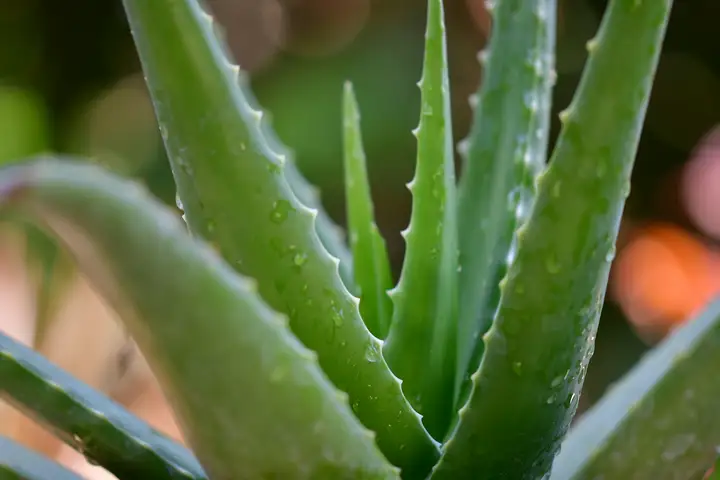
GI irritation, the four PPH-listed signs (drooling, decreased appetite, lethargy, vomiting), plus diarrhea per ASPCA’s clinical-signs entry. Resolves within 12 to 24 hours in typical exposures. No organ damage, no acid-base disturbance, no antidote needed. Aloe vera is the other common houseplant that relies on saponins, with the same mild-GI profile.
Calcium oxalate crystals (pothos, peace lily, monstera, philodendron, dieffenbachia, alocasia)
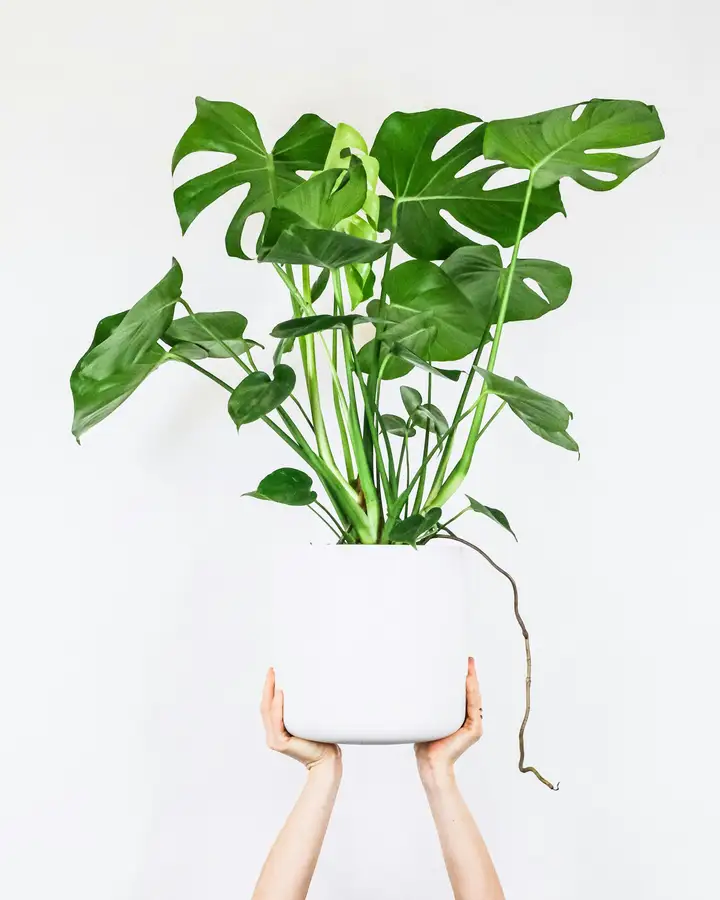
Insoluble microscopic needles that embed in mouth and throat tissue, causing intense oral burning, pawing, drooling, and possible vomiting. Similar symptom profile to snake plant on the outside, but the mechanism is mechanical, not chemical. For the full picture, see our pothos and cats guide or monstera and cats guide, both of which cover this mechanism in detail.
True lily toxin (Lilium and Hemerocallis genera)
Unknown specific toxin, but the effect is catastrophic and unique: acute kidney failure within 12 to 72 hours. Asymptomatic in the first hours is not safe. Even pollen on the fur, then groomed off, can be fatal. This is a different animal entirely from snake plant. For the full guide, see our are lilies toxic to cats article.
The practical takeaway: snake plant is a mild-to-moderate exposure. Pothos / peace lily / monstera are also mild-to-moderate (different mechanism, similar acuity). True lilies are the catastrophic outlier.
Symptoms timeline: what to expect over the next 24 hours
If your cat just ate snake plant, here is the typical progression. Knowing what’s normal helps you tell when something is not.
0 to 15 minutes after ingestion:
- Drooling and possible pawing at the mouth. The saponins are irritating the mouth tissue.
- Possible head-shaking or face-rubbing.
- Your cat may run to water and drink. This is fine; fluid helps flush the irritation.
15 minutes to 2 hours:
- Drooling continues but eases.
- Possible vomiting, usually one to two episodes, sometimes containing visible plant material.
- Possible diarrhea, especially if more than a small amount was eaten.
- Decreased appetite for the next meal.
- Lethargy may begin to appear (the cat seems quieter than usual, hides, sleeps more).
2 to 12 hours:
- Symptoms ease.
- Cat is acting more normal but may still be subdued.
- Diarrhea may still occur in this window.
12 to 24 hours:
- Full recovery for the vast majority of cases.
- No lasting effects expected.
If after 24 hours your cat is still:
- Lethargic
- Refusing food
- Vomiting or having diarrhea
- Drinking unusually little or showing other unusual behavior
Then call your vet. Symptoms persisting past 24 hours have moved beyond what saponin GI irritation alone typically causes, and something else may be going on, including the possibility that they ate something else you did not see.
We are not veterinarians. The information above is drawn from ASPCA reference materials, Pet Poison Helpline publicly available guidance, and standard veterinary references on saponin-containing plant exposures in cats. For specific concerns about your cat, call your vet, the Pet Poison Helpline, or the ASPCA Animal Poison Control Center.
Which snake plant varieties are toxic? (all of them)
Snake plant is a single species with many cultivars. Every cultivar contains the same saponins because they all share the same plant chemistry. The variegation, leaf shape, and color of a particular cultivar are visual differences only; they do not change the toxicity profile.
Mother-in-law’s Tongue / Standard
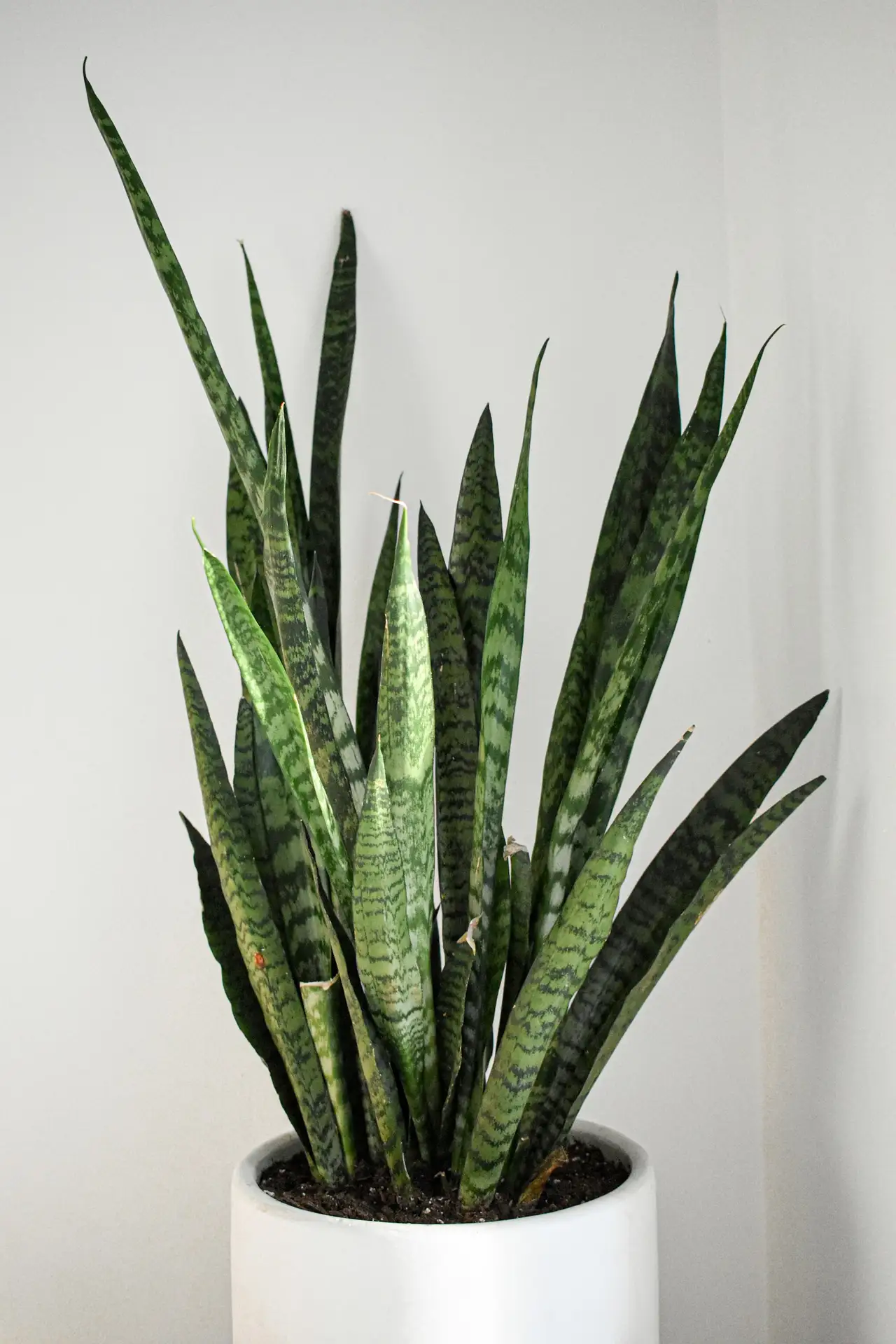
The classic upright snake plant, Dracaena trifasciata (still listed by ASPCA as Sansevieria trifasciata). Tall, sword-shaped variegated leaves up to three feet long. The most common form sold in plant shops and supermarket plant aisles. Toxic to cats.
Bird’s Nest / Hahnii (Dracaena trifasciata ‘Hahnii’)
The compact rosette form, sometimes called Bird’s Nest Snake Plant. Smaller (six to ten inches tall), tightly clustered leaves. Marketed as a tabletop or windowsill plant. ASPCA includes “Golden Bird’s Nest” in the snake plant entry’s additional common names. Same saponins. Toxic to cats.
Cylindrical (Dracaena angolensis, also Sansevieria cylindrica)
The cylindrical variety has round, pencil-thick leaves instead of flat blades. Sometimes sold in a braided form. A different species within the same group of related plants, with the same toxic principle. Toxic to cats.
Laurentii / Variegated (Dracaena trifasciata ‘Laurentii’)
Standard snake plant form with prominent yellow edge stripes. The single most commercially popular cultivar. Same toxin content as the unvariegated form. Toxic to cats.
Moonshine, Black Coral, Whitney, Black Diamond, and other cultivars
Many cultivars exist with different leaf colors (Moonshine has pale silvery green leaves; Black Coral and Black Diamond have very dark leaves; Whitney has white-edged leaves). All are forms of Dracaena trifasciata. All contain saponins. All are toxic to cats.
The rule: if it is sold as a snake plant, Sansevieria, or Dracaena trifasciata, treat it as toxic. There is no safe snake plant variety.
A note on the name: Sansevieria or Dracaena?
This is the only part of the snake plant story where the science has moved faster than the reference databases.
For most of the last century, snake plants were classified as Sansevieria trifasciata. Then in 2017, plant taxonomists merged the genus Sansevieria into Dracaena based on DNA evidence (Mansfeld’s revision, accepted under the APG IV phylogeny). The modern scientific name is Dracaena trifasciata.
Most authoritative pet-safety sources have not yet updated to the new name. The ASPCA snake plant entry still uses Sansevieria trifasciata, and the Pet Poison Helpline entry is titled “Sansevieria.” Many plant retailers also still use the old name on their tags.
For the cat owner’s purposes, both names refer to the same plant. Saponins are present in both names equally. The taxonomy correction does not change the toxicity. We mention both names throughout this guide so that no matter which name appeared on your plant tag or on the ASPCA entry you found, you know it’s the same thing.
What to do if your cat ate snake plant
First 15 minutes
- Calmly remove the cat from the plant and put the plant somewhere the cat cannot reach. Wipe up any sap or debris on the floor so they don’t track it elsewhere.
- Rinse the cat’s mouth gently if they will tolerate it. A damp soft cloth used to wipe the mouth and lips can help reduce ongoing irritation. Do not force a syringe of water into the mouth of a distressed cat.
- Look around for evidence of how much was eaten. A single bitten leaf and some chewed plant material on the floor is a small exposure. A whole leaf eaten is more.
- Note when the ingestion happened. This matters for the helpline call.
When to call the vet vs. Pet Poison Helpline
For most snake plant ingestions, Pet Poison Helpline (855-764-7661) is the right first call. They will triage quickly: ask what was eaten, how much, when, your cat’s age and weight, and whether symptoms have started yet. Their guidance for a typical snake plant exposure is to watch at home and call back if symptoms worsen, escalate to vet if persistent vomiting and dehydration develop, or if the cat is a kitten or senior cat.
For an exposure in a healthy adult cat with no pre-existing conditions, an emergency vet visit is usually unnecessary. The $85 helpline fee is well-spent for the peace of mind alone, and the consultation includes a case number that your vet can pull if you do end up needing an in-person visit later.
Go directly to the vet if the cat is a kitten or very elderly, has existing kidney disease or other chronic conditions, is showing severe symptoms (continuous vomiting, blood in stool or vomit, severe lethargy, refusal of all water), or you have any uncertainty about whether the plant was actually snake plant rather than something more dangerous like a true lily.
Phone numbers (save these now)
- Pet Poison Helpline: 855-764-7661
- ASPCA Animal Poison Control Center: 888-426-4435
- Your regular vet as a follow-up resource
- Your local emergency vet for severe symptoms outside business hours
Why cats are drawn to snake plants
Unlike spider plants, snake plants do not produce a catnip-like compound or any other chemical attractant. Cats chew snake plants for ordinary cat reasons: the long, blade-shaped leaves move slightly when brushed, the texture is novel, and the plant is often placed where the cat already perches or passes.
This matters because the standard plant-chewing redirects work well for snake plant. There is no underlying chemical compulsion driving your cat back to the plant. Once you remove the plant or give the cat a more interesting chewing target, the behavior usually stops.
The single most effective redirect, per our cat grass guide, is to provide a designated chewable plant. A small tray of oat or wheat grass (cat grass) gives the cat a legal target and significantly reduces interest in your other houseplants.
How to keep your snake plant if you have cats
The honest answer is that the best plan with snake plant in a cat household is to swap it for a cat-safe alternative (see the next section). But if you are committed to keeping it, here is how to manage the risk.
Placement
- Height. Snake plants are vertical, which means the top of the leaves often ends up at perfect cat-chewing height even when the pot is on the floor. Move the plant to a tall, sturdy stand where the lowest leaf is at least four feet above any surface a cat can launch from.
- No nearby launch points. Cats can leap five to six feet horizontally from a flat starting surface. Bookshelves, chair backs, and side tables next to a plant stand are launching pads. Move them or move the plant.
- A separate room with a closed door. The most reliable solution. Snake plants tolerate low light, which means they can live in a bedroom or office the cat does not access.
Deterrents
- Citrus spray. Cats dislike citrus oils. A diluted citrus spray on the lower leaves and the soil surface deters most cats. Reapply weekly.
- Double-sided tape on the pot rim. Cats avoid sticky paws. Works well on small pots, less so on large floor planters.
- Heavy ceramic pot. Snake plants are top-heavy as they grow. A lightweight plastic pot tips over when a cat bats the leaves, which creates new chewing access to the now-on-the-floor plant. A heavy ceramic or stoneware pot solves this.
Redirects
The most effective long-term strategy is to give the cat something else to chew:
- Cat grass (oat, wheat, barley, rye grass blends). A small tray gives the cat a designated chewing target and dramatically reduces interest in other plants.
- Catnip plants (Nepeta cataria). About 70 percent of cats respond to catnip. A fresh plant is a stronger draw than dried catnip toys for the cats who respond.
- A cat-safe houseplant in the cat’s range. Counterintuitive, but a non-toxic plant the cat is allowed to interact with often pulls them away from the toxic plants they’re not supposed to touch.
Pet-safe alternatives that look similar
If you bought a snake plant for the upright architectural form, the easy-care nature, or the low-light tolerance, here are non-toxic alternatives the ASPCA classifies as safe for cats. Any of these is a swap that gives you the same visual purpose without the chewing risk.
Cast Iron Plant (Aspidistra elatior), the closest cat-safe match for sheer architectural presence. Long, broad, dark green strap-like leaves up to two feet long. Slow-growing but extraordinarily hard to kill. Tolerates the same low light and irregular watering that snake plants do. ASPCA non-toxic to cats and dogs.
Ponytail Palm (Beaucarnea recurvata), despite the name, not a palm. A drought-tolerant succulent with a thickened trunk and a fountain of narrow leaves. Sculptural form, lives for decades, very low-water. ASPCA non-toxic to cats. The leaves are thin enough that most cats find them uninteresting compared to snake plant’s broad blades.
Parlor Palm (Chamaedorea elegans), small palm that thrives in the same low-to-medium indirect light as snake plant. Multiple narrow fronds give the tropical-architecture look. ASPCA non-toxic. A heavy ceramic pot makes it cat-resistant.
Areca Palm (Dypsis lutescens), larger feathery-frond palm. Grows to five or six feet indoors in the right light. Best cat-safe statement plant in our cat-safe houseplants pillar guide. ASPCA non-toxic.
Banana Tree (Musa species), if you want dramatic upright vertical lines and have south-facing light and humidity. Grows quickly. ASPCA non-toxic. Different aesthetic from snake plant but the “tall and architectural” niche is the same.
For the full list organized by use case (low-light, hanging, statement, easy-care, edible), see our cat-safe houseplants pillar guide.
What about dogs?
Yes, snake plants are toxic to dogs by the same saponin mechanism. The ASPCA classifies snake plant as toxic to both cats and dogs. Dogs typically show the same general signs: drooling, vomiting, diarrhea, lethargy, and decreased appetite.
A few practical differences: dogs are generally larger than cats and may need to eat more plant material to show significant symptoms, but small dogs can be more affected than large dogs by the same amount. Dogs are also more likely to be willing to drink water and self-flush, which helps. The same emergency phone numbers apply (Pet Poison Helpline 855-764-7661, ASPCA APCC 888-426-4435). The same advice applies: watch for symptoms, call if anything is severe or persistent, and keep snake plants at a height your dog cannot reach.
What to skip
A few things you do not need to do, despite what the internet might suggest:
- Do not induce vomiting at home. Methods that work for dogs (hydrogen peroxide) are not safe for cats. If a vet wants vomiting induced, they will do it themselves with proper medication.
- Do not give milk. This is persistent folk advice for plant exposures. Milk does not neutralize saponins, and many cats are lactose-intolerant, which adds GI upset to the GI upset.
- Do not rush to the emergency vet for a small exposure in a healthy adult cat. Call the helpline first. They will tell you whether it is a vet visit or a watch-at-home situation. Most snake plant exposures are watch-at-home, and an unnecessary ER visit costs $200 to $800 for monitoring of a self-limiting condition.
- Do not trust every symptom list you find online. Some popular pet-content sites list symptoms for snake plant ingestion (hemolysis, anemia, dilated pupils, swollen throat, pale gums) that go beyond what the ASPCA and Pet Poison Helpline actually state. We deliberately stick to what the authoritative sources list: drooling, decreased appetite, lethargy, vomiting, diarrhea. If your cat is showing something different and concerning, that is when to call the vet, not a reason to assume a worst-case scenario.
- Do not assume “rarely an emergency” means “never an emergency.” Pay attention to the genuine warning signs above. A persistent vomiter, a kitten, or a cat with existing health conditions warrants vet attention. Most cases resolve on their own; a small minority need supportive care.
Frequently asked questions
Are snake plants toxic to cats? Yes. Per the ASPCA, snake plant (Sansevieria trifasciata, now Dracaena trifasciata) is classified as toxic to cats. The toxic compound is saponins, which cause GI irritation: drooling, vomiting, diarrhea, and lethargy. Recovery is typically within 12 to 24 hours.
What happens if my cat eats a snake plant? Most cats develop drooling within minutes, possible vomiting within an hour or two, possible diarrhea, decreased appetite, and lethargy. Symptoms peak in the first few hours and resolve within 12 to 24 hours. Snake plant does not cause kidney or liver damage.
Can I have a snake plant if I have a cat? Possible but not recommended. The toxicity is real and the chewing is genuinely uncomfortable for the cat. Cat-safe substitutes exist (Cast Iron Plant, Ponytail Palm, Parlor Palm) that give you the same upright architectural look.
Why do cats love snake plants? There is no chemical attractant in snake plant the way there is in spider plant. Cats chew snake plant for ordinary plant-curiosity reasons: novel texture, accessible vertical leaves, movement when brushed. Providing a designated chewable plant like cat grass dramatically reduces the behavior.
Are snake plants toxic to dogs? Yes, by the same saponin mechanism. Similar symptoms, similar severity. Same emergency phone numbers apply.
How much snake plant is toxic to a cat? No established threshold. A single chew may cause mild drooling; more substantial ingestion can cause vomiting and diarrhea. The PPH and ASPCA clinical-signs lists apply across exposure sizes.
My cat licked a snake plant but didn’t eat any. Is that a problem? A single lick is unlikely to cause noticeable symptoms. Saponin toxicity requires the leaf material to be chewed and ingested. Watch for an hour; if drooling or vomiting does not develop in that window, it will not.
Is the variegated snake plant any safer than the standard? No. Every Sansevieria / Dracaena variety contains the same saponins. Hahnii, Cylindrica, Laurentii, Moonshine, Black Coral, and other cultivars are all toxic to cats by the same mechanism. Variegation is purely cosmetic.
Related toxic plants we cover
If you found this article while researching plant toxicity for your cat, these sibling guides cover the other common toxic-houseplant categories:
- Are Pothos Toxic to Cats, the calcium oxalate mechanism shared by many common trailing houseplants
- Peace Lily and Cats, commonly confused with true lilies but actually calcium oxalate
- Are Monstera Toxic to Cats, the third article in the calcium oxalate trio
- Are Lily Toxic to Cats, the actual emergency-level houseplant for cats (a different category of toxicity entirely)
- Cat-Safe Houseplants, the master list of non-toxic plants for cat households
Sources and further reading
- ASPCA Animal Poison Control: Snake Plant (Sansevieria trifasciata), Toxicity: Toxic to Dogs, Toxic to Cats; Toxic Principles: Saponins; Clinical Signs: Nausea, vomiting, diarrhea
- Pet Poison Helpline Sansevieria entry, Common signs to watch for: Drooling, Decreased appetite, Lethargy or depression, Vomiting
- Wikipedia: Dracaena trifasciata, for the modern taxonomy (formerly Sansevieria trifasciata, family Asparagaceae)
- Our cat-safe houseplants pillar guide for non-toxic alternatives
- Our cat grass guide for the single most effective redirect against plant-chewing cats
If you arrived at this page because your cat just ate a snake plant leaf, the most important thing to know is that this is almost certainly going to be fine. Watch them for the next day, call the Pet Poison Helpline if anything seems off, and consider swapping the plant for a cat-safe alternative once everyone is okay.