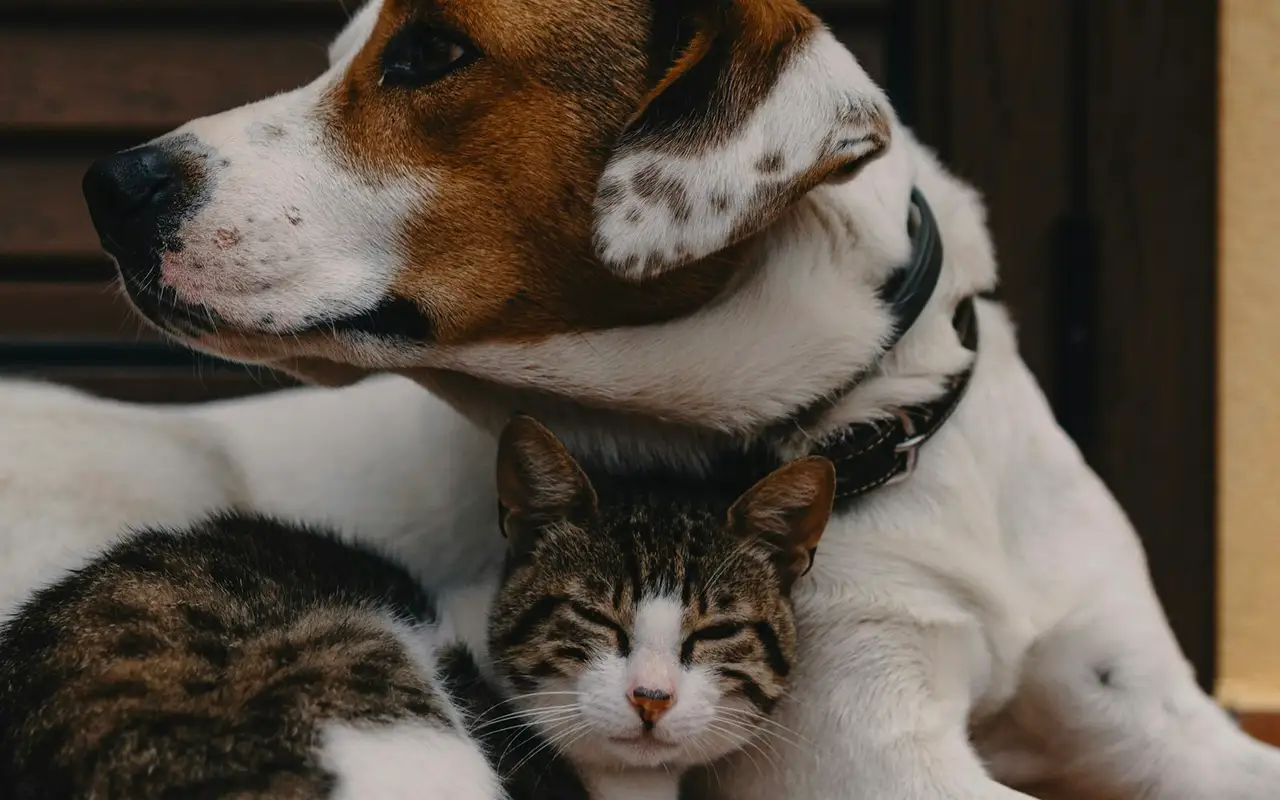
If your dog just raided the cat’s catnip stash, or you are wondering whether catnip could settle a nervous dog, here is the direct answer. Can dogs have catnip? Yes. The ASPCA’s catnip entry lists it as toxic to cats only, its dog plant list has no catnip entry at all, and the senior director of the ASPCA Animal Poison Control Center, a board-certified veterinary toxicologist, has called catnip generally safe for dogs, fresh or dried.
Eating a lot can upset a dog’s stomach, and most dogs show no reaction at all. The part most pages skip: catnip usually reaches a dog inside a cat toy, and the toy is the bigger hazard.
TL;DR
- Catnip is not toxic to dogs. ASPCA’s catnip entry is cat-only, and catnip does not appear on its dog list.
- The ASPCA poison control center’s senior director calls it generally safe for dogs, fresh or dried, with a small risk of stomach upset if a dog eats a lot.
- Dogs do not get high on catnip. Most show nothing; a few seem mildly calmer.
- No controlled study has tested catnip in dogs. The calming effect is veterinary experience and owner report, not trial data.
- The cat toy is the bigger risk. Swallowed toys, strings, and feathers are a common cause of gut blockages in dogs.
- Treat catnip essential oil like any concentrated oil: off the dog, out of reach.
- Several “calming herb” swaps are worse than catnip. ASPCA lists chamomile, lavender, and mint as toxic to dogs.
- Call ASPCA Animal Poison Control (888-426-4435) or Pet Poison Helpline (855-764-7661) if your dog got into concentrated oil, and your vet if it swallowed a toy.
Can dogs have catnip? The verdict by form
Is catnip safe for dogs? Yes, in the amounts a dog normally meets it. Tina Wismer, DVM, MS, DABVT, senior director of the ASPCA Animal Poison Control Center, told Daily Paws that fresh and dried catnip are both considered safe for dogs, adding that “plant material always has a small risk of causing stomach upset in pets.” Risk changes with the form, so here is each one.
| Form | Safe for dogs? | Risk level | What to know |
|---|---|---|---|
| Catnip plant in the garden | Yes | Very low | Most dogs ignore it; a big meal of leaves may cause a mild upset stomach |
| Dried catnip (a pinch to a spoonful) | Yes | Very low | This is the form vets describe sprinkling on food |
| A whole bag or tin eaten | Usually fine | Low | Possible vomiting or diarrhea from the volume of plant material |
| Catnip-filled cat toy | The catnip is fine; the toy is not | Moderate if swallowed | Toys, strings, and feathers can block a dog’s gut |
| Catnip spray | Use with care | Low to moderate | Often made with catnip oil; spray the toy, never the dog |
| Catnip essential oil | No, keep away | Moderate | Concentrated oil is absorbed through skin and mouth |
| Cat treats with catnip | The catnip is fine | Low | A raided bag means a rich-food stomach upset, not poisoning |
| ”Dog catnip” products | Yes, as labeled | Very low | Usually plain catnip or anise-scented items |
What does catnip do to dogs?
Very little, in most dogs. Wismer told Daily Paws that because dogs don’t respond to catnip the way cats do, “many have no response or may experience some mild sedation at most.” That is the honest ceiling: nothing, or a slightly calmer dog.
Cats are different. The active compound, nepetalactone, works through the cat’s sense of smell (a 1985 study found the reaction runs through the main olfactory system, not the pheromone-sensing vomeronasal organ), and Wismer says roughly 50 to 80 percent of cats over 12 weeks old are genetically inclined to react. Even among cats the response is not universal: a 2017 study in BMC Veterinary Research that tested 100 domestic cats found one in three did not respond to catnip at all. For the cat side of the question, including kittens and how much is too much, see is catnip bad for cats.
Can catnip get dogs high?
No. The rolling, rubbing, zoomies reaction is a cat response, and dogs don’t share it. If your dog seems different after catnip, expect a calmer dog, not a stimulated one, and often no visible change.
Does catnip work on dogs for anxiety?
Possibly a little, for some dogs, and that is as far as the evidence goes. We searched for a controlled study of catnip’s effect in dogs and did not find one. The calming claim comes from veterinary experience: Daily Paws reports that the mild sedative effect is one reason some veterinarians recommend catnip, and Wismer describes it being given once before a car ride or another stressful event.
For a dog with real anxiety (storm panic, separation distress, fear at the vet), catnip is not a treatment plan. Daily Paws notes that vets may instead suggest calming supplements, pheromone products such as Adaptil, or anti-anxiety medication such as fluoxetine or trazodone, paired with training.
How much catnip can a dog have?
There is no studied dose. The “½ teaspoon” figure repeated across nearly every page on this topic traces back to one source: a 2021 post by a Kansas veterinary clinic that suggests sprinkling about half a teaspoon of catnip on a dog’s food, roughly 30 minutes before a stressful event like a grooming or vet visit.
That is a reasonable small starting amount, not a researched number. If you want to try it:
- Start with a pinch of plain dried catnip on food or on a snuffle mat.
- Use it occasionally, before a specific event, not as a daily supplement.
- Watch the first time for any stomach upset.
- Ask your vet first if your dog is a puppy, a senior, pregnant, on medication, or has a sensitive stomach.
What happens if a dog eats catnip?
Match your response to what your dog actually got into.
A sniff, a lick, or a few leaves from the garden: nothing to do. This is the everyday exposure, and it is not a poisoning event.
A whole pouch or tin of dried catnip: the likely result is an upset stomach from the sheer volume of plant material, possibly some vomiting, loose stool, or a sleepy dog. Keep fresh water available, and call your vet if vomiting or diarrhea keeps coming back or your dog seems genuinely lethargic rather than just mellow.
Catnip essential oil or concentrated spray, licked or spilled on the coat: call one of the lines below for guidance before you bathe your dog, and don’t try to make your dog vomit unless a vet or poison line tells you to.
A cat toy, or part of one: call your vet now, before signs appear. See the next section for why.
Keep these numbers handy:
- ASPCA Animal Poison Control Center: 888-426-4435
- Pet Poison Helpline: 855-764-7661
The ASPCA notes that a consultation fee may apply.
Catnip toys for dogs: the real risk is the toy
This is the hazard most catnip pages skip. A dog that gets catnip almost always gets it in a cat toy, and cat toys are small, soft, and full of strings, feathers, bells, and stuffing.
Cornell’s College of Veterinary Medicine lists toys among the most common objects that obstruct a dog’s gut, and notes that strings and ribbons (linear foreign bodies) can do worse damage by cutting into the intestine. Most of those obstructions need surgery. Signs to watch for: vomiting, loss of appetite, abdominal pain, diarrhea, dehydration, and lethargy.
So the practical rules are about toys, not catnip:
- Keep cat toys out of the dog’s reach, especially wand toys, feather toys, and anything with string or ribbon.
- If you want your dog to have catnip, use a dog-sized toy. A sturdy refillable chew toy or a snuffle mat with a pinch of catnip works better than a cat mouse.
- Count the cat’s toys if you have a determined chewer. A missing toy plus a vomiting dog is a vet call.
Is there a catnip for dogs? Dognip, anise, and Doggijuana
There is no plant that does to dogs what catnip does to cats. The names you’ll see:
- “Dognip” is a nickname, not a plant. It usually refers to anise (aniseed), and it is also a name some products use. Daily Paws notes that some dogs are stimulated by the smell of anise, a scent used in nose-work training, but that it should be offered as a scent (a little on a toy or in a sachet), not eaten.
- Doggijuana is SmarterPaw’s dog product line. The maker describes its Juananip product as 100% organic catnip prepared for dogs. In other words, it is catnip, with catnip’s safety profile.
One plant-identity warning if you go the anise route: aniseed (Pimpinella anisum) and star anise (Illicium verum) are different plants. Star anise has toxic relatives, and in 2003 the FDA warned consumers off star anise teas after at least 40 people, including 15 infants, became ill, according to NutraIngredients’ report, which notes that Japanese star anise (Illicium anisatum) is known to be toxic. That case involved people, not dogs, but it is reason enough to skip star anise for a DIY “dognip."
"Calming herbs” to skip: what ASPCA lists as toxic to dogs
Two of the top-ranking catnip pages suggest swapping in other calming herbs for dogs, including chamomile and lavender. ASPCA lists both as toxic to dogs. Here is how the commonly suggested herbs actually sort out.
| Herb | ASPCA dog verdict | Signs ASPCA lists |
|---|---|---|
| Catnip (Nepeta cataria) | No dog entry; cat entry only | Toxicologist: small risk of stomach upset |
| Lemon balm (Melissa officinalis) | Non-toxic to dogs | None |
| Chamomile (Anthemis nobilis) | Toxic to dogs | Contact dermatitis, vomiting, diarrhea, anorexia, allergic reactions; bleeding tendencies with long-term use |
| Lavender (Lavandula angustifolia) | Toxic to dogs | Nausea, vomiting, loss of appetite |
| Mint (Mentha species) | Toxic to dogs | Vomiting and diarrhea with large ingestions |
| Valerian, passionflower, aniseed | No ASPCA entry | Not evaluated; ask your vet |
Calibrate this, too. “Toxic” on these entries means mostly stomach-level trouble, not a poisoning emergency, and a dog sniffing a chamomile plant is not in danger. The point is narrower: these herbs are not safer swaps for catnip, and catnip has the cleaner record of the group. Our guide to lavender and dogs covers the plant-versus-oil split in detail.
Catnip spray as a bug repellent for dogs
Catnip’s insect-repelling reputation has real science behind it, just not dog science. A 2021 study in Current Biology found that catnip extract and nepetalactone repel mosquitoes and fruit flies by activating an irritant receptor (TRPA1) in insects, and that catnip does not activate the human version of that receptor.
That is lab work on insects. It does not make a catnip spray a flea or tick preventive for your dog, so keep your vet-prescribed parasite control.
Many catnip sprays are also made with catnip oil. Pet Poison Helpline reports that the essential-oil poisonings it sees in dogs come from concentrated products that owners apply, often to treat fleas or skin problems, and that oil is absorbed through the skin as well as the mouth. Spray the toy or the bed, never the dog. The same oil-over-plant pattern shows up with eucalyptus and dogs.
Catnip in a house with cats and dogs
Here is the irony for two-pet homes: the ASPCA flags catnip for the cat, not the dog. Its entry notes that catnip can cause vomiting and diarrhea in cats that eat it, and makes some cats sedated and others stimulated. Our guide to mint and cats explains where catnip sits in the mint family and why it is still low risk in toys.
So one storage rule protects both animals:
- Keep loose catnip in a sealed tin, up high. It stops the cat from overeating it and the dog from eating the whole bag.
- Rotate the cat’s catnip toys and put them away after play, so they are not lying around as dog chews.
- Give each animal its own outlet. The cat gets its toys and something safe to chew, like cat grass. The dog gets dog-sized toys and scent work.
- Garden catnip is fine near dogs. If your cat is the one flattening it, our guide to keeping cats away from plants has deterrents that don’t harm either pet.
What to skip
- Skip handing your dog the cat’s toys. Strings, feathers, and small stuffed toys are the real catnip-related hazard.
- Skip catnip essential oil on or near your dog. Concentrated oil and dried leaf are different exposures.
- Skip chamomile, lavender, or mint as “safer” calming swaps. ASPCA lists all three as toxic to dogs.
- Skip star anise for homemade dognip. Use aniseed as a scent only, if at all.
- Skip catnip as a flea or tick treatment. The repellent research is on insects in a lab, not on dogs.
- Skip catnip as the plan for real anxiety. Use it as an occasional extra, with your vet’s plan doing the work.
- Don’t worry about the small stuff. A dog rolling in the garden catnip, licking a catnip-dusted scratcher, or eating a pinch is not an emergency.
Frequently asked questions
Can dogs have catnip? Yes. Catnip (Nepeta cataria) is not toxic to dogs. The ASPCA’s catnip entry lists it as toxic to cats only, its dog plant list has no catnip entry, and Dr. Tina Wismer of the ASPCA Animal Poison Control Center has said fresh and dried catnip are both considered safe for dogs. A dog that eats a lot of it may get an upset stomach. Most dogs show no reaction at all.
Do vets recommend catnip for dogs? Some do, as a mild, occasional calming aid. Dr. Tina Wismer of the ASPCA Animal Poison Control Center has described it being sprinkled on food or given in capsules once before a car ride or another stressful event. No controlled study has tested it in dogs, though, so for a dog with real anxiety your vet is more likely to suggest a training plan, pheromone products, calming supplements, or medication.
Can puppies have catnip? No source we found sets a different rule for puppies, and catnip itself is not toxic to dogs. The bigger puppy problem is the delivery: puppies chew and swallow small toys, and cat toys are small, stringy, and stuffed. If you want to try catnip with a puppy, ask your vet first and skip the cat toys entirely.
Is Doggijuana the same as catnip? Doggijuana is a dog product line from SmarterPaw. The maker describes its Juananip product as 100% organic catnip prepared for dogs, so yes, by the maker’s own description it is catnip packaged for the dog side of the house. That makes it no more and no less safe than plain dried catnip.
What happens if my dog eats my cat’s catnip toy? The catnip inside is not the concern. The toy is. Cornell’s veterinary college lists toys among the most common foreign bodies that block a dog’s gut, and strings, ribbons, and feathers can cause worse damage than solid pieces. If your dog swallowed a toy or part of one, call your vet now rather than waiting for signs. Watch for vomiting, loss of appetite, belly pain, diarrhea, or lethargy.
Is catnip oil safe for dogs? Treat catnip essential oil like any concentrated oil: keep it off your dog and out of reach. Pet Poison Helpline notes that the essential-oil poisonings they see in dogs come from concentrated products applied by owners, and that concentrated oil is absorbed through the skin as well as the mouth. Dried catnip leaf and concentrated catnip oil are different exposures.
Is catmint safe for dogs? The ASPCA lists catmint as another common name for catnip (Nepeta cataria), and that entry is marked toxic to cats only. The ornamental garden catmints are other Nepeta species with no ASPCA entry of their own. A dog sniffing, rolling in, or nibbling garden catmint is not a poisoning concern; a dog eating a large amount may get a mild upset stomach, as with most plant material.
The bottom line
Is catnip bad for dogs? No, which makes it one of the easier answers in the dog-and-plant world. It is not toxic to dogs, the ASPCA’s only catnip verdict is about cats, and the most a dog usually gets from it is nothing or a slightly calmer afternoon. Keep the loose catnip sealed and high, keep the cat’s toys away from the dog, keep concentrated catnip oil off your dog’s coat, and you can let both pets share a house with a catnip plant in the garden.
Related articles
- Is Lavender Safe for Dogs?, the calming herb ASPCA lists as toxic to dogs, plant and oil explained
- Is Eucalyptus Safe for Dogs?, another plant where the oil outranks the leaf for risk
- Is Mint Toxic to Cats?, catnip’s place in the mint family and its ASPCA cat verdict
- Cat Grass: A Complete Guide, the safe chewing target for the cat in a two-pet home
- Are Lilies Toxic to Dogs?, the dog-and-flower question with a more serious answer
- How to Keep Cats Away From Plants, deterrents that are safe for cats and dogs
Sources
Every verdict above was checked against the linked page on 2026-11-02.
- ASPCA: Catnip (toxic to cats); Toxic and Non-Toxic Plant List for Dogs (no catnip entry)
- ASPCA dog entries: Chamomile, Lavender, Mint (toxic); Lemon Balm (non-toxic)
- Daily Paws: Is Catnip Safe for Dogs? A Vet Explains the Herb’s Effects, quoting Tina Wismer, DVM, MS, DABVT, ASPCA Animal Poison Control Center
- Cornell University College of Veterinary Medicine, Riney Canine Health Center: Gastrointestinal foreign body obstruction in dogs
- Pet Poison Helpline: Essential Oils and Dogs; 855-764-7661, 24/7
- Bol S, et al. Responsiveness of cats (Felidae) to silver vine, Tatarian honeysuckle, valerian and catnip. BMC Veterinary Research, 2017.
- Melo N, et al. The irritant receptor TRPA1 mediates the mosquito repellent effect of catnip. Current Biology, 2021.
- Animal Care Clinic (Junction City, KS): Catnip: Is It Safe for Dogs?, source of the half-teaspoon starting amount
- NutraIngredients: FDA warning on star anise teas, 2003
- SmarterPaw: Everything You Need to Know About Catnip and Dogs (maker’s description of Juananip)