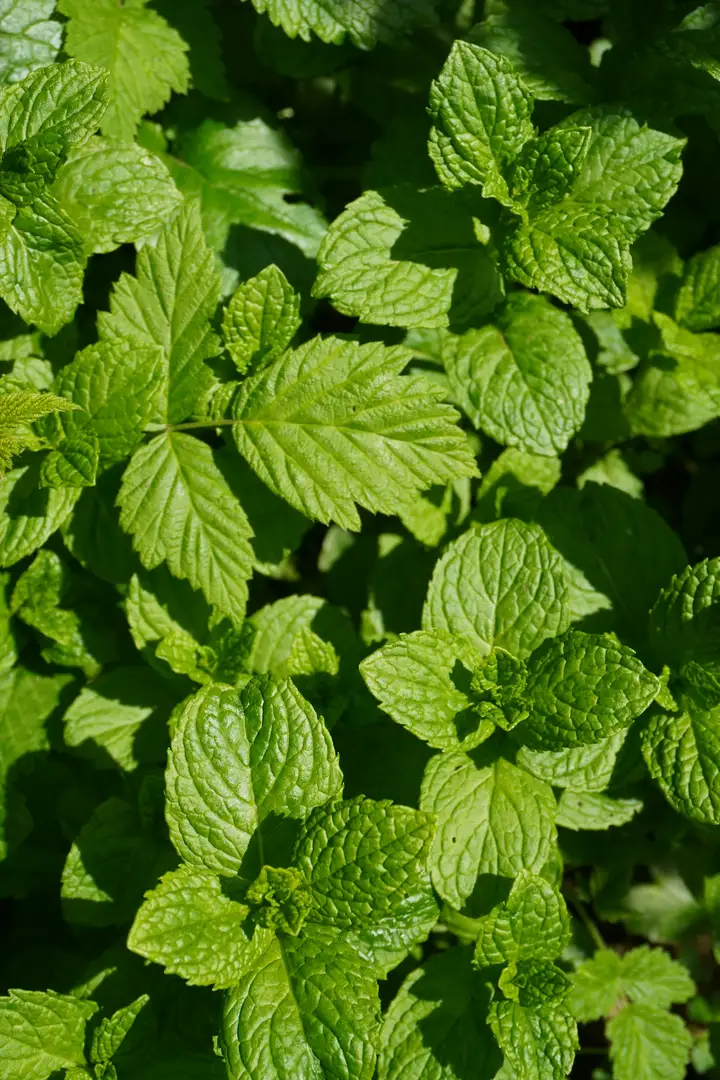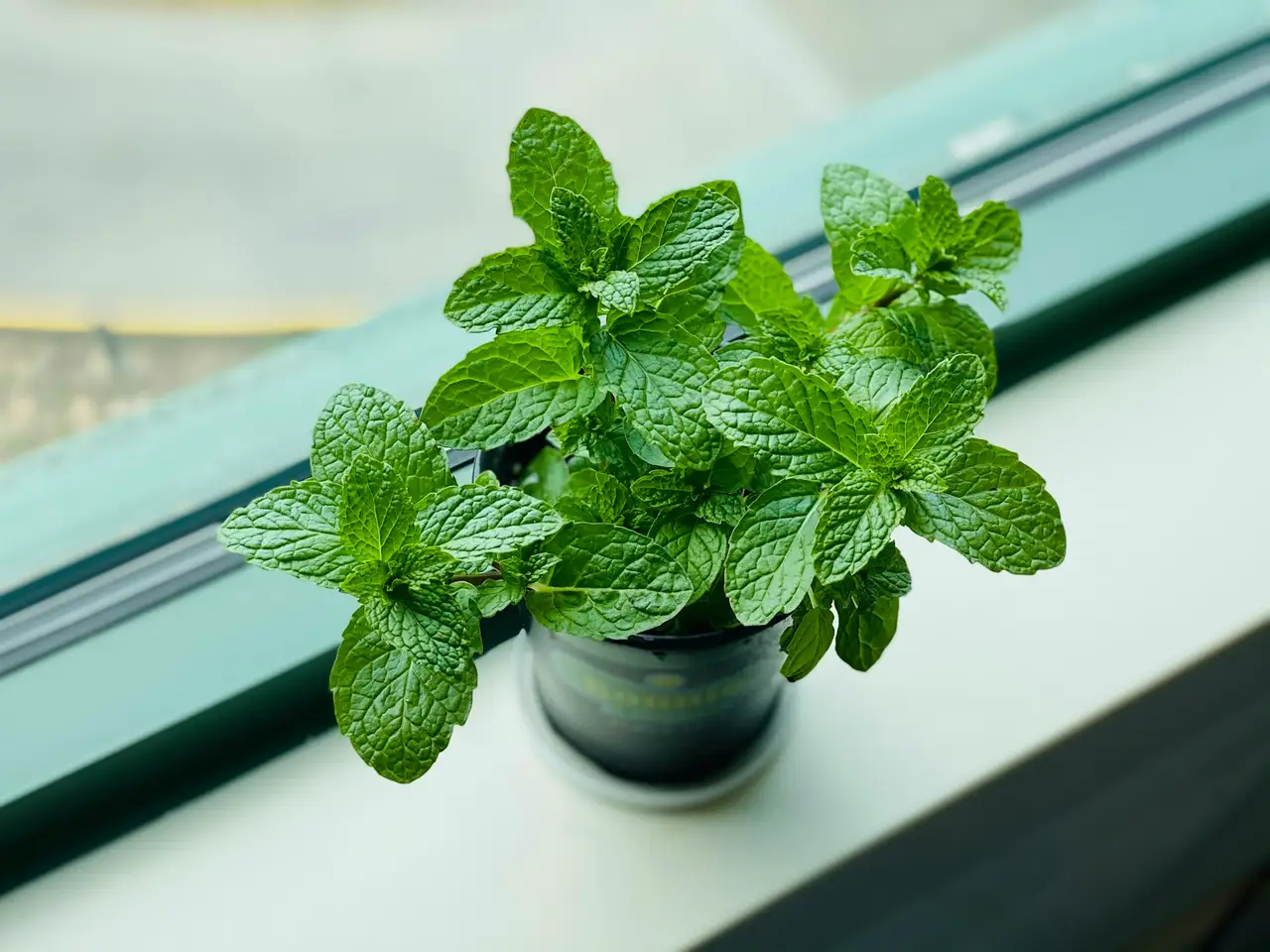
If your cat just chewed the mint on your windowsill, you can breathe. Is mint toxic to cats? Yes, but mildly. The ASPCA lists mint (Mentha species) as toxic to cats because of its essential oils, and the only clinical signs it names are vomiting and diarrhea “with large ingestions.” A cat that nibbles a few leaves is very unlikely to need a vet.
The mint risks that deserve your attention are elsewhere: concentrated mint oils, pennyroyal (the one mint with a documented fatal pet case, caused by its oil), and two herb-aisle plants with “mint” in the name that behave differently from the real thing. This guide sorts all of them, with every verdict checked against the ASPCA entry it comes from.
TL;DR
- Mint is mildly toxic to cats. The ASPCA lists all Mentha species, spearmint and peppermint included, as toxic: vomiting and diarrhea after large amounts.
- A nibble is not an emergency. NC State Extension rates spearmint and peppermint as low poison severity.
- The oil is the real danger. Pet Poison Helpline lists peppermint oil and pennyroyal oil among the essential oils known to poison cats.
- Pennyroyal is different. Its oil, sold as a “natural” flea remedy, killed a dog within 48 hours in a published veterinary case. Never use it on or around a cat.
- Catnip and catmint are toxic on paper, low risk in practice. The ASPCA lists catnip (also called catmint) as toxic to cats; it is safe in toys and small amounts.
- “Mexican mint” is not a mint, and it is toxic. It is Coleus amboinicus, the same plant as Cuban oregano and Spanish thyme.
- Lemon balm (“balm mint”) is non-toxic per the ASPCA, and so are basil, rosemary, sage, and thyme.
- Hotlines (24/7, fee applies): ASPCA Animal Poison Control 888-426-4435, Pet Poison Helpline 855-764-7661.
Is mint toxic to cats? The short answer
Yes, mildly. The ASPCA lists mint (Mentha species) as toxic to cats, dogs, and horses because of its essential oils, with vomiting and diarrhea only after large ingestions. Fresh leaves are a low risk; concentrated mint oils and pennyroyal oil are the forms that cause serious poisoning.
Here is how much each kind of mint exposure should worry you.
| What your cat got into | Risk level | What to do |
|---|---|---|
| A few nibbled leaves of spearmint or peppermint | Low | Move the plant, offer water, watch for the rest of the day |
| A large amount of a mint plant | Low to moderate | Vomiting or diarrhea is possible; call your vet if it repeats |
| Mint or peppermint essential oil (licked, spilled, on the fur) | High | Call a vet or poison hotline now |
| Pennyroyal oil or a “natural” pennyroyal flea product | High | Call now; never use these on a cat |
| Pennyroyal plant | Unknown in cats | Keep it out of a cat household |
| ”Mexican mint” or Cuban oregano | Moderate | Call your vet if vomiting repeats or you see blood |
| Mint chocolate chip ice cream, sugar-free mints or gum | Depends on the ingredients | Check the label for chocolate and xylitol, then call if either is there |
“Toxic” in the ASPCA database covers everything from a plant that might upset a stomach to one that can kill. Mint sits at the mild end. For contrast, lilies are toxic to cats in a way that causes kidney failure from small exposures. Mint is not in that category, and treating it as if it were helps nobody.
Why mint is mildly toxic to cats
The ASPCA names one toxic principle for mint: essential oils. Mint leaves carry those oils in small amounts, which is why a leaf produces, at worst, an upset stomach. NC State Extension’s spearmint entry and its peppermint entry say the same thing in more detail: poison severity low, toxic principle essential oils, symptoms “vomiting and diarrhea with large ingestions,” and both are tagged as a problem for cats.
Concentration changes everything. An essential oil is the plant’s aromatic compounds distilled into a few drops, and cats handle those compounds badly. Pet Poison Helpline explains that essential oils are absorbed both orally and through the skin and processed in the liver, and that cats “lack an essential enzyme in their liver” to clear them. That is why the leaf is a minor matter and the oil is not.
If your question is really about the oil, our full guide answers is mint oil safe for cats (it is not), including diffusers and the flea-remedy mistake.
Can cats eat mint leaves? How much is too much
No veterinary source publishes a toxic dose for the mint plant. The ASPCA’s wording, “with large ingestions,” is the most specific guidance that exists, and nothing suggests a few chewed leaves reaches it. Most cats that taste mint take a bite or two and leave it.
A cat that strips a big share of a pot is a different case. Expect possible vomiting or diarrhea, and keep watching for the rest of the day. Those are the only signs either the ASPCA or NC State lists for the plant.
Can cats have a little mint? It will not hurt a healthy cat, but there is no reason to offer it. You will find pages claiming mint “supports digestion” in cats. We found no veterinary source for that, and the only effects the ASPCA lists are digestive upset, the opposite of a benefit. If your cat wants to chew greenery, give it cat grass instead.
Which mints are toxic to cats? Spearmint, peppermint and other varieties
The ASPCA has one entry for the whole Mentha genus, “Mint (Garden Mint), Mentha sp.,” so every true mint shares the same mild verdict. There are no separate entries for individual mints.
| Mint | Botanical name | Verdict for cats |
|---|---|---|
| Spearmint (garden mint, lamb mint) | Mentha spicata | Mildly toxic; NC State rates it low severity |
| Peppermint | Mentha × piperita | Mildly toxic as a plant; its essential oil is a real poisoning risk |
| Chocolate mint | A peppermint cultivar | Same as peppermint |
| Apple mint, mojito mint, Corsican mint, other garden mints | Mentha species | Same ASPCA verdict; no separate entries |
| Pennyroyal | Mentha pulegium | Covered by the Mentha entry, but its oil is a different level of risk (see below) |
If a plant tag says Mentha, the mild verdict applies. If it says “mint” with no Latin name, check, because two of the plants sold under mint-sounding names are not Mentha at all.
Pennyroyal: the mint to keep out of a cat home
Pennyroyal is a true mint, and the one exception to the “mint is mild” rule. Its danger is concentrated in its oil.
The NIH’s LiverTox entry for pennyroyal oil describes it as derived from Mentha pulegium (or the related American plant Hedeoma pulegioides), used in the past as an insect repellent, and still sold for aromatherapy and as an insect repellent today. Its main component is pulegone. LiverTox notes that the tea and leaf extracts have been used “without serious side effects,” while the oil is “highly toxic” and linked to liver injury and death in people.
The pet case that matters is in the veterinary literature. In a 1992 report in the Journal of the American Veterinary Medical Association, a dog was treated for fleas with pennyroyal oil bought at a health food store. It began vomiting within 2 hours and died within 48 hours despite emergency treatment, and necropsy attributed the death to the pennyroyal oil.
We could not find a published case in a cat. But Pet Poison Helpline lists pennyroyal oil among the essential oils known to poison cats, and cats are more sensitive to essential oils than dogs. Here is our calibrated advice:
- Never apply pennyroyal oil, or any “natural” flea product containing it, to a cat or its bedding. This is the scenario with a documented death.
- Read the labels on herbal flea collars, sprays, and powders. Pennyroyal’s history as a flea repellent is exactly why it turns up in them.
- Leave the pennyroyal plant out of a cat household. A nibbled leaf is far less dangerous than the oil, and we have no evidence of harm from the plant in cats. But it offers nothing a safer herb does not, and it is the one mint where the margin for cats is truly unknown.
Mint-family herbs and cats: the ASPCA verdict for each
Mint gave its name to a whole plant family, Lamiaceae, which includes many common kitchen herbs. Family membership tells you nothing about safety, though. We scanned the ASPCA’s toxic and non-toxic plant list for cats for every mint-family entry and read each one on 2026-10-07.
| Herb | Botanical name (as the ASPCA files it) | Verdict for cats | What the ASPCA lists |
|---|---|---|---|
| Mint | Mentha sp. | Toxic (mild) | Vomiting and diarrhea with large ingestions |
| Catnip (also listed as catmint, catswort) | Nepeta cataria | Toxic (mild) | Vomiting and diarrhea; sedation in some cats, stimulation in others |
| Oregano | Origanum vulgare hirtum | Toxic (mild) | Mild vomiting and diarrhea |
| Marjoram | Origanum majorana | Toxic (mild) | Vomiting and diarrhea |
| Lavender | Lavendula angustifolia | Toxic (mild) | Nausea, vomiting, loss of appetite |
| Spanish thyme / Indian borage (sold as Mexican mint, Cuban oregano) | Coleus ampoinicus (sic) | Toxic | Vomiting, diarrhea, depression, loss of appetite, occasionally bloody vomiting or diarrhea |
| Lemon balm (also listed as balm mint) | Melissa officinalis | Non-toxic | None |
| Basil | Ocimum basilicum | Non-toxic | None |
| Rosemary | Rosmarinus officinalis | Non-toxic | None |
| Sage | Salvia officinalis | Non-toxic | None |
| Thyme | Thymus vulgaris | Non-toxic | None |
| Swedish ivy | Plectranthus australis | Non-toxic | None |
The pattern is the opposite of tidy. Oregano and marjoram are mildly toxic, while thyme and sage, which look and cook much the same, are not. Lavender has its own guide, is lavender safe for cats, because its oil is a bigger concern than its flowers. And the herbs in our basil and cats guide are the reliable safe core of a windowsill garden.
Catnip and catmint: toxic on paper, low risk in practice
Catnip is a mint-family plant but not a true mint: it is Nepeta, not Mentha. The ASPCA lists it as toxic to cats with nepetalactone as the toxic principle, and its clinical signs read: “Many cats love catnip, but it can cause vomiting and diarrhea. It makes some cats sedated and others stimulated.”
The name confusion runs deep. The ASPCA lists “catmint” as another name for catnip, and NC State’s Nepeta cataria entry does the same. The ornamental garden catmint with blue flowers is a different plant, Nepeta × faassenii, which has no ASPCA entry of its own. Some pages call catmint “non-toxic” or catnip “a safe type of mint.” The ASPCA disagrees with both.
In practice, catnip in a toy or a pinch of the dried herb is low risk, and it is one of the most widely used cat enrichment tools for good reason. The ASPCA’s listed signs come from eating it in quantity. Offer it in toys rather than leaving a bowl of loose leaves out, and you are using it well within its safe range.
Mexican mint and Cuban oregano are not mint, and they are toxic
This is the mint-family plant most likely to catch a careful owner out. NC State lists Plectranthus amboinicus (previously Coleus amboinicus) under the common names Mexican mint, Cuban oregano, Spanish thyme, Indian mint, and soup mint. It is a fleshy, fuzzy-leaved herb often sold in the herb section beside the real mints.
The ASPCA files the same species, under the slightly misspelled Coleus ampoinicus, as toxic to cats, dogs, and horses. It is listed under the names Coleus, Indian borage, Spanish thyme, and bread and butter plant, with essential oils as the toxic principle. Its listed signs are the most serious in the family: “Vomiting, diarrhea, depression, anorexia, occasionally bloody diarrhea or vomiting.” It is still a stomach problem, not an organ-failure plant, but it is a step up from garden mint. If your cat chewed one and vomits more than once or you see blood, call your vet.
Lemon balm (“balm mint”) is the safe one
Lemon balm, Melissa officinalis, is the reverse case: a plant with “mint” in one of its names that the ASPCA lists as non-toxic to cats, dogs, and horses. NC State lists “balm mint” among its common names too. It has the same square stems and crinkled leaves as true mint, with a lemon scent, and it is the closest swap if you want a minty-looking herb within a cat’s reach.
Symptoms of mint poisoning in cats, and what to do
For the mint plant, the listed signs are short: vomiting and diarrhea. Neither the ASPCA nor NC State publishes an onset timeline for mint, so we will not invent one. Watch your cat closely for the rest of the day after it eats mint.
Essential-oil exposure looks different. Pet Poison Helpline lists drooling, vomiting, tremors, wobbliness (ataxia), difficulty breathing, low heart rate, low body temperature, and liver failure, depending on the oil.
| What happened | What you may see | What to do |
|---|---|---|
| Chewed a few mint leaves | Usually nothing | Move the plant, offer water, keep an eye on your cat today |
| Ate a lot of a mint plant | Vomiting or diarrhea | Watch; call your vet if it happens more than once or twice, or your cat will not eat |
| Ate Mexican mint / Cuban oregano | Vomiting, diarrhea, lethargy, sometimes blood | Call your vet if vomiting repeats, you see blood, or your cat is subdued |
| Licked, stepped in, or was sprayed with mint, peppermint, or pennyroyal oil | Drooling, vomiting, tremors, wobbliness, labored breathing | Call a vet or poison hotline now, before signs appear |
| Breathing hard or coughing near a mint-oil diffuser | Watery eyes, drooling, fast or labored breathing | Move your cat to fresh air; get emergency care if it does not settle quickly |
If your cat ate the plant:
- Take any leaves out of its mouth and move the pot somewhere it cannot reach.
- Offer fresh water.
- Do not try to make your cat vomit unless a vet tells you to.
- Use the thresholds in the table, and call sooner for a kitten, a senior, or a cat that is already unwell.
For a plant that causes only stomach signs, veterinary care is supportive: treating the vomiting or diarrhea and any dehydration it causes.
Both hotlines answer 24/7: ASPCA Animal Poison Control at 888-426-4435 and Pet Poison Helpline at 855-764-7661. A consultation fee applies to both. Have the plant’s name (or a photo of the tag) and your best guess of how much was eaten ready when you call.
Is mint safe for cats to smell?
A mint plant’s scent is not a listed hazard. The ASPCA’s signs come from eating mint, and a pot of mint on the counter does not put enough oil in the air to matter.
Concentrated mint oil in the air is a different situation. Pet Poison Helpline says that with passive diffusers the main hazard to cats is respiratory irritation: some cats develop a watery nose or eyes, a burning sensation in the nose and throat, nausea leading to drooling or vomiting, and difficulty breathing. Cats with asthma or other breathing problems are at greater risk. A cat that tips a diffuser over, or licks oil off its fur, is an oil ingestion and belongs in the “call now” row above.
Do cats like mint? Does mint repel cats?
Both, depending on the cat. Some cats chew mint enthusiastically, some sniff it and walk away, and some dislike the smell enough to avoid the area. There is no study of how cats as a group respond to garden mint, so treat any confident claim either way with suspicion.
What we do know is that mint is not catnip. The catnip response is tied to nepetalactone, and a 2017 study in BMC Veterinary Research that tested 100 domestic cats found nepetalactone at its highest levels in catnip and only at marginal levels in the other plants tested. Even catnip itself had no effect on one in three of those cats. A cat rubbing on your mint is enjoying a strong smell and soft leaves, not getting a catnip high.
As a deterrent, mint is unreliable. Scent deterrents work on some cats and not at all on others, which is why placement and barriers do most of the work in our guide to keeping cats away from plants. Two specific warnings: never make a peppermint-oil spray to keep cats off furniture or plants, and do not set a pot of mint next to another plant as a “repellent,” because you have just given your cat a second, mildly toxic plant to chew.
Mint ice cream, candy, gum and tea
With mint-flavored foods, the mint is rarely the problem. Check the label for these two ingredients instead.
- Chocolate. Mint chocolate chip ice cream and chocolate mints contain methylxanthines. The ASPCA’s list of people foods to avoid feeding pets says they can cause vomiting, diarrhea, tremors, abnormal heart rhythm, and seizures, and that darker chocolate carries the greater risk. If your cat ate chocolate pieces, call with the type and amount.
- Xylitol. The same ASPCA page lists xylitol, a sweetener in sugar-free gum, candy, and toothpaste, as a cause of low blood sugar and possible liver damage in pets, with liver damage possible within 12-24 hours. Sugar-free mints and gum are worth a call.
The dairy in ice cream is a smaller issue: the ASPCA notes pets lack enough lactase to digest milk well, so it can cause diarrhea or other stomach upset. Plain mint tea is just the plant in diluted form, so a few laps are no more concerning than a nibbled leaf. There is no reason to offer any of these, and none of them is a mint problem.
Cat-safe herbs to grow instead of mint
Build the cat-level part of your herb garden from the ASPCA’s non-toxic list: lemon balm for the mint look, plus basil, rosemary, sage, and thyme. Add a pot of cat grass as your cat’s own chewing target, which draws most cats away from everything else. Keep the mint, oregano, and marjoram you cook with on a high shelf or in a room the cat does not use. For houseplants beyond the herb garden, see our list of cat-safe plants vetted against the ASPCA list.
What to skip
- Skip the emergency-room panic over a nibbled mint leaf. The listed signs require large ingestions.
- Never use peppermint or pennyroyal oil on a cat, including as a flea remedy, and skip mint-oil diffusers in rooms your cat cannot leave.
- Do not trust “catmint is non-toxic.” The ASPCA lists catnip, catmint included, as toxic to cats. Low risk is not risk-free.
- Do not give mint as a stomach remedy. Digestive upset is the plant’s listed effect, not its cure.
- Do not buy herbs by common name alone. “Mexican mint” is a toxic Coleus; “balm mint” is non-toxic lemon balm.
- Do not use potted mint as a cat repellent. It is unreliable and mildly toxic itself.
Frequently asked questions
Is mint toxic to cats? Yes, but mildly. The ASPCA lists mint (Mentha species, including spearmint and peppermint) as toxic to cats, dogs, and horses because of its essential oils. The only clinical signs it lists are vomiting and diarrhea with large ingestions. A cat that nibbles a few leaves is unlikely to need treatment. Concentrated mint essential oils and pennyroyal oil are the forms that cause serious poisoning.
How much mint is toxic to cats? No veterinary source publishes a number. The ASPCA says only that vomiting and diarrhea occur with large ingestions, and NC State Extension rates spearmint and peppermint as low poison severity. A few nibbled leaves is not a large ingestion. A cat that ate a big share of a plant may vomit or have diarrhea; call your vet if it repeats, your cat stops eating, or you see blood. Essential oil is different: there is no established safe dose for cats.
Can cats have a little mint? A little mint is not dangerous to a healthy cat, so there is no need to panic over a nibbled leaf. There is also no reason to offer it. Mint has no proven benefit for cats, the ASPCA lists it as toxic, and the claims that it settles a cat’s stomach have no veterinary source behind them. If your cat likes greenery, cat grass is the safer thing to give.
Is it bad for cats to smell mint? Smelling a mint plant is not a listed hazard; the ASPCA’s signs come from eating it. Concentrated mint oil in a diffuser is different. Pet Poison Helpline says strong essential-oil scents can cause watery eyes or nose, drooling, vomiting, and difficulty breathing in some cats, and cats with asthma are at greater risk. Skip mint-oil diffusers in rooms your cat uses.
Why is my cat obsessed with mint? Some cats are drawn to mint’s strong smell and soft leaves, and others avoid it. It is not a catnip reaction. The catnip response comes from nepetalactone, a compound concentrated in catnip (Nepeta cataria), not in garden mint. If your cat keeps chewing the mint, move the pot out of reach and give your cat its own cat grass to chew.
Is catnip a mint? Catnip is in the mint family (Lamiaceae) but it is not a true mint. True mints are the Mentha genus; catnip is Nepeta cataria. The ASPCA lists catnip, also sold as catmint, as toxic to cats: it can cause vomiting and diarrhea if eaten in quantity, and makes some cats sedated and others stimulated. In toys and small amounts it is low risk.
Is mint toxic to dogs? Yes, mildly, and on the same terms as cats. The ASPCA’s mint entry lists Mentha as toxic to dogs, cats, and horses, with vomiting and diarrhea after large ingestions. Pennyroyal oil is the serious exception: a dog treated for fleas with pennyroyal oil died within 48 hours in a case published in the Journal of the American Veterinary Medical Association.
Related articles
- Is Peppermint Oil Safe for Cats?, the full guide to mint oils, diffusers, and the flea-remedy mistake
- Is Basil Safe for Cats?, the safe anchor of a cat-friendly herb garden
- Is Lavender Safe for Cats?, the mint-family herb whose oil is the bigger concern
- Cat Grass: A Complete Guide, the chewing target that keeps cats off your herbs
- Spider Plant and Cats, the safe houseplant with a catnip-like reputation
- How to Keep Cats Away From Plants, the deterrents that work and the ones that harm cats
Sources
Every verdict above was checked against the linked page on 2026-10-07.
- ASPCA: Toxic and Non-Toxic Plant List for Cats
- ASPCA toxic entries: Mint, Catnip, Oregano, Marjoram, Lavender, Spanish Thyme, Coleus, Indian Borage
- ASPCA non-toxic entries: Lemon Balm, Basil, Rosemary, Sage, Thyme, Swedish Ivy
- ASPCA: People Foods to Avoid Feeding Your Pets
- Pet Poison Helpline: Essential Oils and Cats; 855-764-7661, 24/7
- NC State Extension Gardener Plant Toolbox: Mentha spicata, Mentha x piperita, Nepeta cataria, Plectranthus amboinicus, Melissa officinalis
- NIH LiverTox: Pennyroyal Oil
- Sudekum M, Poppenga RH, Raju N, Braselton WE. Pennyroyal oil toxicosis in a dog. Journal of the American Veterinary Medical Association, 1992.
- Bol S, et al. Responsiveness of cats (Felidae) to silver vine, Tatarian honeysuckle, valerian and catnip. BMC Veterinary Research, 2017.
The short version you can keep: a nibbled mint leaf means move the pot and watch your cat for the day. Any mint oil, and pennyroyal in any form you would put on a pet, means call. Everything else on this page is about telling those two situations apart.