If your cat just shredded a bag of catnip, or you are wondering whether the weekly sprinkle on the scratching post is doing harm, here is the straight answer. Is catnip bad for cats? Not in normal use. The ASPCA’s catnip entry does list it as “Toxic to Cats,” but the only clinical signs it names are vomiting and diarrhea, plus sedation in some cats and stimulation in others. Pet Poison Helpline puts the risk plainly: “no significant toxicity is expected” in cats.
So the label is real and the risk is small. A cat that eats a lot may throw up. A cat that sniffs it gets the 5 to 15 minute reaction you already know. The catnip problems worth your attention are elsewhere: concentrated catnip oil, cats with asthma, and the toy the catnip comes stuffed in. Every claim below is tied to the veterinary source or study it comes from, including the numbers other pages get wrong.
TL;DR
- Catnip is safe for cats in normal use. The ASPCA lists it as toxic because eating a lot can cause vomiting and diarrhea; Pet Poison Helpline expects no significant toxicity.
- Sniffing excites, eating mellows. The reaction lasts about 5 to 15 minutes, then most cats ignore catnip for an hour or more.
- “Too much” means an upset stomach, not a poisoning. Pick up the rest, keep water out, and call your vet if vomiting repeats or your cat stops eating.
- No study sets a dose or a schedule. The Animal Humane Society calls a tablespoon or less of dried catnip plenty for a session, and many cats need only a pinch. Space sessions out if the reaction fades.
- Kittens can have it. It is harmless, but most kittens show no obvious reaction until 3 to 6 months.
- About 1 in 3 cats skip the classic reaction. Some of them are still responding, just quietly.
- Silver vine reached 71% of catnip non-responders in a 100-cat study. It has no ASPCA entry.
- Skip catnip oil, ask your vet first for a cat with asthma, and throw out torn or stringy catnip toys.
- Hotlines (24/7, a fee may apply): ASPCA Animal Poison Control 888-426-4435, Pet Poison Helpline 855-764-7661.
Is catnip bad for cats? The answer by form
No, not in normal use. The ASPCA lists catnip (Nepeta cataria) as toxic to cats, but the signs it names are vomiting, diarrhea, and sedation or stimulation, and Pet Poison Helpline expects no significant toxicity. Sniffing it is harmless, eating a lot can upset a stomach, and concentrated catnip oil is the form to avoid.
Here is how much each kind of catnip exposure should worry you.
| What your cat gets into | Risk | What to do |
|---|---|---|
| Sniffing, rolling in, or rubbing on catnip | Very low | Nothing. Let the reaction run its 5 to 15 minutes |
| Chewing or eating a few fresh or dried leaves | Low | Nothing. Expect a calmer cat for a while |
| Eating a large amount (a torn-open bag, a stripped plant) | Low | Vomiting or diarrhea is possible. Call your vet if it repeats or your cat stops eating |
| Catnip spray on a toy or scratcher | Low | Spray objects, never the cat |
| Catnip essential oil, licked or on the fur | Higher, and not well studied | Call your vet or a poison hotline |
| A catnip toy chewed open, or string or stuffing swallowed | The toy is the hazard | Call your vet now, even if your cat seems fine |
| Garden catnip treated with a pesticide | Depends on the product | Call a hotline with the product label in hand |
“Toxic” in the ASPCA database spans everything from a plant that can upset a stomach to one that causes organ failure. Catnip sits at the mild end. For contrast, lilies are toxic to cats in a way that can cause kidney failure from small exposures. Catnip does not belong in that conversation.
Why the ASPCA lists catnip as toxic to cats
Here is the ASPCA entry, word for word, as of November 2026:
Catnip (Catswort, Catmint). Nepeta cataria, family Lamiaceae. Toxicity: Toxic to Cats. Toxic Principles: Nepetalactone. Clinical Signs: “Many cats love catnip, but it can cause vomiting and diarrhea. It makes some cats sedated and others stimulated.”
Two things stand out. The toxic principle is nepetalactone, the same compound that causes the reaction cat owners buy catnip for. And half of the listed signs, sedation and stimulation, are simply what a catnip session looks like. The entry catalogs what catnip does to a cat, including what happens when a cat eats too much of it. NC State Extension’s catnip page repeats the same signs and tags the plant as a “problem for cats.”
Pet Poison Helpline, the other major animal poison line, frames the same facts from the risk side. Its veterinary information specialist writes that “from a toxicological standpoint, no significant toxicity is expected in either humans or cats,” and closes by encouraging owners to use catnip often. Both sources are right. One lists the possible effects; the other grades how much they matter.
Why does nearly every other page, and Google’s AI answer, call catnip “non-toxic”? They are describing the practical risk and skipping the label. You should know both, because the label is what you will find if you look catnip up in the ASPCA database at 2 a.m., and it should not frighten you. Our cat-safe plants list flags catnip the same way: fine for cats, with an asterisk.
Catnip is a member of the mint family, and the ASPCA lists “catmint” as one of its common names. True mints (Mentha) have their own separate entry with similarly mild signs; our guide to whether mint is toxic to cats sorts out which “mints” are which.
What does catnip do to cats?
Catnip works through smell. In a 1985 study, removing cats’ vomeronasal organ (the pheromone-sensing organ in the roof of the mouth) did not change their catnip reaction, while removing the olfactory bulbs eliminated it (Hart and Leedy, 1985). The reaction is a scent response, not a pheromone response and not a digestive one.
The brain side became clearer in 2021, when researchers found that nepetalactol, silver vine’s close chemical relative of catnip’s nepetalactone, raised cats’ blood levels of β-endorphin, and that blocking μ-opioid receptors suppressed the classic face rubbing (Uenoyama et al., 2021). The study measured silver vine’s compound rather than catnip’s, but the two trigger the same behavior. In plain terms, these plants switch on the cat’s own reward chemistry.
The same study offers the best explanation yet for why cats do it. Rubbing transfers the compound onto the cat’s face and head, where it repelled Aedes albopictus mosquitoes in the researchers’ tests. The rolling may be self-applied bug spray.
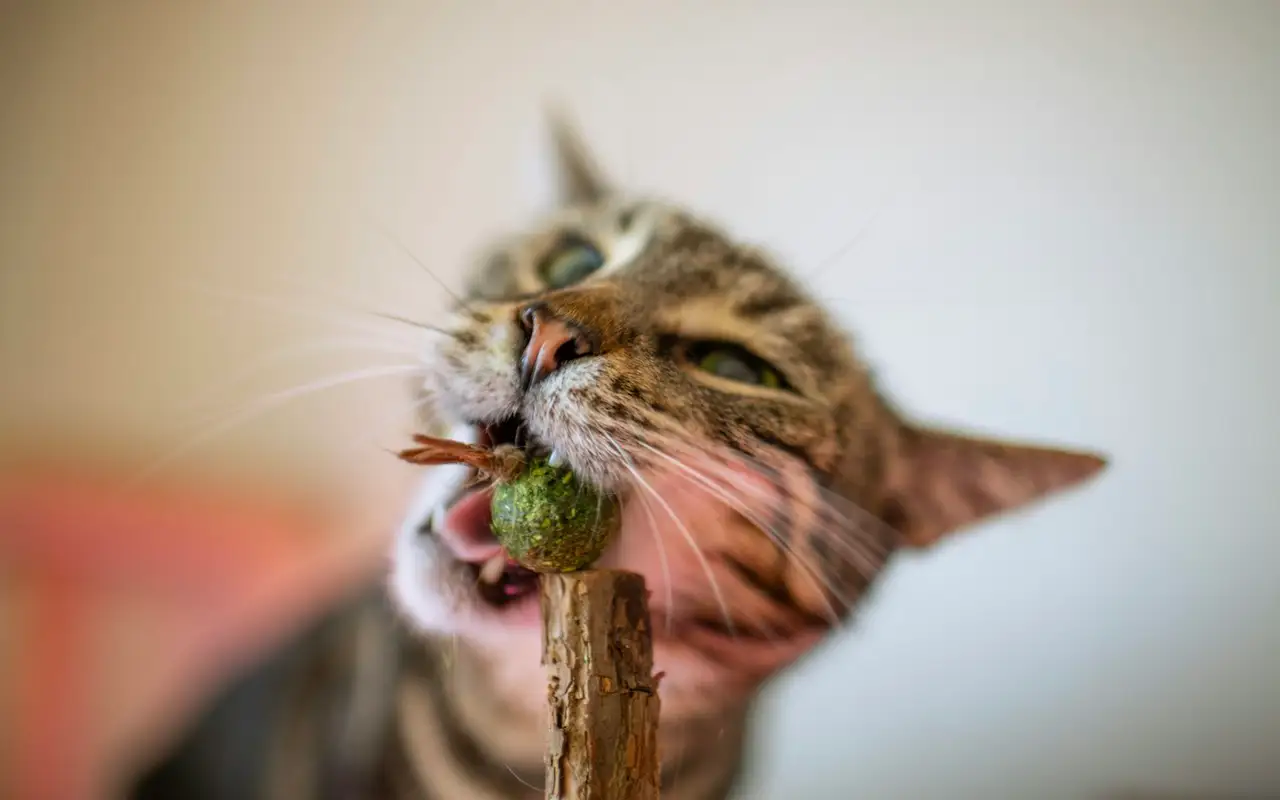
A typical session looks like this: sniffing, licking and chewing, rubbing the chin and cheeks, rolling, drooling, batting and kicking, vocalizing, then a quiet, zoned-out stretch. Some cats get rough. Pet Poison Helpline cautions that catnip “may cause them to playfully bite/scratch more/differently than normal since their inhibitions are lowered.”
Sniffing vs. eating catnip
Smelling catnip tends to make cats more active, while eating it tends to make them calm and mellow, according to the Animal Humane Society. The chewing is part of the scent response, not hunger. A 2022 study found that when cats lick and chew catnip leaves, the damaged leaves release substantially more of the active compounds (Uenoyama et al., 2022). Your cat bites the catnip to make it smell stronger.
How long catnip lasts on cats
The reaction “usually lasts 5 to 15 min, followed by a period of one or more hours when they are nonresponsive,” per the 2021 study above. Pet Poison Helpline gives nearly the same window: 10 to 15 minutes, then 1 to 2 hours of “immunity.” You will see longer figures, up to 30 minutes, on some clinic pages. The research figure is 5 to 15.
Does catnip get cats high?
Sort of, and “kitty crack” overstates it. The reaction runs through the μ-opioid receptors, the same reward system involved in euphoria in people, which is why it looks like a high. But the cat’s body caps it. PetMD explains that the endorphin release is tightly regulated and not proportional to how much nepetalactone a cat inhales, and the response switches itself off within minutes no matter how much catnip is on the floor. That ceiling is why a catnip session cannot escalate the way a drug dose can.
Is catnip addictive for cats?
There is no evidence it is. The hour-plus refractory period alone makes compulsive use hard. The best direct test of addiction-like behavior used silver vine rather than catnip: in a 2023 study, continuous exposure to silver vine “showed no hallmarks of addictive behavior,” cortisol and blood sugar did not rise after cats responded, and cats with up to 3.2 years of exposure had liver and kidney blood values in the normal range (Uenoyama et al., 2023). The same paper cites earlier work finding no marked physiological or tissue effects within 96 hours of cats ingesting nepetalactone.
One clinic page in the search results says cats “can develop a dependence” on catnip. We found nothing in the research behind that claim.
Can cats eat catnip?
Yes. Many cats chew and swallow some catnip during a session, and that is normal. Eating it in quantity is what the ASPCA’s vomiting-and-diarrhea warning covers. No veterinary source publishes a toxic dose for cats, and a cat that eats a few leaves is not a reason to call anyone.
Can cats eat the catnip plant itself? Yes. A homegrown plant is the same herb as the dried product, just fresher. Two caveats: grow it without pesticides (Small Door Veterinary calls catnip safe “assuming it hasn’t been sprayed with pesticides”), and do not let one cat eat an entire pot in a sitting.
Should you add catnip to your cat’s food? Zoetis’s veterinary writer advises against routinely adding it to meals. Catnip is a scent toy, not a supplement.
Fresh vs. dried catnip for cats
Both work. Fresh catnip is more potent than dried, according to the Animal Humane Society, so use less of it. Dried catnip loses strength as its volatile oils evaporate: store it airtight in the freezer, and crush it between your fingers before offering it to release fresh scent. Catnip sprays tend to draw less interest because they usually contain less nepetalactone, per Zoetis.
If you buy dried catnip, buy organic or pesticide-free. Frontier Co-op’s organic cut and sifted catnip is US-grown and sold by the pound, which is a lot of catnip; it keeps well frozen. Frontier was one of the two catnip suppliers in the 100-cat study cited throughout this guide.
Can cats overdose on catnip? How much is too much
Not in the way people fear. The reaction caps itself, and the realistic worst case from eating too much is what the ASPCA lists: vomiting and diarrhea. PetMD states that a fatal catnip overdose is not possible, and that the stomach upset from eating a large volume is rare and resolves with time.
What “too much” looks like: a bout or two of vomiting, loose stool, or a sleepy, mellow cat after eating a lot. Some pages list hyperactivity and aggression as “overdose symptoms.” Those are the normal reaction, not a sign of excess.
If your cat got into the whole bag:
- Pick up the rest and seal it away.
- Make sure fresh water is available.
- Watch for the rest of the day. A single episode of vomiting or diarrhea that settles on its own is the expected outcome.
- Call your vet if vomiting repeats, your cat will not eat, you see blood in vomit or stool, or your cat seems weak or unusually lethargic. Those signs point to something other than catnip (see the table below).
- If the packaging, a toy, or string went down too, call now.
How much is a normal session? “One tablespoon or less of dried catnip is plenty for a fun session,” according to the Animal Humane Society, and many cats need only a pinch. No study has set a dose, so start small and watch your cat.
How often can cats have catnip?
No study sets a safe frequency, and the advice you will find is all over the place: once a week (Zoetis), once every few weeks (a New York clinic), “occasionally” (Cats.com). None of these is a safety limit. They are about keeping catnip interesting, because frequent exposure dulls the response; PetMD notes cats can develop a mild tolerance over time.
Our practical take: for a healthy cat there is no evidence-based reason to ration catnip for safety. Ration it for effect. If the reaction is getting weaker, go longer between sessions. Saving catnip for specific jobs (a new scratching post, a slow afternoon, a cat you are trying to coax into a new room) keeps it working.
Can kittens have catnip?
Yes. Catnip is harmless for kittens; most simply ignore it. The Animal Humane Society says kittens typically do not show a response until they are 3 to 6 months old, and Pet Poison Helpline ties the response to sexual maturity. Pages that say “under 8 weeks” or “around 6 months” are describing the same gradual window.
There is a twist. In a 2017 study of 60 cats of different ages (Espín-Iturbe et al., 2017), only juveniles and adults showed the active, rolling response to 500 mg of dried catnip. But passive responses, holding a sphinx-like posture, vocalizing less, and moving less, showed up at every age. A kitten that seems to ignore catnip may be having a quiet catnip moment.
For kittens, the real hazard is the toy rather than the herb. Kittens chew everything, and VCA advises letting kittens play with string or ribbon only under direct supervision. A sprinkle of dried catnip on a scratching pad, or a solid, sewn catnip toy too big to swallow, is the safer first try.
Spaying or neutering does not switch catnip off. All 100 cats in the Bol study below were neutered, and 68 of them responded.
Why doesn’t my cat react to catnip?
Roughly one cat in three shows no reaction. In a 2017 study of 100 cats, 68 responded to catnip (Bol et al., 2017). The response is inherited (Todd, 1962), which is why one cat in a household can go wild while another yawns. Age made little difference among adults: in the Bol study, younger cats were no more likely to respond than older ones.
You will see other figures: 20 percent non-responders on one brand page, “30 to 50 percent” in Google’s AI answer. Much of the spread comes from what counts as a response. When the Espín-Iturbe team counted quiet responses (the sphinx posture, less movement, fewer vocalizations), they concluded that all cats respond to catnip, even though only about 20% of their 60 cats rolled around.
So before you write your cat off as a non-responder, look again. A cat that goes still and sphinx-like near catnip may be responding. If you see nothing at all, try crushing the catnip to release fresh scent, offer fresh leaves, or buy a new bag; stale catnip is a common culprit.
Catnip alternatives for cats that don’t respond
The Bol study tested three other plants on the same 100 cats, including the 31 that ignored catnip.
| Plant | What the cats responded to | Cats responding (of 100) | Catnip non-responders who responded (of 31) | ASPCA status |
|---|---|---|---|---|
| Catnip (Nepeta cataria) | Dried leaves and flowers | 68% | Not applicable | Toxic to cats (vomiting, diarrhea) |
| Silver vine, matatabi (Actinidia polygama) | Powder from dried fruit galls | 79% | 71% (22 cats) | No entry |
| Tatarian honeysuckle (Lonicera tatarica) | Wood and sawdust | 53% | 32% (10 cats) | No entry |
| Valerian (Valeriana officinalis) | Dried root | 47% | 19% (6 cats) | No entry |
Response rates from Bol et al., 2017. ASPCA status checked against the ASPCA’s toxic and non-toxic plant list for cats on 2026-11-03.
“No entry” means the ASPCA has not evaluated the plant. It is not a safety verdict. For a fuller picture: the Bol team consulted Pet Poison Helpline, which told them valerian root is generally considered safe and that no toxicity has been reported from silver vine or Tatarian honeysuckle wood. And the 2023 silver vine study above found no hallmarks of addiction and normal liver and kidney values.
Silver vine is the best-tested alternative, with one buying note. Bol’s cats responded mainly to powder made from dried fruit galls; in a follow-up test, only 1 of 8 cats responded to silver vine wood, the material most “silvervine sticks” are made from. (The 2023 study found dried silver vine leaves effective as well.) Start with powder or leaves before buying sticks. Valerian works for about half of cats but has a strong smell that many people dislike, as the Bol authors note; if you try it, buy the dried root sold for cats rather than a supplement made for people.
When catnip is a bad idea for your cat
Catnip is low risk for most cats. These are the exceptions worth knowing.
Cats with asthma. Zoetis’s veterinary writer advises asking your vet before using catnip with a cat that has feline asthma, because inhaled small particles can make coughing and wheezing worse. That fits how the disease works: Cornell’s Feline Health Center describes feline asthma as an allergic reaction to inhaled particles. Loose, dusty dried catnip is the form that puts particles in the air.
Cats that turn rough. Some cats get aggressive rather than playful. In a multi-cat home, give catnip to cats separately and end the session if play turns into hissing or swatting.
Catnip oil and concentrated extracts. The Animal Humane Society says to “avoid using any catnip oils,” because they are “highly concentrated and potent.” Catnip oil is not on Pet Poison Helpline’s list of oils known to poison cats, but its guide to essential oils and cats explains why concentrated oils are a problem for cats in general: they are absorbed through the skin and mouth, and cats lack a liver enzyme needed to clear some of them. Never put a concentrated oil on your cat. Our peppermint oil guide covers diffusers and the flea-remedy mistake.
Before a stressful trip, test first. Pet Poison Helpline suggests catnip can ease fear during car rides and vet visits. A cat that goes wild on catnip is harder to handle in an exam room, though, so try it at home before you rely on it.
The real catnip risk: the toy
Catnip mostly reaches cats inside toys, and the toy is the bigger hazard. VCA Animal Hospitals lists thread, wool, and small toys among the things cats commonly swallow, and warns that swallowed string is potentially life-threatening: it can wrap around the base of the tongue or anchor in the stomach. When a blockage is diagnosed or suspected, VCA says exploratory surgery is generally recommended.
A cat in the middle of a catnip session bites and kicks harder than usual, which is exactly how toys get opened.
- Choose solid, tightly sewn toys with no dangling strings, feathers, or tails.
- Throw a toy out once a seam opens and stuffing shows.
- Put wand toys and anything with string away after supervised play.
- If you see string or ribbon coming from your cat’s rear end, VCA’s instruction is “do not pull!” Take your cat to the vet. String caught under the tongue also needs a vet.
If you have a dog, keep the cat’s toys out of its reach too. Can dogs have catnip? Yes, but a swallowed cat toy is a different story.
Signs it’s not the catnip: when to call the vet
| What you see | Is it the catnip? | What to do |
|---|---|---|
| Rolling, rubbing, drooling, zoomies, or zoning out for 5 to 15 minutes | Yes, the normal reaction | Nothing |
| A calm, sleepy cat after eating some | Yes | Nothing |
| One or two episodes of vomiting or loose stool after eating a lot | Probably | Water, quiet, and watch for the rest of the day |
| Repeated vomiting, refusing food, belly pain, straining in the litter box, lethargy | Not typical of catnip; these are VCA’s signs of a swallowed object | Call your vet now |
| Pawing at the mouth, or string visible under the tongue or from the rear | A swallowed toy or string | Call your vet now; do not pull |
| Coughing, wheezing, fast or open-mouth breathing | Not typical of catnip; Cornell lists these as asthma signs | Call your vet now |
| Drooling, vomiting, wobbliness, or tremors after contact with an oil or diffuser | Possible essential oil exposure | Call a poison hotline now |
| Your cat also chewed another plant | Depends on the plant | Check it against the ASPCA list or call a hotline |
If you are not sure what your cat got into, call one of the 24/7 animal poison lines (a consultation fee may apply):
- ASPCA Animal Poison Control: 888-426-4435
- Pet Poison Helpline: 855-764-7661
Have the product or plant name ready, along with roughly how much is missing and when it happened.
Growing catnip at home with cats
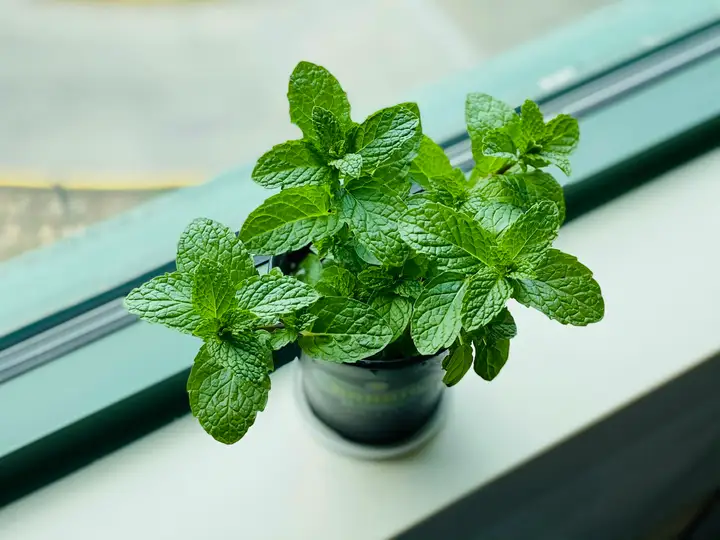
Catnip is easy to grow. NC State Extension describes it as a perennial in the mint family that wants full sun to part shade and good drainage, tolerates many soil types, and “can become weedy, so consider growing it in a container.” Indoors, give it your sunniest window. Botanical Interests catnip seeds come in organic and conventional packets, and the plant self-sows readily.
The challenge is the cat. A cat with free access will flatten, chew, and roll on a young plant until there is nothing left. What works:
- Grow it where the cat can’t reach, in a room the cat does not enter or under a wire cloche, and bring cut sprigs to the cat.
- Rotate two pots. One recovers out of reach while the other is on offer.
- Skip pesticides on any catnip a cat will touch.
- Keep it away from plants you care about. A cat rolling in the catnip pot will knock over the neighbors. Our guide to keeping cats away from plants covers placement and cat-safe deterrents.
If your cat wants greenery to eat rather than roll in, that is a different plant. Cat grass is the chewing crop; catnip is the scent toy. And if your cat is obsessed with a houseplant that is not catnip, it may be a spider plant, the other famous cat magnet (non-toxic, and unrelated to catnip).
What to skip
- Skip calling poison control because your cat rolled in catnip or ate a pinch. That is the plant working as intended.
- Skip catnip oil and concentrated extracts anywhere near your cat.
- Skip the “once a week, maximum” rule as a safety rule. No study supports it. Space sessions out to keep the reaction strong, not out of fear.
- Skip stringy, feathered, or torn catnip toys for unsupervised play.
- Skip silver vine sticks as your first alternative. Cats responded far more to fruit-gall powder than to the wood.
- Skip assuming your “non-responder” feels nothing. A still, sphinx-posed cat may be responding quietly.
- Skip swapping in other “calming” herbs. The ASPCA lists lavender as toxic to cats; see is lavender safe for cats.
Frequently asked questions
Is it okay to give cats catnip every day? It is unlikely to harm a healthy cat, but it is likely to stop working. No study has tested daily use, and the effects the ASPCA lists (vomiting and diarrhea) come from eating a lot, not from frequent sniffing. The practical problem is tolerance: PetMD notes that cats can develop a mild tolerance over time. Spacing sessions out, or saving catnip for specific jobs, keeps the reaction strong.
Can cats build a tolerance to catnip? Yes, in two ways. In the short term, after a 5 to 15 minute reaction most cats are unresponsive for an hour or more, so a second sprinkle right away does nothing. Over longer stretches, frequent exposure can blunt the response. Fresh catnip, crushed dried catnip, and breaks between sessions all help.
At what age can kittens have catnip? Any age; it is harmless. Most kittens show no obvious reaction until 3 to 6 months, according to the Animal Humane Society. Research suggests younger kittens may still respond quietly, by going still rather than rolling. Offer it on a scratcher or in a solid toy too big to swallow.
Will catnip help my cat sleep at night? Possibly, indirectly. Eaten catnip tends to leave cats mellow, and many cats rest after a session. No study has tested catnip as a sleep aid, though. An evening play session with a catnip toy is a reasonable experiment; skip it if your cat gets wound up instead.
Why does my cat get aggressive with catnip? Catnip lowers some cats’ inhibitions, and Pet Poison Helpline notes they may bite and scratch more than usual. It is a known part of the reaction, not a sign of poisoning. Give catnip to cats one at a time, keep your hands out of the play, and skip it for a cat that turns genuinely aggressive.
Does catnip expire? Dried catnip fades with time: it loses strength as its volatile oils evaporate. Store it in an airtight container in the freezer. If your cat stops reacting to an old bag, try fresh catnip before deciding your cat has lost interest.
Does catnip help a cat in heat? There is no evidence it does. The rolling and rubbing resemble the behavior of a female cat in heat, which is where the idea comes from, but the catnip reaction runs through the cat’s main sense of smell, not its pheromone-sensing organ (Hart and Leedy, 1985), and spayed and neutered cats still respond. Catnip may distract a cat for a few minutes; it will not change the heat cycle. Talk to your vet about spaying.
Is catnip the same as doggijuana? Doggijuana is a dog product brand, and its maker describes its Juananip product as organic catnip prepared for dogs. Catnip is not toxic to dogs: the ASPCA’s catnip entry is marked toxic to cats only. Our guide to whether dogs can have catnip covers how much, dognip, and the toy risk.
The bottom line
Is catnip bad for cats? No. It is one of the few plants on the ASPCA’s toxic list that you can hand to your cat on purpose. The label reflects an upset stomach from eating a lot, and the reaction itself is short, self-limiting, and driven by the cat’s own reward chemistry. Keep sessions small, buy pesticide-free catnip, keep oils off your cat, check with your vet first if your cat has asthma, and throw out toys once they split. If your cat ignores catnip, try silver vine powder before you give up.
Related articles
- Is Mint Toxic to Cats?, catnip’s place in the mint family and which “mints” differ
- Can Dogs Have Catnip?, the dog side of the same herb, and why the toy is the risk
- Is Peppermint Oil Safe for Cats?, why concentrated oils are a different exposure from the leaf
- Cat Grass: A Complete Guide, the greenery cats are meant to eat
- Spider Plant and Cats, the houseplant cats chase like catnip
- Cat-Safe Plants: 22 Houseplants Vetted Against ASPCA’s List, the full safe-plant roundup
- How to Keep Cats Away From Plants, protecting a catnip pot (and everything else)
Sources
Every verdict above was checked against the linked page on 2026-11-03.
- ASPCA: Catnip (toxic to cats); Toxic and Non-Toxic Plant List for Cats (no entries for silver vine, Tatarian honeysuckle, or valerian)
- Pet Poison Helpline: The Chemistry of Catnip (Michelle Willis, CVT); Essential Oils and Cats (Kia Benson, DVM); 855-764-7661, 24/7
- NC State Extension Gardener Plant Toolbox: Nepeta cataria
- Bol S, et al. Responsiveness of cats (Felidae) to silver vine, Tatarian honeysuckle, valerian and catnip. BMC Veterinary Research, 2017.
- Espín-Iturbe LT, et al. Active and passive responses to catnip are affected by age, sex and early gonadectomy in male and female cats. Behavioural Processes, 2017.
- Uenoyama R, et al. The characteristic response of domestic cats to plant iridoids allows them to gain chemical defense against mosquitoes. Science Advances, 2021.
- Uenoyama R, et al. Domestic cat damage to plant leaves containing iridoids enhances chemical repellency to pests. iScience, 2022.
- Uenoyama R, et al. Assessing the safety and suitability of using silver vine as an olfactory enrichment for cats. iScience, 2023.
- Hart BL, Leedy MG. Analysis of the catnip reaction: mediation by olfactory system, not vomeronasal organ. Behavioral and Neural Biology, 1985.
- Todd NB. Inheritance of the catnip response in domestic cats. Journal of Heredity, 1962.
- Animal Humane Society: Catnip: The herb that drives cats wild
- PetMD: Does Catnip Make Cats High?
- Zoetis Petcare: All About Catnip: Your FAQs Answered (Sam Gilbert, VMD)
- Small Door Veterinary: Everything You Need to Know About Catnip
- Cornell Feline Health Center: Feline Asthma: What You Need To Know
- VCA Animal Hospitals: Ingestion of Foreign Bodies in Cats; Holiday Safety Tips for Cat Owners