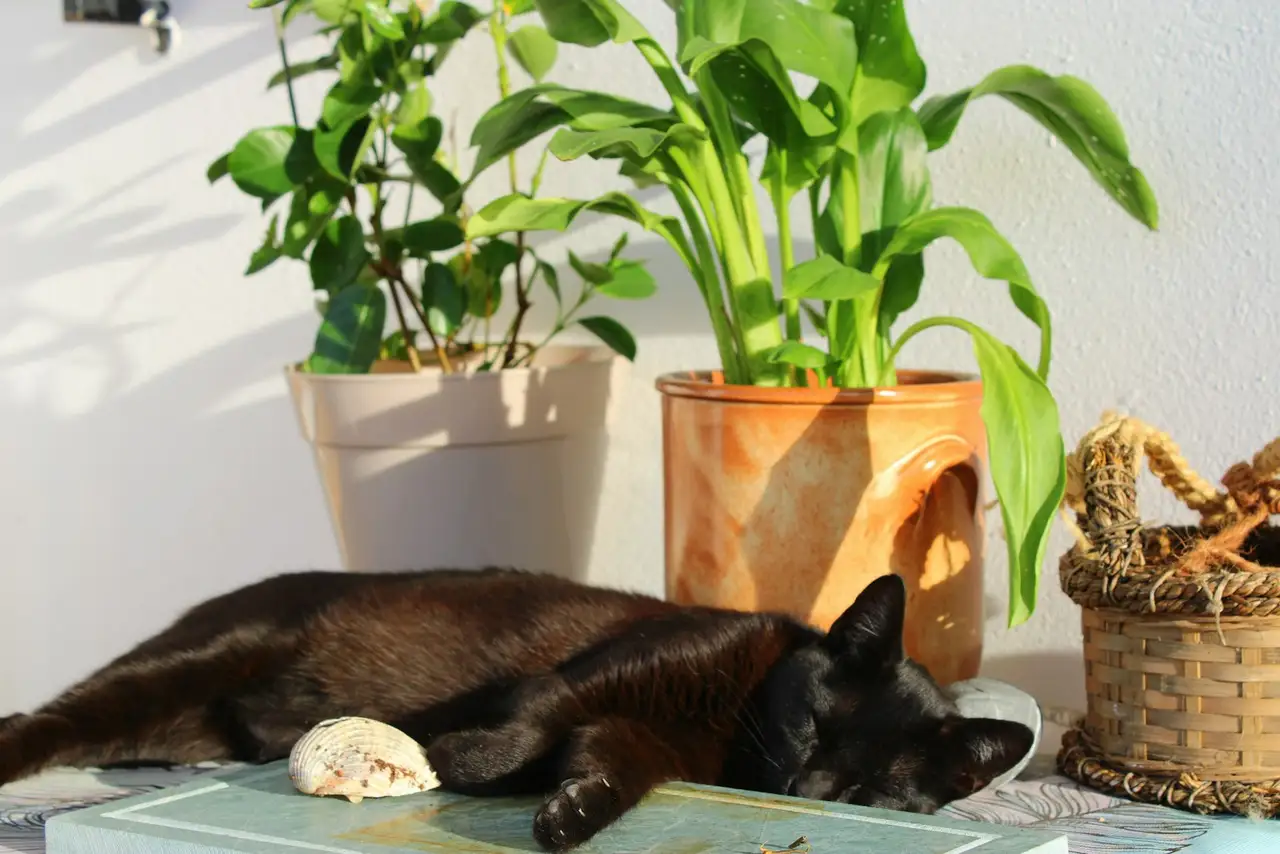
If your cat treats your houseplants as a salad bar, a litter box, and a toy all at once, you have two problems to solve at the same time: keeping the cat away from the plant, and making sure nothing you do to deter the cat ends up harming it. That second part is where most advice online quietly fails. Knowing how to keep cats away from plants safely means skipping the popular “natural” sprays that are toxic to cats and leaning on the methods that actually work.
This guide ranks the deterrents by what works and what is safe, explains why your cat does this in the first place (so you fix the cause, not just the symptom), and flags the one thing that matters more than any deterrent: whether the plant itself is dangerous. Safety claims here are sourced to the ASPCA.
TL;DR
- The methods that actually work are physical: put plants out of reach, use barriers, cover the soil, and redirect your cat to its own cat grass. Placement beats every spray.
- The cause is usually play, texture, or boredom, not hunger. Fix that and half the battle is over.
- Skip the “natural” sprays that can hurt your cat. The ASPCA warns that concentrated essential oils (peppermint, eucalyptus, tea tree, citrus oil) can be toxic to cats. Coffee grounds are also a bad idea, because caffeine is toxic to cats.
- Citrus scent is the safe deterrent most cats dislike: use fresh peels, not essential oil.
- The most important step is not a deterrent at all: make sure the plant is not toxic. If you cannot keep your cat away from a true lily, the answer is to remove the lily, not to deter the cat.
- Sprays and scents are inconsistent supplements, not a primary strategy.
Why your cat keeps going after your plants
Before you can keep cats away from plants, it helps to know what your cat is actually getting out of them. The fix follows the cause.
The prey instinct. A leaf that dangles, sways, or flutters in a draft looks a lot like prey. Trailing plants (pothos, spider plants, ivy) are the worst offenders because the movement is irresistible. Your cat is not being destructive; it is hunting.
The texture and the chew. Some cats simply like the feel of chewing fibrous greenery. Cats are not strict in their behavior here, and a bit of plant-nibbling is normal feline conduct, not a sign that something is wrong.
The soil. Loose, soft potting mix is satisfying to dig in, and to some cats it reads as an inviting second litter box. Digging and pot-as-toilet are two of the most common plant complaints, and both come down to the soil surface being accessible and appealing.
Boredom. An under-stimulated indoor cat will make its own entertainment, and a plant is right there. This is why enrichment, covered below, does more long-term good than any spray.
Knowing which of these is driving your cat tells you which method to reach for. A bored hunter needs play and a redirect; a digger needs the soil covered; a determined climber needs the plant genuinely out of reach.
How to keep cats away from plants: the methods that actually work
Ranked roughly from most to least reliable. The honest truth, which most listicles skip, is that the physical methods work and the scent tricks are hit or miss.
Put plants out of reach (placement and height)
The single most effective method is also the least clever: make the plant impossible to get to. Hang trailing plants from the ceiling, set plants on high floating shelves, or move the most-targeted plants into a room your cat does not enter unsupervised.
This works because it removes access entirely rather than relying on your cat deciding to behave. A motivated cat will out-stubborn any spray, but it cannot reach a plant that is genuinely out of range. Start with your cat’s favorite targets and elevate those first. Prioritize the highest-stakes plants: true lilies, and spring bulbs such as hyacinths, where a dug-up bulb is the most toxic part, belong completely out of a cat’s reach.
Use physical barriers
When you cannot move a plant, put something between it and the cat. Options that work:
- Cloches or glass terrariums over smaller plants, which double as decoration.
- A decorative cage or plant-protector dome for medium plants.
- A closed door. A “plant room,” even just a bright bathroom or office, solves the problem completely for the plants you care about most.
- Netting or mesh for larger plants a cat likes to climb, though this is the least attractive option.
Cover the soil
If the problem is digging or your cat using the pot as a litter box, the fix is the soil surface, not the plant. Cover the top of the pot with something that is unpleasant to dig but safe if your cat investigates:
- River stones or large decorative pebbles, heavy enough that your cat cannot move them.
- Pinecones laid across the surface.
- A layer of coarse bark. Note: if you have a dog, keep an eye on bark chewing, but for cats a bark top-dressing is a common deterrent.
Avoid sharp materials or anything small enough to swallow. The goal is “annoying to dig,” not “hazard.”
Redirect the behavior (give your cat its own plant)
Deterrence works far better when paired with a “yes.” If your cat wants to chew greenery, give it greenery it is allowed to chew. Cat grass is the classic redirect: it satisfies the urge to nibble and pulls attention off your houseplants. Our complete cat grass guide covers how to grow it and why cats love it.
Place the cat grass near the plants your cat targets most, so the easy, allowed option is right where the temptation is. Beyond cat grass, building a collection of genuinely cat-safe plants means a stray nibble is a non-event rather than a panic. Even a kitchen herb works: basil is safe for cats to nibble, so a windowsill pot doubles as a safe redirect.
Fix the boredom (play and enrichment)
A tired cat bothers your plants less. This is the slow fix that prevents the behavior rather than fighting it.
Add a couple of short, active play sessions a day with a wand toy, give your cat vertical space (a cat tree or window perch) so the houseplants are not the most interesting thing in the room, and rotate toys to keep them novel. For a chronic plant-hunter, enrichment often does more than every spray and barrier combined.
Scent deterrents cats dislike (citrus, done safely)
Many cats dislike citrus, so scent can be a useful supplement. The safe way to use it is with fresh citrus peel or a light citrus-scented water spritz, not with essential oils.
Lay a few fresh lemon or orange peels on the soil surface and refresh them as they dry out. A diluted spritz of water with a little lemon juice on the leaves can also help. Just understand that scent deterrents are inconsistent: they work beautifully on some cats and not at all on others, which is why they belong alongside placement and barriers, not in place of them.
The “natural” deterrents to skip (because they can harm your cat)
This is the section the rest of the internet leaves out, and it is the reason to read a pet-safety source for this topic rather than a general listicle. Several popular “natural” deterrents are genuinely risky for cats.
Essential-oil sprays. The most common bad advice is to spray peppermint, eucalyptus, tea tree, or citrus essential oil around your plants. The ASPCA is clear that concentrated essential oils can be a danger to pets: cats can be harmed by oils on their coat or ingested, and concentrated tea tree oil may cause problems with only seven or eight drops. Cats are especially sensitive because of how their livers process these compounds, the same reason lavender essential oil is a bigger risk to cats than the lavender plant. Skip essential-oil deterrents entirely, and never apply any oil to your cat. (A diffuser used briefly in a room your cat cannot access is a lower risk, per the ASPCA, but that is different from spraying oil on a plant your cat investigates.)
Coffee grounds. A frequently repeated tip is to sprinkle used coffee grounds on the soil. The problem: caffeine is toxic to cats. The ASPCA lists coffee and caffeine among the foods to avoid, because their methylxanthine content can cause vomiting, diarrhea, and worse. Putting them on top of soil your cat digs in is the opposite of a safe deterrent.
Cayenne pepper or hot sauce. Dusting cayenne on leaves or soil can cause real pain if it gets in your cat’s eyes or nose, and a cat that paws the plant and then its face is a likely outcome. It is a harsh deterrent for an animal that has not done anything wrong. Use a scent it dislikes, not a substance that hurts.
The pattern: a good deterrent makes the plant boring or inaccessible. A bad one introduces something toxic or painful. Stay on the right side of that line.
The most important step: make sure the plant is not toxic
Here is the reframe that matters most. Every deterrent above is about preference and access, and no deterrent is perfect. So the real question is what happens on the day your cat gets to the plant anyway. That depends entirely on the plant.
If the plant is non-toxic, a determined cat that finally reaches it gets a chewed leaf and maybe a mild upset stomach. If the plant is a true lily, the same scenario can be fatal. True lilies (Easter, Tiger, Asiatic, and daylilies) cause kidney failure in cats from even tiny exposures, including pollen groomed off the fur. We cover this in depth in our guide to whether lilies are toxic to cats, and the takeaway is blunt: you do not deter a cat from a true lily, you remove the lily.
So before you invest in barriers and sprays, audit your plants. Anything genuinely dangerous should leave a cat household, not get a deterrent. For everything else, the methods above let your plants and your cat coexist. If you want greenery you never have to think about, our list of cat-safe flowers and plants is a good place to start.
What to skip (the myths and gimmicks)
- Skip relying on a spray alone. Sprays and scents are the least reliable method and wear off. They are a supplement to placement, not a substitute.
- Skip essential oils and coffee grounds entirely (see above). They are the deterrents most likely to harm your cat.
- Skip punishment. Squirt bottles aimed at the cat, yelling, and startling do not teach a cat to leave plants alone; they teach the cat to fear you and to raid the plant when you are not watching.
- Skip the idea that one trick fixes everything. The cats that leave plants alone usually have several small things working together: the plant is higher up, the soil is covered, they have their own cat grass, and they get enough play.
Frequently asked questions
What smell do cats hate most, and is it safe to use near plants?
Citrus is the scent most cats avoid, and citrus peel or a light citrus-scented spray placed near a plant is generally safe. The important caveat: do not use citrus essential oil or any concentrated essential oil as a deterrent. The ASPCA warns that essential oils in concentrated form can be toxic to cats, whether licked off fur or ingested. A few fresh lemon or orange peels on the soil surface give you the smell without the risk.
What is the most effective way to keep cats away from plants?
Physical inaccessibility, by a wide margin. Hanging plants, high shelves, a closed door, or a cloche or cage barrier work far more reliably than any spray or scent, because they remove the cat’s access entirely rather than relying on the cat choosing to stay away. Pair placement with redirection (give the cat its own cat grass) and you solve most cases. Sprays and scents are a helpful supplement, not a primary strategy.
Is a homemade spray safe to keep cats off plants?
It depends entirely on what is in it. A diluted citrus or vinegar-water spritz on leaves is low risk. Essential-oil sprays (peppermint, eucalyptus, tea tree, citrus oil) are not safe: the ASPCA notes concentrated essential oils can be dangerous to cats. Skip any recipe that calls for essential oils, and never spray anything directly on your cat. When in doubt, deter with placement and barriers instead of a spray.
Which houseplant is the most dangerous to cats?
True lilies (Lilium and Hemerocallis species, such as Easter, Tiger, Asiatic, and daylilies) are the most dangerous, because even tiny exposures, including pollen groomed off the fur, can cause fatal kidney failure. If you cannot reliably keep your cat away from a plant, the plant’s identity matters more than any deterrent. Remove true lilies from a cat household entirely rather than trying to deter access.
Why does my cat keep digging in or eating my plants?
Usually play, texture, and boredom, not hunger. Dangling leaves trigger a cat’s prey instinct, loose potting soil is satisfying to dig, and a bored cat will treat a plant as entertainment. Some cats also chew greenery as a normal behavior. The fix is to address the cause: more play and enrichment, a cat-grass plant of their own to chew, and a covered soil surface, alongside moving the plant out of reach.
The bottom line
You do not have to choose between a happy cat and a green home. Put your most-targeted plants out of reach, cover the soil, give your cat its own cat grass and enough play to burn off the boredom, and use citrus scent as a gentle supplement. Skip the essential-oil sprays and coffee grounds that the internet loves and that the ASPCA flags as risky. And do the one thing that matters most: make sure nothing in your home is a plant your cat’s life depends on avoiding. Get those pieces right and the daily battle over your plants mostly disappears.