Are philodendron toxic to cats? Yes, but the calibrated answer is more useful than the panic answer. The ASPCA classifies philodendron as toxic to cats, dogs, and horses due to insoluble calcium oxalate crystals, the exact same toxin found in pothos, peace lily, and monstera. The Pet Poison Helpline notes that the rare-but-serious airway swelling occurs “VERY rarely.” Most cats who chew a philodendron leaf get oral irritation, drooling, possibly one or two episodes of vomiting, and recover at home within 12 to 24 hours.
If your cat just chewed a philodendron leaf, you almost certainly do not have a medical emergency. You have an uncomfortable cat for a few hours.
The quick answer
Philodendron (the entire genus, including Heartleaf, Split-Leaf, Brasil, Pink Princess, Birkin, and dozens of other cultivars) is toxic to cats via insoluble calcium oxalate crystals. The toxicity mechanism is identical to pothos (including specialty types like Cebu Blue and Scindapsus), peace lily, and monstera, all in the same Araceae family.
Most cats who ingest philodendron get:
- Oral irritation, drooling, pawing at the mouth
- Possibly one or two episodes of vomiting
- Decreased appetite for several hours
- Recovery within 12 to 24 hours
If your cat ate philodendron and you’re worried, the right call right now is:
- ASPCA Animal Poison Control: (888) 426-4435 (a consultation fee may apply)
- Pet Poison Helpline: (855) 764-7661 (a consultation fee applies)
Both lines are staffed by veterinary toxicologists.
TL;DR
- Toxic but rarely dangerous. ASPCA confirms; PPH notes airway swelling is VERY rare.
- Toxin: insoluble calcium oxalate crystals (same as pothos, peace lily, monstera).
- All species and cultivars share the toxin. Heartleaf, Split-Leaf, Brasil, Pink Princess, Birkin, Micans, Florida Ghost. Variegation does not change toxicity.
- Symptoms are oral and GI. Drooling, pawing at the mouth, vomiting. Self-limiting in 12 to 24 hours.
- Rare but real: airway swelling that makes breathing difficult. Per PPH wording: “VERY rarely.”
- Most cases do not need a vet visit. Monitor at home.
- Do not induce vomiting at home. ASPCA and our other Araceae articles are consistent on this.
- Same toxicity in dogs. ASPCA: toxic to dogs, cats, horses.
- Often mislabeled in stores. Philodendron and pothos look nearly identical but are different genera, and they share the same toxin.
What ASPCA, PPH, and Iowa State Extension all agree on
The veterinary toxicology consensus on philodendron is clean. Multiple credibility-grade sources align on the same calibration.
ASPCA, Heartleaf Philodendron entry: “Toxic Principles: Insoluble calcium oxalates. Clinical Signs: Oral irritation, pain and swelling of mouth, tongue and lips, excessive drooling, vomiting (not horses), difficulty swallowing.”
ASPCA, Split Leaf Philodendron entry (a separate database entry, Philodendron bipennifolium): “Toxic Principles: Insoluble calcium oxalates. Clinical Signs: Oral irritation, intense burning and irritation of mouth, tongue and lips, excessive drooling, vomiting, difficulty swallowing.”
Pet Poison Helpline: “A multitude of Philodendron species exist. These plants contain insoluble calcium oxalate crystals similar to other plants in the Araceae family. Chewing or biting into this plant will release these crystals causing tissue penetration and irritation the mouth and GI tract. VERY rarely, swelling of the upper airway occurs making it difficult to breathe.”
Iowa State University Extension (Aaron Steil, Consumer Horticulture Extension, March 19, 2024): “Philodendrons and closely related species contain calcium oxalate crystals which are toxic to humans, dogs, cats, and other animals. When any part of the plant is eaten, it may cause pain and swelling in the lips, mouth, tongue, and throat, as well as excessive drooling, vomiting, difficult and painful swallowing, and loss of speech.”
Figo Pet Insurance (Lee Pickett, V.M.D.): “Philodendron leaves contain calcium oxalate crystals which, if ingested, irritate the gastrointestinal tract from the mouth to the stomach and intestines. Affected cats drool and exhibit signs of abdominal pain. If your kitten chews your philodendron, paws at his mouth and then rubs his eyes, they’ll hurt too. Fortunately, that’s the extent of the plant’s toxicity.”
The “extent of the plant’s toxicity” framing from Dr. Pickett is the right calibration. Some pet content frames philodendron as “life-threatening.” The vet-source consensus does not support that framing for typical exposures.
How calcium oxalate poisoning actually works
Insoluble calcium oxalate is the same toxin we covered in detail in our pothos guide, peace lily guide, and monstera guide. The mechanism is mechanical, not chemical.
The crystals are needle-shaped (the technical term is raphides) and are stored under pressure in specialized plant cells called idioblasts. When a cat chews into philodendron tissue, the cells rupture and fire the needle-like crystals into the cat’s mouth, tongue, and esophageal tissue. This produces the immediate intense oral irritation that has cats drooling, pawing at the face, and shaking their heads within minutes.
The crystals do not cause systemic poisoning the way true cyanogenic glycosides or cardiac glycosides do. They cannot enter the bloodstream in clinically meaningful quantities. They cause local irritation in the tissue they contact, and the body clears them through normal saliva and GI motility.
What this means in practice:
- The pain is real and immediate.
- The peak symptoms are in the first hour.
- The duration is usually 12 to 24 hours.
- There is no systemic damage to kidney, liver, or heart.
- There is no antidote because none is needed.
The only genuinely dangerous outcome is the upper-airway swelling PPH describes as “VERY rare.” That happens when the oral and pharyngeal tissue swells enough to compromise breathing. It is unusual, and it is the reason the calibrated advice is “monitor for breathing difficulty” rather than “do nothing.”
Symptoms to actually watch for
Typical oral and GI signs (the common ones)
These cover 95%+ of philodendron exposures:
- Drooling within minutes of the bite. The most common first sign.
- Pawing at the mouth or face, head-shaking, vocalizing distress.
- Lip-smacking, tongue-licking, attempting to clear the irritation.
- One or two episodes of vomiting, usually within 1 to 2 hours.
- Decreased appetite for the rest of the day.
- Lethargy or sleepiness from discomfort.
- Sometimes diarrhea, less common but possible.
Symptoms peak in the first 30 to 60 minutes and resolve within 12 to 24 hours.
The “VERY rare” airway-swelling signs
PPH and the Plantology USA content both note that severe cases can involve airway swelling. The exact wording from PPH: “VERY rarely, swelling of the upper airway occurs making it difficult to breathe.” This is the genuinely-serious symptom that warrants emergency vet care, not home monitoring.
Watch for:
- Difficulty breathing or rapid, labored breathing
- Visible swelling of the lips, tongue, or throat
- Wheezing or stridor (a high-pitched breathing sound)
- Pale or bluish gums (oxygen-delivery problem)
- Open-mouth breathing (cats almost never do this normally, it indicates respiratory distress)
- Collapse, weakness, or inability to stand
If your cat shows any of these signs, do not call a phone line first. Go to the nearest emergency veterinary clinic. These are the situations PPH calibrates “VERY rare” against, and they need clinical intervention.
When to call the vet vs. monitor at home
For typical oral and GI signs, the thresholds where “monitor at home” turns into “call the vet”:
- Vomiting more than 3 to 4 times in a few hours, or vomiting throughout the day.
- More than 2 to 3 bouts of diarrhea, or blood in stool.
- Symptoms lasting longer than 24 hours.
- Lethargy that does not improve with rest and water.
- A kitten, senior cat, or cat with pre-existing health conditions showing any symptoms.
- A cat who cannot keep water down, raising dehydration risk.
- Any breathing or gum-color changes: emergency, not phone call.
What to do if your cat ate a philodendron
Step by step in the first 30 minutes:
- Don’t panic. Severe philodendron poisoning is rare. The typical outcome is uncomfortable cat for a few hours.
- Gently remove any plant material from your cat’s mouth. If they cooperate, rinse with a small amount of cool water.
- Move all philodendrons out of reach. Cats often come back for a second taste once the initial irritation fades.
- Wash sap off fur or paws with mild soap and water. Cats groom; topical sap becomes ingested sap.
- Offer something cool to drink. Plain water is fine. Dr. Lee Pickett’s older Figo Q&A suggests chicken broth or tuna water (not tuna oil) to help flush crystals from the mouth and provide some relief from the local irritation. Milk or yogurt has also been suggested traditionally as a binder, though cats are often lactose-intolerant, so use sparingly if at all.
- Take a photo of the plant (or bring a leaf to the vet). Plant identification matters if treatment becomes necessary.
- Watch for 12 to 24 hours. Note time of ingestion, estimated quantity, and symptoms.
- Do not induce vomiting at home. The calcium-oxalate damage is local; inducing vomiting risks re-traumatizing already-irritated tissue and can cause aspiration.
- If breathing or gum-color symptoms appear, go to the emergency vet immediately. Do not wait to see if they improve.
How to tell philodendron from pothos (and why it matters less than you’d think)
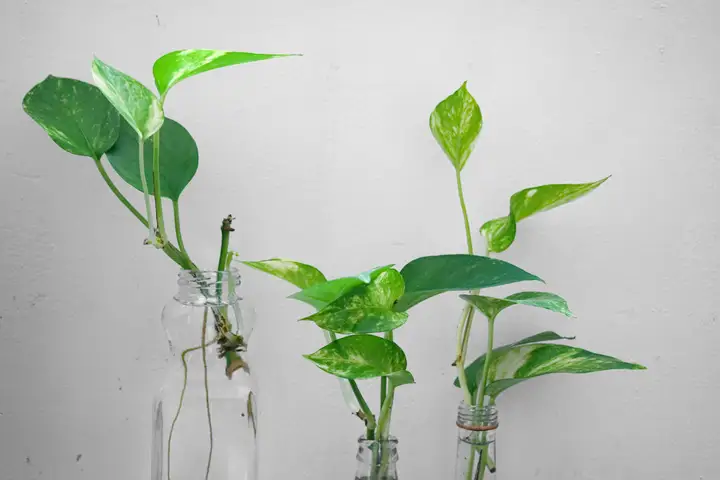
Philodendron and pothos (Epipremnum aureum) are the two most-mislabeled plants in the houseplant trade. They look nearly identical: heart-shaped leaves, climbing or trailing growth habit, similar care needs, similar size. Plant stores routinely mislabel them. Even experienced houseplant collectors can get them confused.
The good news: the cat-safety answer is the same for both. Both are in the Araceae family. Both contain insoluble calcium oxalate crystals. Both produce the same oral and GI signs in cats. The triage, the calibrated severity, and the “VERY rare” airway-swelling caveat all apply equally.
If you want to identify which plant you have:
- Aerial roots: philodendrons typically have prominent aerial roots growing from the nodes. Pothos has them too but they’re smaller and less obvious.
- Leaf texture: pothos leaves have a slight ridge or texture on the surface. Philodendron leaves are smoother and often more matte.
- New leaf color: philodendron new leaves are usually a copper or pink-brown color before turning green. Pothos new leaves emerge already green.
- Cataphylls: philodendrons grow new leaves wrapped in a thin protective sheath (cataphyll) that dries up and falls off. Pothos does not.
If you want a clean side-by-side, our pothos guide covers the species-specific detail. But again, the cat-safety answer is the same. Don’t drive yourself crazy on identification when both plants need the same handling.
The philodendron varieties that exist in the houseplant trade
Philodendron is a large genus (the ASPCA recognizes at least two separate database entries for different species), and the houseplant industry has bred dozens of cultivars with different leaf shapes and colors. The toxin is consistent across all of them.
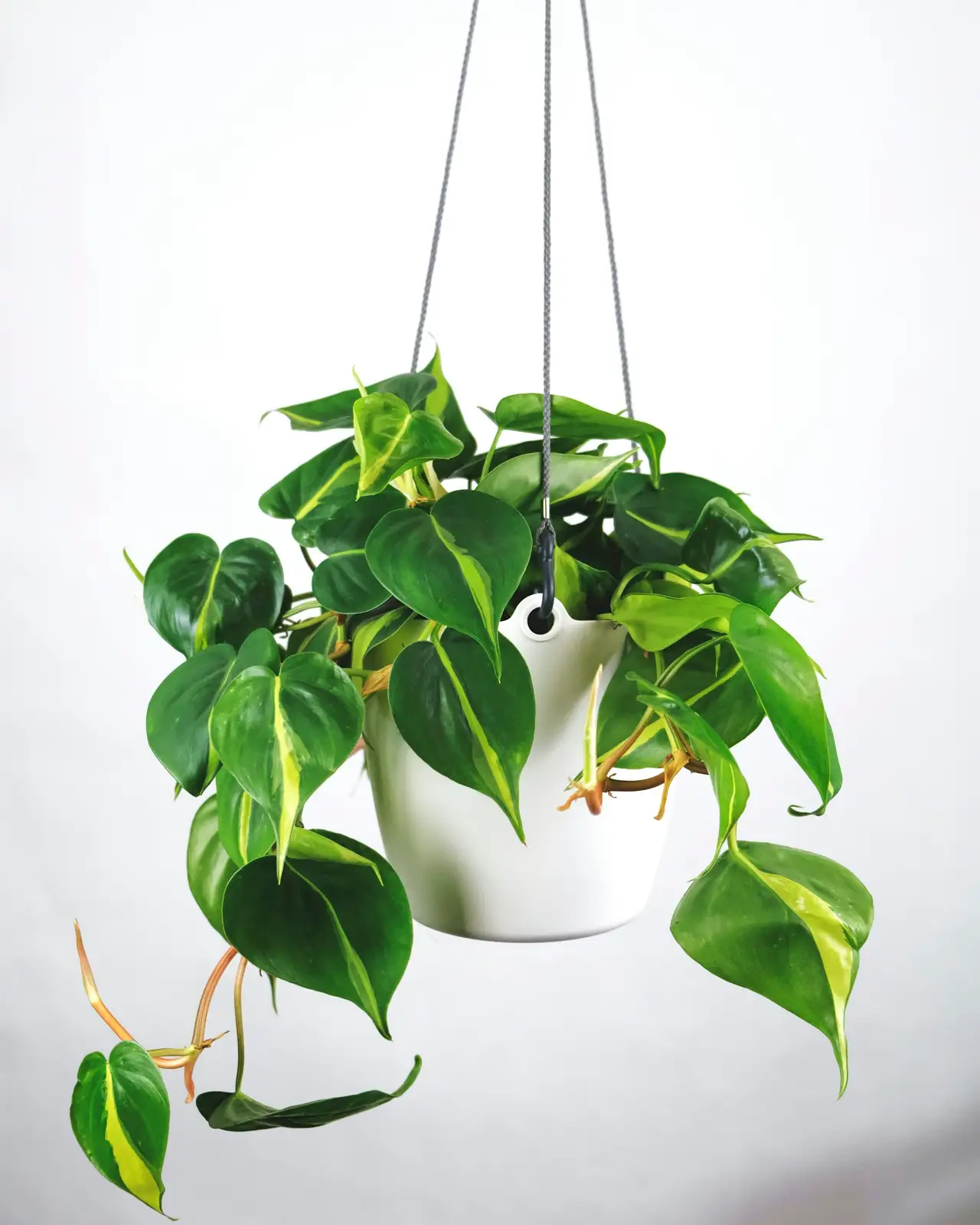
Heartleaf Philodendron (Philodendron hederaceum, also called Cordatum or Sweetheart Plant): the most common philodendron in homes. Vines with heart-shaped green leaves 2 to 4 inches long. The ASPCA’s Heartleaf Philodendron entry covers this species.
Split-Leaf Philodendron (Philodendron bipennifolium, sometimes sold as P. bipinnatifidum): the climbing or self-heading philodendron with deeply lobed mature leaves. ASPCA classifies this as a separate entry but with the same toxin and similar symptoms. Note: “Split-Leaf Philodendron” is also a common (incorrect) name for Monstera deliciosa, which is a different plant in the same family and which we cover in our monstera guide; if you keep one anyway, our monstera plant care guide includes the pet-placement approach.
Philodendron Brasil: a variegated cultivar of P. hederaceum with yellow-green stripes down the center of heart-shaped leaves. Same toxicity profile as plain Heartleaf.
Philodendron Micans: another P. hederaceum cultivar with velvety, iridescent dark leaves.
Philodendron Birkin: a recent introduction (registered cultivar, Philodendron ‘Birkin’) with white pinstriped leaves on a self-heading form.
Philodendron Pink Princess: a highly variegated cultivar with pink and dark green leaves. Same calcium oxalate, same toxicity.
Philodendron Moonlight, Prince of Orange, Florida Ghost, Lemon Lime: hybrid cultivars in various leaf colors. All the same toxin.
Elephant Ear Philodendron (Philodendron domesticum): large arrow-shaped leaves. Same toxin.
Tree Philodendron (Thaumatophyllum bipinnatifidum, formerly Philodendron bipinnatifidum or P. selloum): the large, deeply-cut leafed floor plant. Same toxin per ASPCA’s Saddle-Leaf entry.
The cultivar collecting hobby is real, and rare philodendron cultivars can cost hundreds of dollars. None of this changes the cat-safety answer. Treat every philodendron as toxic.
Are philodendrons poisonous to dogs?
Yes, with the same mechanism. The ASPCA classifies philodendrons as toxic to dogs, cats, and horses, all via insoluble calcium oxalate crystals. Iowa State Extension explicitly notes “toxic to humans, dogs, cats, and other animals.”
Dogs are more likely than cats to eat a large quantity in one go (dogs eat indiscriminately; cats nibble). A small dog or puppy that eats multiple leaves at once is more likely to need a vet call for hydration support if vomiting and diarrhea are persistent. The per-bite toxicity is the same.
Same triage thresholds as for cats: persistent vomiting past 24 hours, breathing or gum-color symptoms, dehydration risk, or any symptoms in puppies, seniors, or dogs with pre-existing conditions.
How to keep cats away from philodendrons
You can keep philodendrons in a home with cats. The toxicity is mild for typical exposures, and basic placement strategies work well for the trailing/climbing growth habit.
- Hanging planters are excellent for philodendrons. Trailing philodendron from a ceiling hook (genuinely out of jumping range, not on a low shelf “high spot”) is one of the cleaner solutions in the houseplant trade. Just make sure the trailing vines stay above cat-jumping height.
- Closed rooms work. A sunroom, office, or guest bedroom that the cat doesn’t access freely. Philodendrons are forgiving plants and tolerate moderate light, so they can live in less-trafficked rooms.
- Decoy chew targets. A small pot of cat grass on the floor gives cats a safe, designated chew target. This is the single most effective redirect for plant-chewing cats.
- Citrus-scented deterrents on the soil surface (not on the leaves) discourage approach. Cats dislike citrus.
- Motion-activated air canisters (brands like Ssscat, StayAway, and Sensor Egg) are mentioned in Figo’s Dr. Lee Pickett’s Q&A. They hiss a brief burst of compressed air when motion is detected and are very effective at training cats to avoid a specific area or plant.
- Keep the lower leaves and aerial roots tucked. Trailing growth tends to hang low; periodic tuck-ups or wrapping around the pot keeps the accessible bite-target small.
The aesthetic position: you don’t have to give up philodendrons because of mild toxicity. Lilies are the plant you actually have to ban from a cat household. Philodendrons are not in that category.
Cat-safe houseplant alternatives that look like philodendron
If you want the trailing-vine, heart-shaped-leaf look without the toxicity, our cat-safe plants pillar lists 22 ASPCA-verified options. The closest visual substitutes for philodendron:
- Spider Plant (Chlorophytum comosum): not heart-shaped but trails beautifully. ASPCA classifies as non-toxic to cats and dogs. Covered in detail in our spider plant guide.
- Burro’s Tail (Sedum morganianum): a trailing succulent with chunky leaves. ASPCA non-toxic.
- String of Hearts (Ceropegia woodii): heart-shaped leaves on thin trailing vines. ASPCA non-toxic to cats per their database (verify with our pillar before swapping).
- Hoya carnosa (Wax Plant): waxy leaves, trailing or climbing. ASPCA non-toxic.
- Boston Fern (Nephrolepis exaltata): not trailing the same way, but a non-toxic option that fills a similar visual niche of “lush green hanging plant.” Our fern guide covers which ferns are safe and which fern-named plants to avoid.
What to skip
Things you can stop doing if you’ve absorbed information from the panic side of the internet:
- Calling the ER for a single chewed leaf with no symptoms. Most philodendron ingestions resolve at home. PPH’s “VERY rare” framing for airway swelling is the calibration.
- Inducing vomiting at home. The damage is local; inducing vomiting risks re-traumatizing already-irritated tissue. Both PetMD and our other Araceae articles agree.
- Giving activated charcoal at home. Not indicated for calcium oxalate mechanical irritation; dosing without vet guidance risks aspiration pneumonia.
- Removing all philodendrons from your home permanently. Some pet-content sites push toward this. The veterinary consensus does not support it. Manage placement instead.
- Treating “Pink Princess” or “Birkin” as more toxic than plain heartleaf. They aren’t. Variegation does not change the toxin content.
- Confusing philodendron with true lilies. Lilies cause acute kidney failure within 24 to 72 hours and are a real emergency. Philodendrons cause an irritated mouth. They are not in the same category. See our lily emergency guide for the lily-specific protocol.
- Forcing milk on a cat with an irritated mouth. Some traditional advice suggests milk to bind crystals, but most adult cats are lactose-intolerant. If your cat tolerates it, a small amount is fine. If you don’t know, skip it; plain water and time work as well.
FAQ
What part of the philodendron is most toxic to cats?
All parts of the philodendron plant contain insoluble calcium oxalate crystals: leaves, stems, roots, and sap. The leaves are the most-chewed part because of accessibility, but no part is safe. ASPCA classifies the whole plant as toxic to cats, dogs, and horses.
How long do philodendron poisoning symptoms last in cats?
Most cases resolve within 12 to 24 hours with supportive care at home. The intense oral irritation peaks within the first hour and fades. Vomiting, if it occurs, is usually one or two episodes. If symptoms persist past 24 hours or your cat shows breathing difficulty, call your vet or Pet Poison Helpline at 855-764-7661.
Is heartleaf philodendron more toxic than split-leaf philodendron?
No. ASPCA classifies both as toxic via the same mechanism (insoluble calcium oxalates). The Heartleaf Philodendron (Philodendron hederaceum) and Split Leaf Philodendron (Philodendron bipennifolium) have separate ASPCA database entries with identical toxin profiles and similar symptom lists. Treat all philodendron species the same for cat safety.
Will my cat die from eating a philodendron?
Almost never. The Pet Poison Helpline notes that severe airway swelling occurs VERY rarely. Most cats experience oral irritation, drooling, and possibly one or two episodes of vomiting, then recover at home within 12 to 24 hours. The deadly plant in this category is true lilies, not philodendrons.
Are philodendrons toxic to dogs?
Yes. The ASPCA classifies philodendrons as toxic to dogs, cats, and horses. Same toxin (insoluble calcium oxalate), same symptom profile. Dogs may eat larger quantities in one go due to indiscriminate eating habits, but the per-bite toxicity is the same.
What’s the difference between philodendron and pothos toxicity?
There is no meaningful difference. Both are in the Araceae family, both contain insoluble calcium oxalate crystals, both produce the same oral irritation and GI signs in cats. Pothos is Epipremnum aureum; philodendron is the Philodendron genus. The two plants are commonly mislabeled in the houseplant trade because they look nearly identical, and the calibrated cat-safety response is identical too.
Are rare philodendron cultivars (Pink Princess, Birkin, Brasil) also toxic?
Yes. Pink Princess Philodendron, Philodendron Birkin, Philodendron Brasil, Micans, Moonlight, Prince of Orange, and Florida Ghost are all cultivars within the Philodendron genus. They share the same calcium oxalate chemistry and the same toxicity profile. Variegation and rarity do not change the toxin content.
The takeaway
Philodendron is toxic to cats, but the toxicity is mild for typical exposures, and the airway-swelling cases that pet-content sites sometimes lead with are “VERY rare” per Pet Poison Helpline’s own wording. If your cat just chewed a philodendron leaf, monitor for 12 to 24 hours, watch for the rare breathing-difficulty signs, and call your vet if anything escalates. Most cats are back to normal by morning.
If you want a cat-safe alternative that gives you the trailing-green-leaves look, our cat-safe plants pillar lists 22 ASPCA-verified options. For the Araceae-family siblings of philodendron, our pothos guide, peace lily guide, and monstera guide cover the same calcium oxalate mechanism with each plant’s specific quirks. The calibrated response is identical across all four.
Emergency phone numbers
Keep these visible in any cat household:
- ASPCA Animal Poison Control: (888) 426-4435 (a consultation fee may apply)
- Pet Poison Helpline: (855) 764-7661 (a consultation fee applies)
Both lines are open 24/7 and staffed by veterinary toxicologists.
Sources cited
- ASPCA. Heartleaf Philodendron - Toxic and Non-toxic Plants. Verified May 25, 2026.
- ASPCA. Split Leaf Philodendron - Toxic and Non-toxic Plants. Verified May 25, 2026.
- Pet Poison Helpline. Philodendron Are Toxic To Pets. Verified May 25, 2026.
- Iowa State University Extension. Are philodendrons poisonous?. Steil, A. (Consumer Horticulture Extension Specialist), March 19, 2024. Verified May 25, 2026.
- Figo Pet Insurance. Philodendron toxic to cats. Pickett, L., V.M.D., January 22, 2019. Verified May 25, 2026.