If you just brought home a Cebu Blue pothos, or your cat just chewed one, here is the short version: yes, Cebu Blue pothos is toxic to cats, but it is the ordinary, manageable kind of toxic, not the emergency kind. Is Cebu Blue pothos toxic to cats in some special way the regular green pothos is not? No. It is the same genus, the same toxin, and the same mild-to-moderate reaction. The same goes for the satin and silver pothos that get sold under the “pothos” name but are actually a different plant entirely.
This guide does what the generic “are pothos toxic to cats” pages skip: it sorts out which “pothos” you actually own, because the name covers at least three different plants across two genera, all toxic to cats by the exact same mechanism. Every toxicity claim here is sourced to the ASPCA.
TL;DR
- Cebu Blue pothos (Epipremnum pinnatum) is toxic to cats. It is the same genus as regular golden pothos and carries the same insoluble calcium oxalate crystals.
- Satin and silver pothos (Scindapsus pictus) are also toxic to cats, per the ASPCA, even though they are a different genus. Same toxin, same reaction.
- All “pothos” are toxic to cats the same way: oral irritation, drooling, pawing at the mouth, sometimes vomiting. It hurts but is rarely serious.
- There is no special Cebu Blue or Scindapsus danger. Whatever pothos you own, the safety answer is identical.
- Recovery is usually 12 to 24 hours. Rare exception: swelling that affects breathing, which needs an urgent vet.
- You can keep pothos with a cat. Hang it, place it out of reach, and redirect chewing to cat grass. No need to rehome it.
- If your cat ate pothos and signs are strong: call your vet, ASPCA Animal Poison Control (888-426-4435), or Pet Poison Helpline (855-764-7661).
Is Cebu Blue pothos toxic to cats? The short answer
Yes. Cebu Blue pothos is a variety of Epipremnum pinnatum, the same genus (Epipremnum) as the common golden pothos, and it contains the same toxic principle: insoluble calcium oxalate crystals. The ASPCA classifies golden pothos (Epipremnum aureum) as toxic to cats and dogs because of these crystals, and Cebu Blue, as a close botanical cousin in the same genus, carries them too.
One honest note on sourcing, because precision is the point of this page. The ASPCA’s database lists “Golden Pothos” (Epipremnum aureum) by name; it does not have a separate entry titled “Cebu Blue” or “Epipremnum pinnatum.” That does not make Cebu Blue safe. It is the same genus and the same calcium oxalate toxin, so it is toxic to cats by the same mechanism. Any source telling you Cebu Blue is cat-safe is wrong.
The reassuring part: this is the mild-to-moderate kind of toxic. A cat that chews Cebu Blue gets an irritated, painful mouth, not organ damage. We go deep on the mechanism and the calibrated risk in our main guide to whether pothos is toxic to cats; everything there applies to Cebu Blue.
Which “pothos” do you actually have?
This is where every generic page falls down, and where it actually matters, because “pothos” is a common name shared by plants in two different genera. Here is the quick map. The good news for a worried cat owner: the safety answer is the same for all of them.
| Common name | Botanical name | Genus | Toxic to cats? | ASPCA-listed by name? |
|---|---|---|---|---|
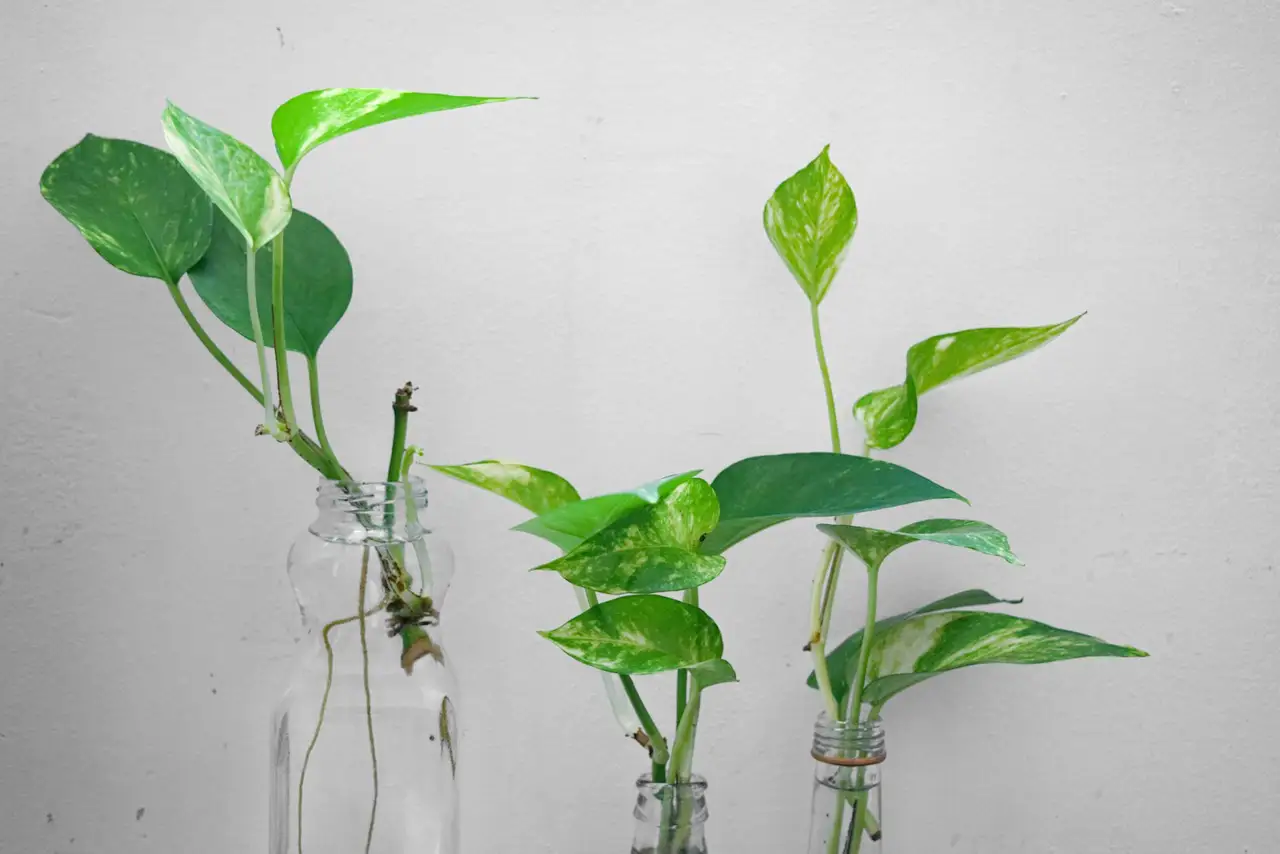
| Golden Pothos (Devil’s Ivy) | Epipremnum aureum | Epipremnum | Yes | Yes (Golden Pothos) |
| Cebu Blue Pothos | Epipremnum pinnatum | Epipremnum | Yes | No (same genus as Golden) |
| Marble Queen, Neon, Manjula, Pearls and Jade | Epipremnum aureum cultivars | Epipremnum | Yes | Via Golden Pothos |
| Satin Pothos / Silver Pothos | Scindapsus pictus | Scindapsus | Yes | Yes (Satin Pothos) |
Golden Pothos (Epipremnum aureum)
The classic, the one most people mean by “pothos,” also sold as Devil’s Ivy. The ASPCA lists it under its additional common names Pothos, Devil’s Ivy, Taro Vine, and Ivy Arum. Toxic to cats via insoluble calcium oxalate. This is the parent plant our main pothos and cats guide covers in full.
Cebu Blue Pothos (Epipremnum pinnatum)
The collector favorite with elongated, silvery blue-green leaves that develop natural splits (fenestrations) as the plant matures. It is a true Epipremnum, the same genus as golden pothos, and it carries the same calcium oxalate toxin. Toxic to cats. The blue color and the higher price tag change nothing about the safety profile.
Satin / Silver Pothos (Scindapsus pictus, a different genus)
Here is the one that trips people up. The “satin pothos” or “silver pothos,” with its velvety dark leaves splashed in silver, is not a true pothos at all. It is Scindapsus pictus, a different genus. But the ASPCA lists Satin Pothos (Scindapsus pictus) as toxic to dogs, cats, and horses, with the same insoluble calcium oxalate toxic principle and signs that include oral irritation, pain and swelling of the mouth, drooling, and vomiting. Different genus, identical safety answer: toxic.
Marble Queen, Neon, Manjula, Pearls and Jade
These trendy variegated and colored “pothos” are cultivars of Epipremnum aureum, the golden pothos. Variegation is about leaf color and pattern, not chemistry. They all contain the same calcium oxalate crystals and are all toxic to cats. There is no cat-safe pothos cultivar.
Why every pothos is toxic to cats: insoluble calcium oxalate crystals
All of these plants belong to the Araceae family, and they share one defense: bundles of microscopic, needle-shaped calcium oxalate crystals packed throughout the leaves and stems. When a cat bites into the tissue, the pressure releases the crystals, which then embed in the soft lining of the mouth, tongue, and throat.
The reaction is immediate and physical, like a mouthful of tiny glass splinters. That is why the symptoms are oral and fast rather than delayed and systemic, and it is why the pain itself usually stops a cat from eating very much.
This is the exact same toxin family found across our most-asked-about houseplants. If you have read our guides on whether philodendron is toxic to cats, monstera is toxic to cats, or peace lily is toxic to cats, the mechanism is identical. The plant changes; the calcium oxalate does not.
Symptoms of pothos poisoning in cats
Signs usually appear within minutes of chewing, because the crystals act on contact. Watch for:
- Pawing at the mouth or face
- Drooling, sometimes heavily
- Oral pain, head-shaking, or foaming
- Vomiting, usually within a couple of hours
- Reduced appetite or reluctance to eat
- Possible mild diarrhea
The rare but serious sign to take seriously: swelling of the mouth, tongue, or throat that makes swallowing or breathing difficult. This is uncommon, but it is the reason you do not simply ignore a pothos ingestion. If your cat’s face swells or it struggles to breathe, treat it as an emergency.
How dangerous is it, really?
Calibrated answer: usually mildly, occasionally moderately, rarely seriously.
The realistic outcome for a cat that chews a Cebu Blue or satin pothos leaf is a few hours of mouth discomfort, drooling, and maybe one or two episodes of vomiting, then a full recovery within 12 to 24 hours. Because the crystals hurt on contact, most cats spit the plant out fast and never consume enough to cause a bigger problem.
Pothos does not cause kidney failure the way true lilies do, and it does not cause organ damage. It is a painful houseplant, not an organ-threatening one. The job is to manage access and to know the rare airway-swelling sign, not to panic over a chewed leaf.
What to do if your cat ate Cebu Blue or satin pothos
Work the steps calmly. Most cases end fine.
- Remove the plant and any pieces from your cat’s mouth and clear the rest out of reach.
- Rinse the mouth gently. Offer water or wipe the gums with a damp cloth to flush out loose crystals. Something cool to lick can ease the burning.
- Check for the serious signs. Look for facial or mouth swelling and any trouble swallowing or breathing. If you see those, go to a vet now.
- Call a professional if signs are strong or you are unsure. Reach your veterinarian, ASPCA Animal Poison Control (888-426-4435), or Pet Poison Helpline (855-764-7661). The poison control lines are staffed around the clock.
- Do not induce vomiting at home. With an oral irritant, making a cat vomit can re-expose the throat to crystals, and at-home methods used for dogs are not safe for cats. Call first.
- Note the time and amount. When it happened and roughly how much was eaten helps your vet judge how closely to monitor.
At a clinic, care is usually supportive: rinsing, pain relief, anti-nausea medication if there is vomiting, and monitoring. For the rare swelling case, the vet manages the airway and inflammation directly. Most cats go home the same day.
Can you keep pothos if you have a cat?
Yes. This is the question behind most pothos searches, and the answer is reassuring: you do not have to give up your Cebu Blue or your satin pothos. You have to make them un-chewable.
- Hang them or shelve them high. Pothos are trailing vines, which is exactly what makes them tempting (dangling leaves look like prey) and also what makes them easy to put out of reach. A ceiling hook or a high shelf solves most of the problem.
- Sweep up dropped leaves. A fallen leaf on the floor is just as capable of causing mouth irritation as one on the plant.
- Redirect the chewing. Give your cat its own pot of cat grass so the urge to nibble greenery has a safe target.
- Audit the rest of your shelf. For the full set of placement and deterrent tactics, see our guide on how to keep cats away from plants, and if you want greenery you never have to think about, our list of cat-safe plants is the place to start.
What to skip
- Skip the rehoming panic. Pothos is mild-to-moderate, not a true-lily emergency. Out of reach is enough; you do not need to get rid of the plant.
- Skip the “this cultivar is safe” claims. There is no cat-safe pothos. Golden, Cebu Blue, marble queen, neon, satin, silver, all toxic by the same calcium oxalate. A source that says otherwise is wrong.
- Skip assuming satin pothos is fine because it is “not a real pothos.” It is a different genus (Scindapsus), but the ASPCA lists it as toxic with the same toxin. The botany is different; the danger is the same.
- Skip essential-oil or coffee-ground deterrent sprays. Several popular DIY repellents are themselves unsafe for cats. Use placement instead (covered in our deterrent guide above).
Frequently asked questions
Is Cebu Blue pothos toxic to cats?
Yes. Cebu Blue pothos (Epipremnum pinnatum) is toxic to cats. It is the same genus as regular golden pothos and contains the same insoluble calcium oxalate crystals, which cause oral irritation, drooling, and vomiting when a cat chews it. There is no special Cebu Blue danger; it is the same mild-to-moderate toxicity as any other pothos, and serious cases are rare.
Is Scindapsus (satin or silver pothos) toxic to cats?
Yes. Satin pothos and silver pothos are both Scindapsus pictus, which the ASPCA lists as toxic to cats, dogs, and horses. Despite being a different genus from true pothos (Epipremnum), it contains the same insoluble calcium oxalate crystals and causes the same oral irritation, pain and swelling of the mouth, drooling, and vomiting. Treat it exactly like any other pothos around cats.
What happens if a cat eats Cebu Blue pothos?
The calcium oxalate crystals release on chewing and embed in the soft tissue of the mouth and throat, causing immediate burning, pawing at the mouth, drooling, and sometimes vomiting. The pain usually starts within minutes and is self-limiting, which tends to stop a cat from eating much. Most cats recover within 12 to 24 hours. Rarely, swelling in the mouth or throat can make breathing difficult, which is the one scenario that needs an urgent vet.
Can I keep pothos if I have a cat?
Yes, with placement. Pothos is toxic but rarely an emergency, so you do not have to rehome it the way you would a true lily. Hang it or set it on a high shelf where your cat cannot reach the trailing vines, sweep up dropped leaves, and give your cat its own cat grass to redirect the urge to chew. The goal is no access, not no plant.
How long does pothos toxicity last in cats?
Usually 12 to 24 hours. Because calcium oxalate causes contact irritation rather than systemic poisoning, the mouth discomfort and any vomiting tend to resolve within a day as the irritation fades. If symptoms persist beyond 24 hours, worsen, or your cat will not eat or drink, call your veterinarian.
The bottom line
Whatever pothos you own, the answer is the same: toxic to cats, but the manageable kind. Cebu Blue is a true Epipremnum with the same calcium oxalate as ordinary golden pothos. Satin and silver pothos are a different genus (Scindapsus), but the ASPCA lists them as toxic with the identical toxin. None of them cause organ damage, all of them cause a painful mouth that clears within a day, and every one of them is easy to live with once it is hanging out of your cat’s reach. Identify your plant, place it high, and you can keep the collection and the cat.
Emergency numbers, save them now: ASPCA Animal Poison Control 888-426-4435 and Pet Poison Helpline 855-764-7661. Both are staffed 24/7 by veterinary toxicology experts. A consultation fee may apply, and it is worth it.
Sources: ASPCA Toxic Plants, Golden Pothos (Epipremnum aureum) | ASPCA Toxic Plants, Satin Pothos (Scindapsus pictus)