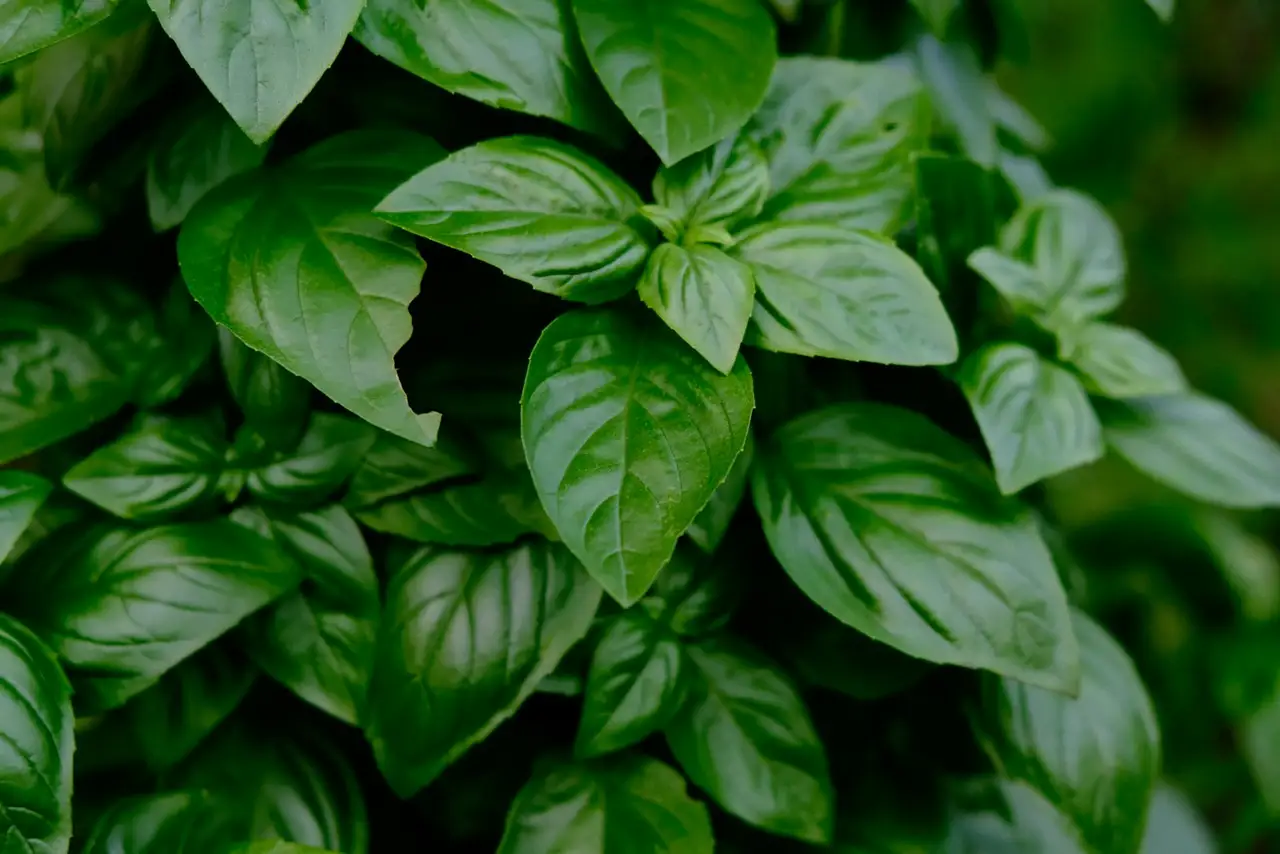
If your cat keeps sniffing the basil on your windowsill, or you just caught it chewing a leaf, you can relax. Is basil safe for cats? Yes. The ASPCA classifies basil as non-toxic to cats, leaves and all, and a curious nibble is a non-event. The only real caveat is the difference between the plant (safe) and concentrated basil essential oil (not safe), which is a distinction worth understanding.
This guide gives you the confident answer with its source, then goes where the thin “yes it’s fine” pages do not: which herbs on your spice rack are actually dangerous, why your cat is drawn to basil in the first place, and how to grow a windowsill herb garden you never have to worry about. Every safety claim here is sourced to the ASPCA.
TL;DR
- Basil is safe for cats. The ASPCA lists basil (Ocimum basilicum), including sweet and Thai basil, as non-toxic to cats and dogs.
- The leaves are fine to sniff, chew, or nibble. Eating a large amount may cause mild, brief stomach upset, as any plant can, but that is the worst of it.
- Basil essential oil is NOT safe. Concentrated oils are a different thing from the plant; keep them away from cats.
- The herbs to avoid are the Allium family: garlic, onion, chives, leeks. The ASPCA classifies these as toxic to cats.
- Rinse store-bought basil before your cat has access; pesticide residue is a bigger real-world concern than the basil.
- Basil is not catnip. Cats are drawn to its smell and texture, not a catnip-style response.
Is basil safe for cats? The short answer
Yes. The ASPCA classifies basil (Ocimum basilicum) as non-toxic to cats and dogs, and that listing covers the common kitchen varieties, including sweet basil and Thai basil. A cat can chew a leaf, brush against the plant, or sit next to a pot of basil with no risk of poisoning.
| Basil and cats | At a glance |
|---|---|
| Safe for cats? | Yes, non-toxic per the ASPCA |
| Scientific name | Ocimum basilicum (family Lamiaceae) |
| Covers | Sweet basil, Thai basil, and other culinary basils |
| Risk from the leaves | None toxic; large amounts may cause mild GI upset |
| The one caution | Concentrated basil essential oil (keep away from cats) |
| Is it catnip? | No, basil contains no nepetalactone |
The honest calibration, which we apply to every plant: non-toxic does not mean a cat should eat a whole pot of it. Any plant in large quantity can cause a temporary upset stomach because it is not part of a cat’s diet. But a nibble of basil is genuinely nothing to worry about.
Why basil is safe: what the ASPCA says
The ASPCA’s Animal Poison Control Center maintains the standard database of which plants are toxic and non-toxic to pets, and basil sits cleanly in the non-toxic column for both cats and dogs. There are no toxic principles listed because there is no toxin to list. Basil does not contain calcium oxalate crystals (the irritant in pothos and peace lily), no cardiac glycosides, and nothing that harms a cat’s organs.
That is different from “toxic but mild” plants like tulips or chrysanthemums, which are on the toxic list and cause stomach upset on purpose. Basil is simply safe. The only way basil causes a problem is the same way lettuce would: a cat that gorges on any plant material may vomit it back up, and that is a volume issue, not a toxicity one.
Can cats eat basil, and should they?
Cats can eat basil, and a small amount is harmless. Should they? It is neither necessary nor particularly beneficial. Cats are obligate carnivores, so basil offers them no real nutritional value, but it does no harm either, and some cats simply enjoy chewing greenery.
The one practical thing to manage is not the basil, it is what is on it. Store-bought basil and outdoor garden basil can carry pesticide or fertilizer residue, which is a more realistic hazard than the herb itself. Rinse basil before it is within your cat’s reach, and if you grow your own, skip the chemical sprays. Home-grown, unsprayed basil is the safest form.
If your cat is a determined plant-chewer, basil is a fine thing for it to chew, but the better long-term answer is to give it a dedicated chewing plant. Our complete cat grass guide covers the cereal grasses cats are designed to nibble, which redirects the urge away from your other houseplants.
Which herbs are safe for cats, and which are not
Basil is safe, but “is this herb safe” is the question people really mean to ask, and the answer is not uniform. Here is the calibrated, ASPCA-sourced breakdown of the common kitchen herbs.
| Herb | Safe for cats? | Per the ASPCA |
|---|---|---|
| Basil (Ocimum basilicum) | Yes | Non-toxic to cats and dogs |
| Rosemary (Rosmarinus officinalis) | Yes | Non-toxic to cats and dogs |
| Thyme (Thymus vulgaris) | Yes | Non-toxic to cats and dogs |
| Sage, dill, cilantro | Generally yes | Commonly listed non-toxic; confirm the species |
| Garlic (Allium) | No, toxic | Toxic to cats: damages red blood cells |
| Chives (Allium schoenoprasum) | No, toxic | Toxic to cats |
| Onion, leeks (Allium) | No, toxic | Same Allium family; cause anemia |
The pattern worth memorizing: the leafy culinary herbs (basil, rosemary, thyme) are safe; the Allium family (garlic, onion, chives, leeks) is toxic. The ASPCA lists garlic’s toxic principle as N-propyl disulfide, which breaks down a cat’s red blood cells and can cause anemia (vomiting, blood in the urine, weakness). This is why a sprig of basil is fine but a clove of garlic is genuinely dangerous, and it is the single most important thing to know about herbs and cats.
For sage, dill, and cilantro, the common consensus is non-toxic, but if you want certainty, check the scientific name against the ASPCA database, because common names overlap across species.
One fragrant herb to treat differently is lavender. Unlike the leafy culinary herbs above, lavender is mildly toxic to cats per the ASPCA, and its concentrated essential oil is a genuine concern, so it does not belong in a cat-accessible herb garden.
Basil leaves vs basil essential oil
This is the distinction that catches people out, and it matters. The basil plant is safe; concentrated basil essential oil is not.
Essential oils are extracted and concentrated to many times the potency of the plant, and cats are uniquely vulnerable to them because they lack an efficient liver pathway (glucuronidation) to clear the compounds. The ASPCA is clear that concentrated essential oils can be a danger to cats, whether ingested or absorbed through the skin or coat. That applies to basil oil just as it does to tea tree, eucalyptus, peppermint, and citrus oils.
So enjoy your basil plant, cook with the leaves, let your cat sniff the pot. Just keep basil essential oil, herb-oil blends, and diffusers out of your cat’s reach and out of rooms your cat cannot leave. The leaf and the oil are not the same risk.
Why is my cat obsessed with basil?
If your cat seems weirdly drawn to your basil, sniffing it, rubbing it, chewing a leaf, that is normal, and it is not a catnip reaction.
Basil contains aromatic compounds that some cats find interesting, and the soft, chewable leaves appeal to a cat’s instinct to nibble greenery. But basil is not catnip. Catnip (Nepeta cataria) works through a specific compound, nepetalactone, that triggers the rolling, drooling, blissed-out response in roughly two-thirds of cats. Basil has none of that. Your cat is enjoying a smell and a texture, not getting high.
If the chewing is the part you want to manage (for the basil’s sake, not the cat’s), the fix is the same as for any plant: give the cat its own greenery. A pot of cat grass next to the herbs usually wins the cat’s attention. Our guide on how to keep cats away from plants covers the placement and redirection tactics that actually work, and which deterrents to skip.
Growing a cat-safe herb garden
A windowsill herb garden and a cat coexist easily, and basil is one of the best plants to anchor it. A few principles keep it genuinely safe:
- Build it from non-toxic herbs: basil, rosemary, and thyme are the reliable, ASPCA-verified safe trio. Add sage, dill, or cilantro if you like.
- Keep the Alliums out, or out of reach. If you grow chives, garlic, or onion, put those well away from where your cat browses, because those are the toxic ones.
- Skip the chemical sprays. Grow without pesticides so a nibbling cat is not exposed to residue. This is better for your cooking too.
- Give the cat a yes-plant. A tray of cat grass beside the herbs satisfies the chewing urge and keeps the cat off the basil you want for pesto.
For a broader set of greenery that is safe across the board, our roundup of cat-safe plants vetted against the ASPCA list and our spider plant and cats guide cover the houseplants that pair safely with a cat.
What to skip
- Skip the worry about the basil plant. It is non-toxic, full stop. A chewed leaf needs no action.
- Skip basil essential oil around cats. This is the one real caution, and it is easy to honor: the plant yes, the concentrated oil no.
- Skip the Allium herbs near a browsing cat. Garlic, onion, chives, and leeks are the genuinely dangerous ones on the herb rack.
- Skip feeding basil as a “supplement.” It offers cats no nutritional benefit, so there is no reason to add it to their food. Let them nibble if they want; do not make it a diet item.
Frequently asked questions
Are basil leaves poisonous to cats?
No. Basil leaves are not poisonous to cats. The ASPCA classifies basil (Ocimum basilicum), including sweet basil and Thai basil, as non-toxic to cats and dogs. A cat can nibble, chew, or brush against basil leaves without harm. The only caveat is that eating a large amount of any plant can cause mild, temporary stomach upset, simply because it is not part of a cat’s normal diet.
Is basil like catnip for cats?
No. Basil is not catnip and does not produce the catnip response. Catnip (Nepeta cataria) contains nepetalactone, the compound that triggers rolling, drooling, and euphoria in about two-thirds of cats. Basil contains no nepetalactone. A cat that sniffs or chews basil is responding to the smell and the texture, not getting a catnip-style high.
Which herbs are not safe for cats?
The culinary herbs to keep away from cats are the Allium family: garlic, onion, chives, and leeks. The ASPCA classifies garlic and chives as toxic to cats, because their N-propyl disulfide can damage red blood cells and cause anemia. The other thing to avoid is concentrated essential oils of any herb (including basil oil), which are far more potent than the plant and can be dangerous to cats. The fresh leafy herbs (basil, rosemary, thyme, sage, dill, cilantro) are generally non-toxic.
Is basil essential oil safe for cats?
No. Basil essential oil is not safe for cats, even though the basil plant is. Essential oils are highly concentrated, and the ASPCA warns that concentrated essential oils can be toxic to cats, who lack the liver pathway to clear them efficiently. Keep basil oil, diffusers, and any concentrated herb oils away from cats. The fresh or dried leaf is the safe form.
Can cats eat fresh basil from the garden?
Yes. Fresh garden basil is safe for cats to nibble. The one practical caution is pesticides: rinse store-bought or garden basil before your cat (or you) has access to it, since pesticide and fertilizer residue is a more realistic concern than the basil itself. Home-grown basil without chemical sprays is the safest of all.
The bottom line
Basil is one of the easy ones: a non-toxic, cat-safe herb you can grow, cook with, and let your cat sniff without a second thought. Keep the concentrated essential oil away, keep the garlic and chives out of paw’s reach, rinse off any pesticides, and your windowsill herb garden and your cat can share the sunlight. If your cat loves chewing it, give it a pot of cat grass of its own and save the basil for your kitchen.
Sources: ASPCA, Basil (non-toxic to cats and dogs) | ASPCA, Garlic (toxic to cats) | ASPCA, The Essentials of Essential Oils Around Pets