Is hydrangea toxic to cats? Yes, but the answer most pet parents need is the calibration: the ASPCA classifies hydrangea as toxic to cats, dogs, and horses due to cyanogenic glycosides, and then writes one of the most reassuring sentences in the entire ASPCA toxic-plants database: “Cyanide intoxication is rare, usually produces more of a gastrointestinal disturbance.” If your cat just chewed on a hydrangea leaf in the garden, the most likely outcome is some drooling and an upset stomach, not a poisoning emergency.
This article gives you the calibrated answer, the actual mechanism (it’s the same chemistry as the cyanogenic compounds in apple seeds and almonds), the symptoms to actually watch for, and when to call the vet versus monitor at home.
The quick answer
Hydrangeas (Hydrangea arborescens, Hydrangea macrophylla, and other species in the Hydrangeaceae family) are toxic to cats but rarely cause serious cyanide poisoning. The toxic compounds are cyanogenic glycosides (amygdalin is the most-cited one), the same compound family found in apple seeds, pear seeds, almonds, and the pits of prunus fruits like cherries and peaches.
Most cats who chew a hydrangea leaf get drooling, mild GI upset, maybe one or two episodes of vomiting, and recover at home within 12 to 24 hours.
If your cat just ate hydrangea and you’re worried, the right call right now is:
- ASPCA Animal Poison Control: (888) 426-4435 (a consultation fee may apply)
- Pet Poison Helpline: (855) 764-7661 (a consultation fee applies)
Both lines are staffed by veterinary toxicologists. Do not induce vomiting at home.
TL;DR
- Toxic but rarely dangerous. ASPCA says cyanide intoxication is rare; typical signs are mild GI.
- Toxin family: cyanogenic glycosides, specifically amygdalin. Same compound family as apple seeds, pear seeds, almonds, prunus pits.
- Cats more sensitive than dogs due to smaller body size, but the mechanism is the same.
- All parts toxic, with highest concentrations in leaves and flowers (per PetMD).
- Most cases need monitoring, not the ER. Mild GI signs (drooling, vomiting, diarrhea, lethargy) resolve in 12 to 24 hours.
- Severe symptoms are rare but real: difficulty breathing, pale or blue gums, seizures, stiff limbs. These warrant emergency vet care.
- Do not induce vomiting at home. Both PetMD and GardeningKnowHow are explicit on this.
- Dried hydrangeas are still toxic. Drying does not break down amygdalin.
- Color does not predict toxicity. Blue, pink, white, lacecap, all carry the same risk.
- Same toxicity in dogs. ASPCA: toxic to dogs, cats, horses.
What ASPCA and Pet Poison Helpline actually say
The ASPCA hydrangea entry is brief and clear:
Scientific Name: Hydrangea arborescens Family: Hydrangeaceae Toxicity: Toxic to Dogs, Toxic to Cats, Toxic to Horses Toxic Principles: Cyanogenic glycoside Clinical Signs: Vomiting, depression, diarrhea. Cyanide intoxication is rare, usually produces more of a gastrointestinal disturbance.
That last sentence is the headline. Most veterinary toxicology agrees: hydrangea ingestion is much more likely to cause an upset stomach than systemic cyanide poisoning. PetMD’s vet-authored coverage, written by Dr. Barri J. Morrison, DVM, confirms: “severe toxicity is very rare, mild poisoning is common.” Dr. Tony Coronado, DVM, VP of Emergency Medicine at Thrive Pet Healthcare, is quoted: “Thankfully this severity of hydrangea poisoning is rare.”
The vet consensus is solid. The mismatch you’ll see in some content is between this calibrated science and the urgent-pet-blog framing that pushes readers toward unnecessary ER visits.
How hydrangea toxicity actually works (the amygdalin mechanism)
The relevant biochemistry is well-studied because the same toxin family appears in foods humans eat regularly:
- Amygdalin is a cyanogenic glycoside, meaning a sugar molecule bonded to a compound that can release hydrogen cyanide (HCN) when broken down.
- β-glucosidase is the enzyme that catalyzes that breakdown. Plants store amygdalin and β-glucosidase in separate cell compartments. When tissue is crushed or chewed, the enzyme contacts the glycoside, and small amounts of HCN are released.
- Hydrogen cyanide is the actively toxic compound. It interferes with cellular oxygen use at high doses, which is what produces the breathing-difficulty and pale-gums signs of true cyanide poisoning.
The dose matters more than the presence of the compound. The same chemistry happens in apple seeds, pear seeds, almonds, and the pits of prunus species (cherry, peach, apricot, plum). Humans eat apple slices around the core without consequence because the amygdalin in a few seeds is not a clinically meaningful dose. The same logic applies to a cat chewing a hydrangea leaf: detectable amygdalin, but rarely enough to cause systemic cyanide effects.
The GI signs come from local irritation in the mouth and gut, plus the cat’s reaction to a bitter foreign substance. The systemic cyanide effects only show up at much higher doses, which is why ASPCA can both classify hydrangea as toxic AND say cyanide intoxication is rare without contradicting itself.
Why “cyanogenic” sounds scarier than it is
Cyanide is one of the most-feared compounds in popular toxicology. The word triggers associations with murder mysteries, World War II espionage, and acute fatal poisoning. So when pet content mentions “cyanogenic glycosides,” readers naturally assume the worst.
The calibration that veterinary toxicology applies:
- Cyanogenic glycoside is not the same as free cyanide. It is a precursor that releases small amounts of HCN under the right enzymatic conditions.
- Dose makes the poison. A cat eating a single hydrangea leaf gets a tiny fraction of the dose needed to cause systemic toxicity.
- The body clears it. Mammals have enzymes (rhodanese, primarily) that convert small amounts of cyanide to thiocyanate, which is excreted. This is the same mechanism that lets humans eat apples and almonds safely.
- Cats are not unusually vulnerable to cyanide specifically. PetMD notes cats are more sensitive than dogs to hydrangea due to body size, not due to any special cyanide-handling deficiency.
This is why competent vet sources lead with “mild GI signs” and treat cyanide-intoxication symptoms as the rare-but-watch-for-it category. We are doing the same.
Symptoms to actually watch for
Drawing from ASPCA, PetMD’s vet author, and the symptom patterns at Garden State Vet Specialists and GardeningKnowHow:
Typical GI signs (within the first few hours)
- Drooling within 30 minutes of ingestion. The most common first sign.
- Lip-licking or pawing at the mouth from local irritation.
- One or two episodes of vomiting, usually within 1 to 3 hours.
- Mild diarrhea, less common but possible.
- Reduced appetite for the rest of the day.
- Lethargy or sleepiness for several hours (the “depression” ASPCA lists).
- Skin irritation if sap contacted skin or fur, especially in cats with sensitive skin.
Symptoms onset is typically about 30 minutes, per GardeningKnowHow. Most cats are visibly back to normal by the next morning.
The rare-but-real cyanide intoxication signs
Per PetMD’s vet author, these are the systemic cyanide signs that warrant emergency care, not home monitoring:
- Difficulty breathing or labored breathing
- Pale or blue gums (the classic cyanide-poisoning sign because the body cannot use oxygen)
- Stiff limbs or muscle stiffness
- Seizures
- Elevated heart rate
- Collapse or coma
If your cat shows any of these signs, do not call a phone line first. Go to the nearest emergency veterinary clinic. These are the genuine “time is of the essence” symptoms.
When to actually call the vet
For typical GI signs, here are the criteria where “monitor at home” turns into “call the vet”:
- Vomiting more than 3 to 4 times in a few hours, or vomiting that continues throughout the day.
- More than 2 to 3 bouts of diarrhea, or any blood in stool.
- Symptoms lasting longer than 24 hours.
- Lethargy that doesn’t improve with rest and water.
- A kitten, senior cat, or cat with pre-existing health conditions showing any symptoms.
- A cat who cannot keep water down, raising dehydration risk.
- Any breathing or gum-color symptoms. These are the cyanide-intoxication signs and warrant immediate emergency care.
What to do if your cat ate a hydrangea
Step by step, in the first 30 minutes:
- Don’t panic. Severe hydrangea poisoning is rare. The most likely outcome is mild GI upset.
- Gently remove any plant material from your cat’s mouth. Rinse with cool water if they cooperate.
- Move all hydrangeas out of reach. Includes potted plants, fresh-cut arrangements, and dried hydrangea wreaths.
- Wash off any sap from fur or paws. Cats groom, and topical sap becomes ingested sap.
- Offer fresh water. Hydration helps the body clear the toxin.
- Take a photo of the plant (or bring a leaf to the vet if you go). Plant identification helps if symptoms warrant treatment.
- Watch for 12 to 24 hours. Note the time of ingestion, the estimated quantity, and any symptoms as they appear.
- Do not induce vomiting at home. Both PetMD and GardeningKnowHow are explicit: hydrogen peroxide and other home protocols can cause more harm than they prevent for hydrangea toxicity. PetMD: “Do not induce vomiting at home for any possible poison ingestion without explicit direction from your vet to do so.”
- If breathing or gum-color symptoms appear, go to the emergency vet immediately. Don’t call first; drive.
Which part of the hydrangea is most toxic?
Per PetMD, the highest concentration of cyanogenic glycosides is in the leaves and flowers. The stems and woody parts contain less. This makes the practical risk pattern straightforward: the parts most accessible to a chewing cat (the broad green leaves and the dense flower clusters) are also the parts with the most toxin.
This is different from peonies, where the toxin is most concentrated in the root system. With hydrangeas, the visible above-ground plant is the main exposure source.
Do hydrangea colors matter? (the soil-aluminum question)
This is the question pet parents wonder about but no competitor addresses. Short answer: no, color does not predict toxicity.
Hydrangea flower color, particularly in Hydrangea macrophylla (the bigleaf or mophead hydrangea), is determined by:
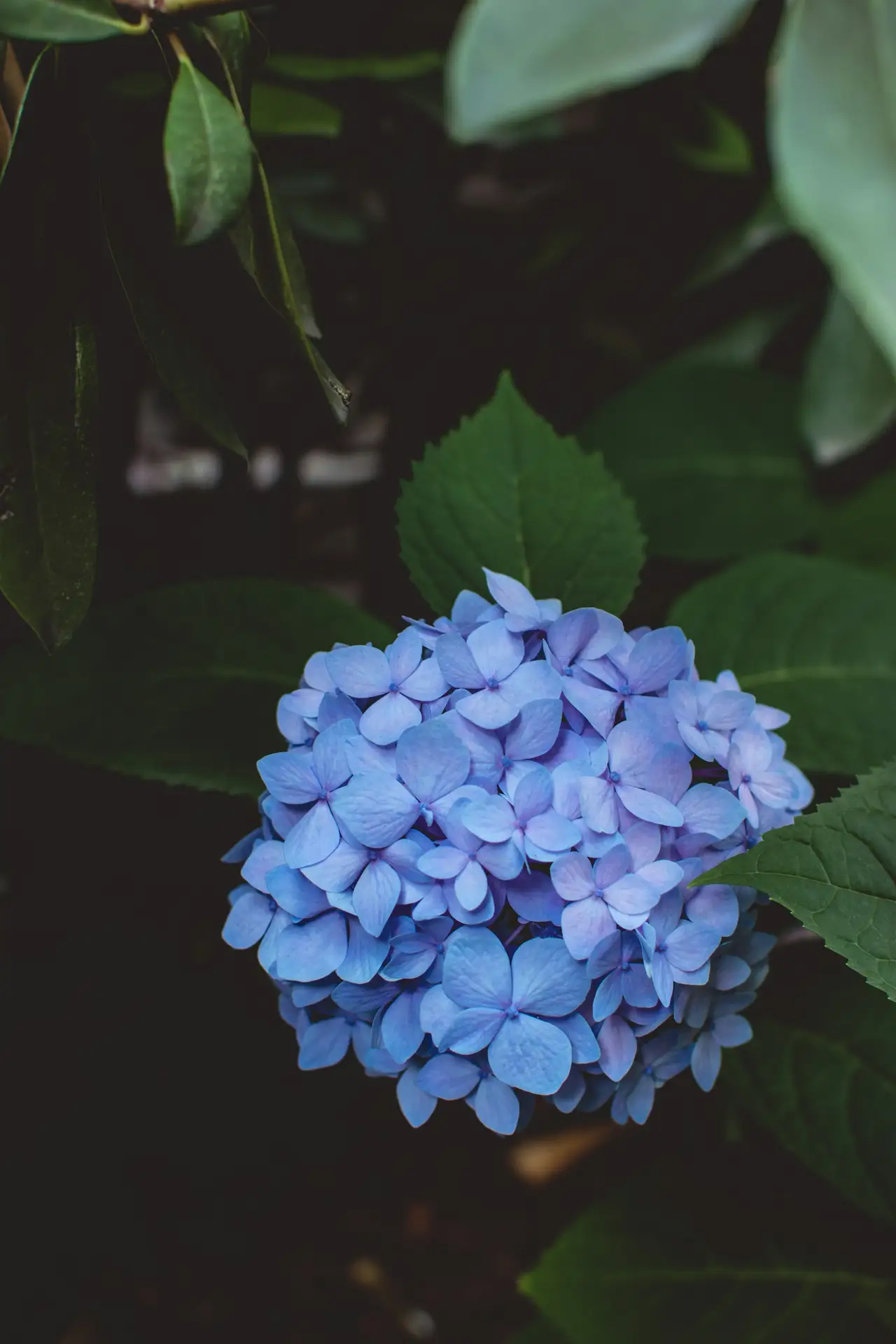
- Soil pH: acidic soils (pH below 6) make aluminum bioavailable to the plant, producing blue flowers. Alkaline soils (pH above 7) lock aluminum away from the plant, producing pink flowers. Neutral pH gives purple or in-between shades.
- The cultivar’s color potential: white hydrangeas (most H. arborescens) stay white regardless of soil. Some cultivars are bred to be pink or blue stable.
Aluminum and soil pH affect color. They do not change the cyanogenic glycoside content. A blue hydrangea, a pink hydrangea, a white H. arborescens like “Annabelle,” a H. paniculata “Limelight,” and a H. quercifolia (oakleaf) are all toxic to cats by the same mechanism. Treat them identically for cat-safety purposes.
Are dried hydrangeas still toxic?
Yes. Drying preserves the cyanogenic glycosides. Dried hydrangea wreaths, fall craft arrangements, and pressed-flower decor still contain amygdalin, and a cat chewing on a dried flower head can still develop GI signs.
Practical implication: don’t let your guard down on dried-hydrangea decor. Place dried arrangements where your cat cannot reach them, dispose of dropped petals or fragments, and treat dried hydrangea ingestion the same way as fresh-plant ingestion.
Are hydrangeas poisonous to dogs?
Yes, with the same mechanism. The ASPCA classifies hydrangeas as toxic to dogs, cats, and horses, all via cyanogenic glycosides. Symptoms in dogs are similar: vomiting, diarrhea, lethargy, depression. PetMD notes that cats are slightly more sensitive than dogs due to smaller body size, but the prognosis and severity calibration are similar. Same triage thresholds: persistent vomiting past 24 hours, breathing or gum-color symptoms, dehydration risk, or any symptoms in puppies, seniors, or dogs with pre-existing conditions = vet call.
How to keep cats away from hydrangeas
You can keep hydrangeas in a home or garden with cats. Hydrangeas are toxic but not high-risk like lilies, and most cats are not motivated to consume large quantities. Practical strategies:
- Outdoor hydrangea bushes: most indoor-only cats will not encounter them. For indoor-outdoor cats, supervise garden access and watch for chewing on accessible plants.
- Cut hydrangea arrangements: place in tall, narrow vases on shelves above cat-jumping height. Hydrangeas are popular wedding-bouquet flowers, so the indoor exposure is usually short-lived (a 5 to 7 day vase life).
- Dried hydrangea wreaths and crafts: store in closed cabinets or rooms during off-season. Hang wreaths on exterior doors only.
- Provide a decoy chew target: a small pot of cat grass gives cats a designated, safe target.
- Citrus-based deterrent sprays on the soil or pot rim (not the plant itself) make hydrangeas less attractive.
- Closed-room placement during cut-arrangement weeks. A dining room or sunroom your cat doesn’t have free run of works fine for the short vase life of hydrangeas.
Note: standard “place it up high” advice is weak for cats who climb. Pair height with inaccessibility (closed rooms, narrow shelves, off-limits surfaces).
Cat-safe summer flower alternatives
If you want summer arrangements without the hydrangea question, our cat-safe flowers pillar lists 8 ASPCA-verified safe options. The strongest substitutes for hydrangea’s dense-cluster look:
- Sunflowers (Helianthus): ASPCA non-toxic. Big, bold, summer-classic.
- Snapdragons (Antirrhinum majus): ASPCA non-toxic. Cottage-garden shape.
- Alstroemeria (Peruvian lily, despite the “lily” name not a true lily): ASPCA non-toxic to cats, dogs, and horses.
- Gerber daisies (Gerbera): ASPCA non-toxic. Bright color, accessible at any grocery florist.
- Roses: ASPCA non-toxic. Detailed in our cat-safe flowers pillar.
Note: carnations are widely listed online as cat-safe but ASPCA classifies them as toxic. We cover the full verdict, symptoms, and Dianthus family in are carnations toxic to cats.
What to skip
Things you can stop doing if you’ve absorbed information from the panic side of the internet:
- Calling the ER for a single chewed leaf with no symptoms. The visit fee is $100 to $300 before any treatment. For typical hydrangea ingestion with mild GI signs, the recommendation will be “monitor at home.” Save the ER for the cyanide-intoxication symptoms above.
- Inducing vomiting at home. PetMD: don’t do it without explicit vet direction. Hydrogen peroxide protocols cause more harm than they prevent in mild irritant cases.
- Giving activated charcoal at home. Not indicated for mild cyanogenic glycoside ingestion; dosing without vet guidance risks aspiration pneumonia.
- Removing all hydrangeas from your garden. Mild toxicity does not warrant a complete plant-removal response. Manage placement and access, the same way you would with any of dozens of mildly-toxic ornamentals.
- Treating dried hydrangeas as “safer” than fresh. They aren’t. Same toxicity.
- Worrying about hydrangea color as a safety signal. Blue, pink, white, lacecap, all the same risk.
- Treating hydrangeas like lilies. Lilies cause acute kidney failure within 24 to 72 hours and are a genuine veterinary emergency (see our lily emergency guide). Hydrangeas cause mild GI upset. Don’t conflate the two.
FAQ
How much hydrangea does a cat have to eat to get sick?
Not precisely known. Veterinary sources note that cats are more susceptible than dogs because of smaller body size, but severe cyanide poisoning from hydrangea is rare. Most cats who chew a leaf or petal show mild GI signs (drooling, one or two episodes of vomiting) and recover at home in 12 to 24 hours. The risk goes up with quantity and with younger or smaller cats.
What part of the hydrangea is most poisonous to cats?
All parts of the hydrangea plant contain cyanogenic glycosides, but the highest concentrations are in the leaves and flowers (the parts most accessible to a cat). PetMD and ASPCA both confirm this. The toxin is released when leaves are crushed or chewed.
How long does hydrangea poisoning last in cats?
Mild cases resolve within 12 to 24 hours with supportive care at home. If symptoms persist past 24 hours, your cat seems lethargic, or breathing or gum color changes, call your vet or Pet Poison Helpline at 855-764-7661.
Will my cat die from eating a hydrangea?
Almost never. ASPCA explicitly notes that “cyanide intoxication is rare” and that hydrangea usually produces gastrointestinal disturbance rather than systemic cyanide poisoning. Severe outcomes are typically only in cats who eat large quantities, especially kittens or cats with pre-existing health conditions.
Are dried hydrangeas still toxic to cats?
Yes. Drying does not break down amygdalin or other cyanogenic glycosides. Dried hydrangea wreaths and fall arrangements carry the same toxicity profile as fresh hydrangeas and should be kept out of cat-accessible spaces.
Do hydrangea flower colors change the toxicity?
No. Hydrangea flower color comes from soil pH affecting aluminum availability (acidic soil with available aluminum = blue, alkaline soil = pink). It has nothing to do with the cyanogenic glycoside content. Blue, pink, white, purple, and lacecap hydrangeas all carry the same toxicity profile.
Are hydrangeas poisonous to dogs?
Yes. ASPCA classifies hydrangeas as toxic to dogs, cats, and horses. The mechanism is the same (cyanogenic glycosides releasing small amounts of cyanide when chewed). PetMD notes cats are somewhat more susceptible than dogs due to smaller body size, but the symptom profile and severity calibration are similar across species.
The takeaway
Hydrangeas are toxic to cats, but the toxicity profile is mild GI upset, not the systemic cyanide emergency the word “cyanogenic” might suggest. ASPCA’s own classification calls cyanide intoxication “rare” and notes that hydrangeas “usually produce more of a gastrointestinal disturbance.” If your cat just nibbled a hydrangea, the most likely outcome is some drooling, a few hours of looking unwell, and a return to normal by morning. Monitor for 12 to 24 hours, call your vet if symptoms persist or you see any breathing or gum-color signs, and skip the ER visit for a single chewed leaf.
If you want a cat-safe alternative for summer arrangements, our cat-safe flowers pillar covers 8 ASPCA-verified options that get you the same summer-bouquet look without the question. For the genuinely dangerous summer flowers, see our lily emergency guide, which is the actual high-risk plant in this season. Peony, poinsettia, and tulip (peony, poinsettia, tulip) are siblings to hydrangea in the mild-toxicity calibration category.
Emergency phone numbers
Keep these visible in any cat household:
- ASPCA Animal Poison Control: (888) 426-4435 (a consultation fee may apply)
- Pet Poison Helpline: (855) 764-7661 (a consultation fee applies)
Both lines are open 24/7 and staffed by veterinary toxicologists.
Sources cited
- ASPCA. Toxic and Non-toxic Plants: Hydrangea. Verified May 21, 2026.
- PetMD. Are Hydrangeas Poisonous to Cats?. Morrison, B. J., DVM. Updated March 31, 2026. Verified May 21, 2026.
- Thrive Pet Healthcare. Are Hydrangeas Toxic To Cats?. Coronado, T., DVM, VP of Emergency Medicine, quoted. Verified May 21, 2026.
- Garden State Veterinary Specialists. Are Hydrangeas Poisonous to Cats. May 2, 2025. Verified May 21, 2026.