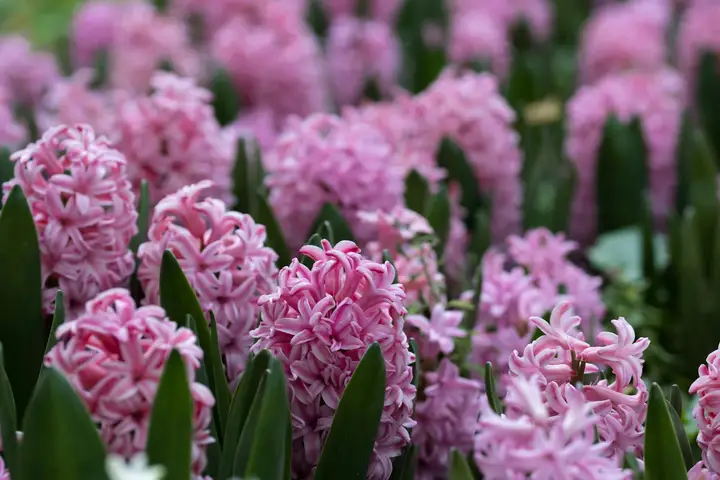
Are peonies poisonous to cats? Yes, but mildly. The ASPCA classifies peonies as toxic to cats, dogs, and horses, with the toxin identified as paeonol. The clinical signs are vomiting, diarrhea, and depression, and almost every case resolves at home within 12 to 24 hours without veterinary treatment. If you came here because your cat just chewed on a peony bouquet, the most likely outcome is some drooling, maybe one episode of vomiting, and a sleepy cat by evening.
This is the calibrated answer. We will not tell you to rush to the emergency vet. We will also not tell you peonies are harmless. Both of those framings exist in the search results above this article, and both are wrong.
The quick answer
Peonies (Paeonia officinalis, Paeonia lactiflora, Paeonia suffruticosa) are mildly toxic to cats. The toxic compound is paeonol, found throughout the plant. Most cats who chew a peony get drooling, mild stomach upset, possibly one or two episodes of vomiting, and recover at home over 12 to 24 hours without veterinary intervention.
If your cat ingested any part of a peony and you’re worried, the right call right now is:
- ASPCA Animal Poison Control: (888) 426-4435 (a consultation fee may apply)
- Pet Poison Helpline: (855) 764-7661 (a consultation fee applies)
Both will tell you the same thing: monitor, hydrate, and call back if vomiting continues past 24 hours, your cat seems lethargic, or symptoms worsen.
TL;DR
- Mildly to moderately toxic, not deadly. ASPCA confirms toxic; clinical signs are GI-only.
- The toxin is paeonol. A natural compound concentrated in the root system per pharmacology research.
- Symptoms are GI-only. Vomiting, diarrhea, drooling, depression, lethargy. Usually self-limiting in 12 to 24 hours.
- Most cases do not need a vet visit. Severe outcomes are rare and typically only in kittens, senior cats, or cats with pre-existing conditions who eat large amounts.
- Peonies are not in the same risk category as lilies. Lilies cause acute kidney failure within 24 to 72 hours; peonies cause an upset stomach.
- Dried peonies are still toxic. Paeonol does not break down with drying.
- Same toxicity in dogs. The ASPCA classifies peonies as toxic to dogs and horses with the same mechanism.
- You can still have peonies with cats at home. Place thoughtfully, monitor for chewing, dispose of dropped material.
Why the “as toxic as lilies?” question keeps coming up
The top-ranking organic result for “are peonies poisonous to cats” is a Reddit thread titled “Are peonies as toxic as lilies?” That is the question pet owners actually have, and almost every competitor buries the answer.
The honest answer: no, not close. The two plants are different in:
- Toxin mechanism. Peonies contain paeonol, a phenolic compound that irritates the cat’s GI tract. Lilies contain an unidentified water-soluble toxin (the exact compound is still under study) that destroys feline kidney tubular cells and causes acute kidney injury within 24 to 72 hours.
- Severity of outcome. Peony ingestion causes mild GI upset that resolves at home. Lily ingestion can cause death from kidney failure if not treated within 18 hours, and even with treatment some cats do not survive. See our lily emergency guide for the full Fitzgerald 2010 timeline.
- Treatment urgency. Peony ingestion: monitor at home, call vet if symptoms persist. Lily ingestion: go to the vet immediately, regardless of symptoms or quantity eaten.
- Mortality rate. Peonies: essentially zero in the veterinary literature for cats. Lilies: 50 to 100 percent untreated, depending on cat size and dose.
If your cat ate a peony, you do not need to behave as if your cat ate a lily. The vet bill, the urgency, the prognosis are all different orders of magnitude.
What paeonol actually does in a cat’s system
Paeonol is a naturally occurring phenolic compound found throughout the peony plant. In pharmacology research it’s mostly studied as the active ingredient in Cortex Moutan, the root bark of Paeonia suffruticosa (tree peony), which has been used in traditional Chinese medicine for over a thousand years.
In a cat’s body, paeonol acts as a gastrointestinal irritant. It triggers the local mucous-membrane response that produces drooling, then nausea, then vomiting. Diarrhea is the GI tract’s downstream response. The “depression and lethargy” the ASPCA notes is the systemic response to GI distress, not a sign of neurological toxicity.
This is fundamentally different from the toxin mechanism in calcium-oxalate plants like pothos or peace lily (covered in our pothos guide and peace lily guide, where insoluble needle-like crystals physically pierce mouth and esophagus tissue). It’s also different from saponin-based irritation in snake plants. Paeonol is a chemical irritant, not a mechanical one. The cat’s body clears it through normal liver and kidney function within 12 to 24 hours, and there is no accumulating systemic damage.
Symptoms to actually watch for
Drawing from ASPCA, GardeningKnowHow’s vet-reviewed peony coverage, and the pattern across vet-authored peony content:
Within the first few hours
- Drooling within 30 minutes of ingestion. The first sign in almost every case.
- Lip-licking, head-shaking as the cat tries to clear the irritant.
- One or two episodes of vomiting, usually within 1 to 3 hours.
- Mild diarrhea, less common but possible.
- Reduced appetite for the rest of the day.
- Lethargy or sleepiness for several hours; this is the “depression” ASPCA lists.
Most cats are recognizably back to normal by the next morning.
Beyond 24 hours (when to call the vet)
These are the criteria where a calm “let’s monitor at home” turns into a “let’s call the vet”:
- Vomiting more than 3 to 4 times in a few hours, or vomiting that continues throughout the day.
- More than 2 to 3 bouts of diarrhea.
- Symptoms lasting longer than 24 hours.
- Lethargy that doesn’t improve, or weakness when standing.
- A kitten, senior cat, or cat with pre-existing conditions (kidney disease, diabetes, IBD) showing any symptoms.
- A cat who can’t keep water down, raising dehydration risk.
- You’re not sure how much your cat ate. When in doubt, call the poison-control lines. They will help you triage without an automatic vet visit.
What to do if your cat ate a peony
Step by step, in the first 30 minutes:
- Don’t panic. Your cat is almost certainly going to be fine. Peony toxicity is mild.
- Gently remove any plant material from your cat’s mouth. If they cooperate, rinse with a small amount of cool water.
- Move the peonies out of reach. Cats often come back for a second taste.
- Wash off any sap from fur or paws with mild soap and water. Cats groom, and topical residue becomes ingested residue.
- Offer fresh water. Hydration helps the body clear paeonol.
- Watch for 12 to 24 hours. Note the time, the symptoms, and how much your cat ate (an estimate is fine).
- Do not induce vomiting at home. GardeningKnowHow is explicit on this: “Do not attempt to induce vomiting.” Hydrogen peroxide protocols can cause more GI damage than they help, and they are not the right intervention for paeonol ingestion.
- If symptoms escalate past the criteria above, call your vet or a poison-control line. This is not the moment to “wait and see.” Vet phone triage costs $89 to $100 (a fraction of an ER visit) and often resolves the question in 10 minutes.
Which part of the peony is most toxic? (the answer competitors got wrong)
This is where the search results conflict. Three competitors give three different answers without citing sources:
- One major site says the toxin is “most concentrated in the stems.”
- A peony-focused commerce blog says “highest concentrations in the roots and flowers.”
- A pet-insurance content blog says “the most toxic part is the root, followed by the leaves and stems. The flowers themselves are considered to be less toxic.”
ASPCA does not specify a most-toxic part. It says paeonol is the toxic principle and classifies the entire plant as toxic to cats, dogs, and horses.
What the peer-reviewed literature shows: pharmacology research on paeonol is centered on the root bark of Paeonia suffruticosa, called Cortex Moutan or Moutan root bark in traditional Chinese medicine. Multiple PubMed-indexed studies measure paeonol content from root bark specifically; the plant material studied for medicinal extraction is the root system, which suggests the highest concentrations are in the roots. We have not found peer-reviewed work specifically measuring paeonol content in stems versus flowers versus leaves of garden peonies (Paeonia officinalis, Paeonia lactiflora).
The practical takeaway: treat the entire plant as toxic. The root system is the most concentrated source per pharmacology research, but cats rarely access roots; they access stems, leaves, and flowers from cut bouquets or potted plants. All of those contain paeonol. Don’t rely on a part-ranking to gauge risk.
Peonies vs. tree peonies (the species clarification)
The “peonies” sold at florists for May to June wedding season are almost always Paeonia lactiflora (Chinese peony, the iconic ruffled garden peony) or Paeonia officinalis (common European peony). Both are herbaceous, meaning they die back to the ground each winter.
“Tree peonies” are a different species: Paeonia suffruticosa. They have woody stems that persist through winter, larger blooms, and are the species whose root bark is the medicinal Cortex Moutan in traditional Chinese medicine.
All peony species contain paeonol. The toxicity profile is the same. If you have a peony at home, you don’t need to identify the exact species to manage cat safety. Treat all peonies the same way.
Are peonies poisonous to dogs?
Yes, with the same mechanism. The ASPCA classifies peonies as toxic to cats, dogs, and horses. The toxin is the same (paeonol). The symptoms are the same (vomiting, diarrhea, depression). The severity is mild.
Dogs are more likely than cats to eat a large quantity of peony in one go (dogs eat everything; cats nibble). A small dog eating an entire peony plant might warrant a vet call for hydration support, but the underlying toxicity is the same mild GI irritation. Same triage thresholds as for cats: persistent vomiting past 24 hours, lethargy, dehydration risk, or any symptoms in puppies, seniors, or dogs with pre-existing conditions.
How to keep cats away from peonies (without giving them up)
You can keep peonies in a home with cats. Peak peony season is May to June, which is exactly the May-to-June wedding and Mother’s Day flower-arrangement window, and there is no reason to ban them from your home because of a plant with mild GI toxicity. The same calibrated approach works for other toxic-but-mild bouquet flowers, including the fall favorite chrysanthemum. Practical strategies:
- Tall, narrow vases work better than wide ones. Cats can sample petals from low vases easily; a tall vase with a heavy base makes the bouquet less accessible.
- Closed rooms during peony display. Put the arrangement in a sunroom, dining room, or office your cat doesn’t have free run of. Peonies have a 7 to 10 day vase life, so the imposition is short.
- Provide a decoy chew target. Cats often chew flowers because they want greens. A small pot of cat grass gives them a designated, safe target.
- Cover the vase water. If your cat is a water-bowl-explorer, vase water with peony stems sitting in it is a secondary exposure route. A cling-film cover or weighted floral foam reduces drinking access.
- Dispose of dropped petals immediately. Petals shed naturally during the vase life; sweep them up before your cat finds them.
The aesthetic position we hold: you don’t have to choose between flowers and pets. You manage placement the same way you’d manage any household plant with mild toxicity. Lilies are the plant you actually have to ban from a cat household; peonies are not.
Cat-safe wedding flower alternatives
If you’re shopping for a wedding bouquet, Mother’s Day arrangement, or sympathy flowers and want to skip the peony question entirely, our cat-safe flowers pillar lists 8 ASPCA-verified safe options. The strongest substitutes for the soft, romantic look peonies provide:
- Roses (Rosa species): the classic. ASPCA classifies as non-toxic to cats. Detailed in our cat-safe flowers pillar.
- Sunflowers (Helianthus): ASPCA non-toxic, big bright statement.
- Snapdragons (Antirrhinum majus): ASPCA non-toxic, cottagey shape.
- Alstroemeria (Peruvian lily, Alstroemeria): ASPCA non-toxic to cats, dogs, and horses. Despite the “lily” common name, it’s not a true lily and not in the lily-toxic-to-cats category.
- Gerber daisies (Gerbera): ASPCA non-toxic, bright color, accessible at any grocery florist.
- Freesia: ASPCA non-toxic, fragrant.
Note: carnations are widely listed online as cat-safe but ASPCA classifies them as toxic; our full guide to whether carnations are toxic to cats has the sourced verdict. If your florist suggests carnations as a “safe alternative,” they’re working from old folk-wisdom.
What to skip
Things you can stop doing if you’ve absorbed information from the panic side of the internet:
- Calling the ER for one chewed petal. The visit fee is $100 to $300 before any treatment. For peony ingestion, the recommendation will be “monitor at home.” Save the ER for actual emergencies.
- Inducing vomiting at home. Hydrogen peroxide protocols cause more harm than they prevent for mild irritant ingestion in cats.
- Giving activated charcoal at home. Not indicated for mild GI irritants, and dosing without veterinary guidance risks aspiration pneumonia.
- Banning peonies from your home forever. No competitor goes this far in their recommendation, but the implicit fear-framing in much of the search-result content pushes readers in that direction. The toxicity is mild. Normal placement is sufficient.
- Treating peonies and lilies as equivalent threats. They are not. The Reddit thread question that ranks #1 on this keyword (
Are peonies as toxic as lilies?) is the question that needs the cleanest answer: no. - Relying on a “most toxic part” ranking to gauge safety. All parts contain paeonol. Don’t let your cat chew any of it.
FAQ
Are peonies as toxic as lilies?
No. Peonies cause mild gastrointestinal upset (vomiting, diarrhea, lethargy) from paeonol and usually resolve at home in 12 to 24 hours. Lilies cause acute kidney failure within 24 to 72 hours and are a true veterinary emergency. The two are not in the same category of risk.
What part of the peony is most toxic to cats?
ASPCA does not specify a most-toxic part and classifies the whole plant as toxic. Pharmacology research on paeonol (the toxin) is centered on the root bark of Paeonia suffruticosa (called Cortex Moutan in traditional Chinese medicine), which suggests the highest concentrations are in the roots. Competitor articles claim different parts (stems, flowers, roots) without citing sources; we recommend treating the entire plant as toxic and not relying on part-rankings to gauge risk.
How long does peony poisoning last in cats?
Most cases resolve within 12 to 24 hours with supportive care at home. If symptoms persist past 24 hours, your cat is lethargic, or there is repeated vomiting that prevents hydration, call your vet or Pet Poison Helpline at 855-764-7661.
Will my cat die from eating a peony?
Almost never. Peonies are classified as mildly to moderately toxic. Severe outcomes are rare and typically only in cases where a cat (especially a kitten or one with pre-existing health conditions) eats a large quantity of plant material.
Are dried peonies still toxic to cats?
Yes. Drying does not break down paeonol. Treat dried peonies the same as fresh peonies and keep them out of cat-accessible spaces.
Are peonies safe in vase arrangements with cats around?
The bouquet itself is safe to display; the risk is your cat chewing the stems, leaves, or petals. Place the arrangement on a high or closed-off surface, monitor for chewing, and dispose of dropped petals promptly. A peony bouquet is not a reason to give up cut flowers, just one to place thoughtfully.
Are tree peonies more toxic than garden peonies?
Both contain paeonol. Tree peony (Paeonia suffruticosa) root bark is the species used in pharmacology research and is the medicinal source of Cortex Moutan. Garden or herbaceous peonies (Paeonia officinalis, Paeonia lactiflora) carry the same toxin family. Treat all peony species the same way around cats.
The takeaway
Peonies are mildly toxic to cats. The Reddit panic question (“Are peonies as toxic as lilies?”) deserves a clean answer: no, they’re not even close. Lilies cause acute kidney failure; peonies cause an upset stomach that resolves at home in a day. If your cat just ate a peony, you can stop panicking, monitor for 12 to 24 hours, and call your vet if symptoms persist or worsen. The cat is fine. The peony bouquet is fine.
If you want a cat-safe alternative for next year’s wedding arrangement, Mother’s Day bouquet, or simply for your kitchen table, our cat-safe flowers guide lists 8 ASPCA-verified safe options that get you the same lush spring-arrangement look without the question.
For the other classic summer wedding flower with mild toxicity questions, see our hydrangea-and-cats guide. Hydrangeas contain cyanogenic glycosides rather than paeonol, but the calibration is similar: mild GI signs, not the systemic poisoning the word “cyanide” might suggest.
Emergency phone numbers
Keep these somewhere visible in any cat household:
- ASPCA Animal Poison Control: (888) 426-4435 (a consultation fee may apply)
- Pet Poison Helpline: (855) 764-7661 (a consultation fee applies)
Both lines are open 24/7 and staffed by veterinary toxicologists.
Sources cited
- ASPCA. Toxic and Non-toxic Plants: Peony. Verified May 20, 2026.
- GardeningKnowHow. Are Peonies Poisonous For Cats? How Peony Lovers Can Keep Pets Safe. Ellis, M. E. June 29, 2024. Verified May 20, 2026 (cited for the calibrated “do not induce vomiting” guidance and peony care framing).
- PubMed. Search results for “paeonol moutan root bark”. Verified May 20, 2026 (cited for the pharmacology direction on paeonol; peer-reviewed research on this compound is centered on root bark extracts of Paeonia suffruticosa).