A cat-safe flower guide is only as good as the sourcing behind it. Most articles on this topic list 12 to 14 flowers as cat-safe and cite no one, which means a few of those entries are wrong and a few aren’t in any authoritative database at all. This guide lists eight cat-safe flowers, with the ASPCA’s individual plant-entry URL for each one, and it does the thing most competitors don’t: it flags a flower that’s widely called safe but isn’t.
Quick answer
Per the ASPCA’s Toxic and Non-Toxic Plant List for Cats, eight common flowers are verifiably non-toxic to cats: rose (Rosa species), sunflower (Helianthus), Phalaenopsis orchid, gerber daisy (Gerbera jamesonii), zinnia, Peruvian lily / alstroemeria, petunia, and African violet (Saintpaulia). True lilies are the catastrophic outlier; their pollen, leaves, and vase water cause acute kidney failure in cats and must never enter a cat household. Carnation, despite frequent claims of safety on pet-content sites, is officially toxic per ASPCA.
At a glance: cat-safe and cat-toxic flowers
| Flower | Scientific name | Safe for cats? | Notes |
|---|---|---|---|
| Rose | Rosa species | Yes | Non-toxic; strip the thorns before a cat brushes the stem |
| Sunflower | Helianthus | Yes | Non-toxic, pollen and seeds included |
| Phalaenopsis orchid | Phalaenopsis sp. | Yes | Non-toxic; long vase life |
| Gerber daisy | Gerbera jamesonii | Yes | Non-toxic; bright focal flower |
| Zinnia | Zinnia species | Yes | Non-toxic; easy garden cutting |
| Peruvian lily (alstroemeria) | Alstroemeria | Yes | Non-toxic, and not a true lily despite the name |
| Petunia | Petunia species | Yes | Non-toxic |
| African violet | Saintpaulia | Yes | Non-toxic flowering houseplant |
| Carnation | Dianthus caryophyllus | No | Toxic per ASPCA: mild GI upset and dermatitis |
| Baby’s breath | Gypsophila | No | Toxic: mild GI; the most common toxic bouquet filler |
| Chrysanthemum / mum | Chrysanthemum sp. | No | Toxic: pyrethrins, usually mild |
| Tulip | Tulipa species | No | Toxic; the bulb is the worst part |
| Hydrangea | Hydrangea | No | Toxic: usually mild GI upset |
| True lily | Lilium / Hemerocallis | No, emergency | Fatal kidney failure; pollen and vase water included |
The rest of this article is the long version, with the sourcing for each entry, the correction story for the flowers competitors get wrong, and the practical “how to order a bouquet without poisoning your cat” workflow.
Above all: keep true lilies out of the house
Before the safe-flower list, one calibration that matters more than anything else on this page.
True lilies (Lilium and Hemerocallis) are the single most dangerous flower a cat household can encounter. Even pollen on the cat’s fur, then groomed off, causes acute kidney failure within 12 to 72 hours. Treatment must start within 6 hours of exposure to be reliably effective. There is no safe placement strategy for a true lily in a cat home; vase water and pollen contamination defeat the “different room” approach.
For the full safety protocol, symptoms timeline, and emergency phone numbers, see our complete guide to lilies and cats. The rest of this article assumes lilies are off the table.
The 8 cat-safe flowers we can verify against ASPCA
Each of these has its own ASPCA Animal Poison Control entry; we Playwright-verified each one before writing this list. Click the citation links to see the source for any specific flower.
1. Rose (Rosa species)
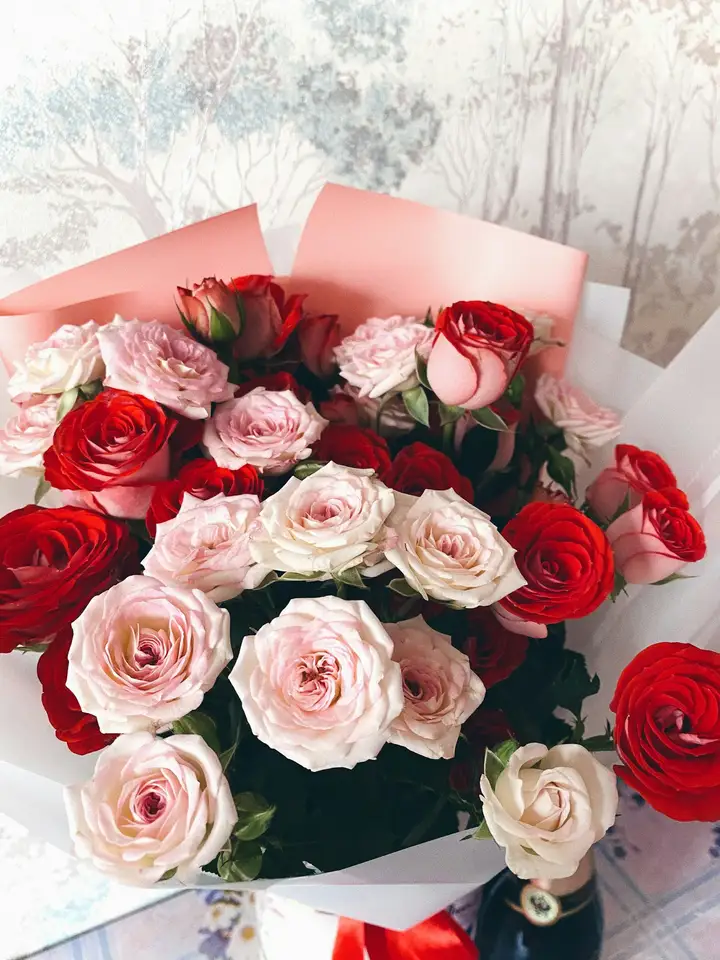
Per ASPCA’s Rose entry, all true roses (genus Rosa, family Rosaceae) are non-toxic to dogs, cats, and horses. This is the gold-standard cat-safe cut flower. Long-lasting in a vase (7 to 10 days), available year-round, available in every color, available at every price point from supermarket roses ($15) to high-end florist roses ($60-150+).
The only caveat: thorns. A cat batting a rose stem can scratch a paw or mouth. Strip the thorns off the lower stem before placing in a vase. Florists do this automatically; supermarket roses you should do yourself. Our full guide on whether roses are toxic to cats covers the thorn risk, rose hips, and the toxic look-alikes (desert rose, Christmas rose) sold under the rose name.
2. Sunflower (Helianthus)
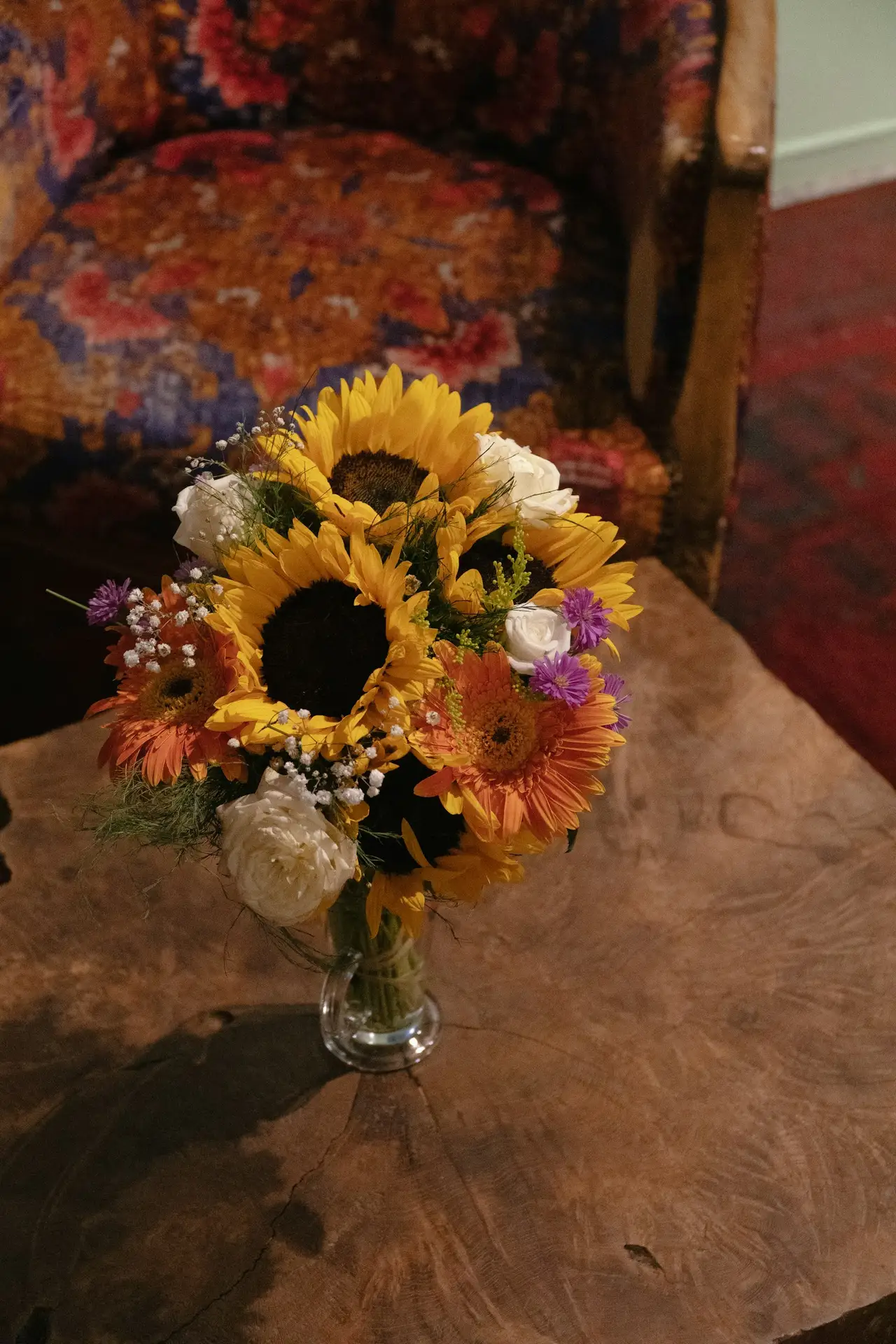
Per ASPCA’s Sunflower entry, Sunflower is non-toxic to dogs, cats, and horses. ASPCA’s entry specifies Helianthus angustifolius (a swamp sunflower species), but the genus is the same as the common florist sunflower (Helianthus annuus) and both share the same non-toxic profile. Our full guide to whether sunflowers are toxic to cats covers the seeds, the oil, and the pollen question in depth.
Dramatic, sturdy, cheerful, available June through October at most florists and supermarkets. Great as a single-stem focal flower. Vase life 5 to 8 days. The seeds, leaves, and stem are also non-toxic per the ASPCA classification, though no cat should be eating volumes of any plant material.
3. Phalaenopsis Orchid / Moth Orchid (Phalaenopsis sp.)
Per ASPCA’s Phalaenopsis Orchid entry, the moth orchid is non-toxic to dogs, cats, and horses. The most common orchid sold in grocery stores and big-box stores (Trader Joe’s, Whole Foods, Home Depot orchids are almost all Phalaenopsis).
Not strictly a “cut flower”, more of a potted plant, but the visual role (single dramatic flowering stem on a desk or counter) is the same. Phalaenopsis orchids bloom for 2 to 4 months from a single spike. They prefer bright indirect light, weekly watering, and they live for years between bloom cycles. A great long-term swap if you want flowers on display without buying weekly bouquets.
Note: ASPCA’s database only has an entry for Phalaenopsis, not for other orchid genera. Cymbidium orchids (common in arrangements), Dendrobium, and Cattleya orchids are NOT individually listed in the ASPCA database. We can’t verify them. If you want a guaranteed-safe orchid, ask for Phalaenopsis specifically. For the full breakdown, including the potting-bark hazard most owners miss, see our orchids and cats guide.
4. Gerber Daisy / African Daisy (Gerbera jamesonii)
Per ASPCA’s Gerber Daisy entry, Gerber Daisy is non-toxic to dogs, cats, and horses. ASPCA’s African Daisy entry lists the same scientific name (Gerbera jamesonii), so both common names refer to the same plant. ASPCA uses the spelling “Gerber Daisy”; most florists call it “Gerbera Daisy” with the extra ‘a’. Both are the same flower. It is the one verified-safe daisy in a family where the word covers toxic mums and unverified lawn daisies alike; our daisies and cats guide sorts them species by species.
Bold, single-bloom flowers on long stems in red, pink, yellow, orange, white. Common as both focal and accent in mixed bouquets. Vase life 6 to 10 days with fresh water and stem-cut recutting every 2 to 3 days.
5. Zinnia (Zinnia species)
Per ASPCA’s Zinnia entry, Zinnia is non-toxic to dogs, cats, and horses. Common summer annual that produces cut flowers from June through frost.
Most commonly seen in garden-grown bouquets rather than commercial supermarket flowers, but increasingly available at florists during peak summer. Multi-petaled, bright, available in every warm color (no true blue). Vase life 5 to 8 days.
6. Peruvian Lily / Alstroemeria
Per ASPCA’s Peruvian Lily entry, Peruvian Lily (genus Alstroemeria) is non-toxic to dogs, cats, and horses.
Critical naming clarification: Peruvian Lily is NOT a true lily. Despite the word “lily” in the common name, Alstroemeria is in the family Alstroemeriaceae, not the Liliaceae (true lily) family. The two have nothing to do with each other genetically and have opposite toxicity profiles. True lilies kill cats; Peruvian lily is non-toxic.
This is the single most-used filler-level focal flower in commercial bouquets. The slender stems with multiple flower clusters in pink, white, peach, yellow, or orange that you see in nearly every $20-$40 grocery bouquet, those are alstroemerias. Vase life 10 to 14 days, the longest of any common cut flower. The best cat-safe substitute for someone who’s been told to “avoid lilies in bouquets” and assumes that means no flowers with “lily” in the name.
7. Petunia (Petunia species)
Per ASPCA’s Petunia entry, Petunia is non-toxic to dogs, cats, and horses. Common bedding annual and hanging-basket flower, less common as a cut flower but worth knowing for garden-cuttings or potted-flower displays.
8. African Violet (Saintpaulia spp.)
Per ASPCA’s African Violet entry, African Violet (genus Saintpaulia) is non-toxic to dogs, cats, and horses. Like the Phalaenopsis orchid, not strictly a cut flower, but the visual role is the same: small flowering plant that lives on a desk, windowsill, or bathroom counter.
African violets bloom on and off year-round given the right conditions (bright indirect light, bottom watering, average humidity). A reasonable swap for someone who wants color in the home without weekly bouquet shopping.
The flowers other sites call cat-safe: but we cannot verify
These flowers are widely listed as cat-safe on pet-content sites, vet-clinic blogs, and florist guides. None of them have an individual entry in the ASPCA’s plant database. Their absence from the database is not the same as confirmation of toxicity, but it is also not confirmation of safety. We don’t list flowers as safe without a source.
If you want to use these in a bouquet, that’s your call. We can tell you that the ASPCA hasn’t listed them as toxic. We can’t tell you that the ASPCA has listed them as safe.
- Snapdragon (Antirrhinum majus). Common bouquet filler. Not in the ASPCA database.
- Stock (Matthiola incana). Common late-spring bouquet flower with strong scent. Not in the ASPCA database.
- Lisianthus (Eustoma). Increasingly popular wedding and event flower. Not in the ASPCA database.
- Freesia. Fragrant spring-season cut flower. Not in the ASPCA database.
- Aster. Common late-summer cut flower. Not in the ASPCA database under “Aster” or related slugs.
- Wax flower (Chamelaucium). Common bouquet filler with small white or pink flowers. Not in the ASPCA database.
- Marigold / Calendula / Tagetes. Three different plants commonly grouped together. Pot marigold (Calendula officinalis) and African marigold (Tagetes) are both widely called safe; neither has a current ASPCA entry we could locate.
- Pansy (Viola). Common spring annual. Not in the ASPCA database under “Pansy” or “Garden Pansy.”
The honest position: most of these are probably fine for cats based on the absence of toxicity reports in veterinary literature, and you’ll see them recommended by sources we generally trust. We’re not telling you to avoid them. We’re telling you that we don’t have ASPCA confirmation to back a “yes, safe” claim, so we’re not making one. That’s the standard for this site.
The flower OTHER sites call cat-safe: but ASPCA says is TOXIC
This is the most important section in this article. Several widely-read pet content sites list this flower as safe for cats. ASPCA disagrees.
Carnation (Dianthus caryophyllus)
Per ASPCA’s Carnation entry, Carnation is toxic to dogs, cats, and horses. Clinical signs per ASPCA: “Mild gastrointestinal signs, mild dermatitis.” Our dedicated guide to whether carnations are toxic to cats covers the symptoms, the whole Dianthus family (mini carnations, pinks, Sweet William), and how to keep them safely.
Multiple cat-safe-flower articles in the top Google results for “cat safe flowers” list carnations as safe. The Cat Protection Society of NSW (a real cat welfare authority), the Smalls cat food brand, and several florist-published guides all list carnation as cat-friendly. They are wrong by the ASPCA’s official classification. The toxicity is mild, not life-threatening, but it is genuinely toxic.
What this means practically: a cat that chews a carnation may develop mild stomach upset (vomiting, diarrhea) and possible skin irritation if the stem sap contacts skin or fur. Recovery is typically within 12 to 24 hours without intervention. This is not a lily-grade emergency, but it is also not in the same category as a rose or a sunflower.
If you’ve been giving or receiving carnation bouquets in cat households and your cat has never had a problem, that’s not surprising; many cats ignore flowers entirely. But the ASPCA classification stands, and we recommend swapping carnations for one of the verified-safe alternatives above.
Other common bouquet flowers that ARE toxic per ASPCA
Beyond carnation and the catastrophic-tier true lilies, a few other common bouquet components are worth flagging.
Baby’s breath / Gypsophila is toxic to cats per the ASPCA. Mild GI upset, vomiting. This is one of the most common bouquet fillers and many cat owners overlook it because it’s filler not focal. Remove baby’s breath from any bouquet before bringing the bouquet near a cat.
Tulip (Tulipa species) is toxic to cats per the ASPCA. The bulb is most toxic; the flower and leaves are mildly so. Tulip is the second-most-searched “is this toxic to cats” flower after true lilies, and we cover it in full in our tulips and cats guide.
Hyacinth is toxic to cats per the ASPCA. Spring bulb flower with the toxin concentrated in the bulb, similar to tulip.
Daffodil is toxic to cats per the ASPCA. Common spring flower; bulb is most toxic but the cut flower is also a problem.
Hydrangea is toxic to cats per the ASPCA. Cyanogenic glycosides in the leaves and flowers cause GI upset and lethargy. ASPCA notes that “cyanide intoxication is rare” with hydrangeas; the typical reaction is mild GI signs, not systemic cyanide poisoning. See our full hydrangea-and-cats guide for the amygdalin mechanism and calibrated severity walkthrough.
Chrysanthemum / Mum is toxic to cats per the ASPCA. Common fall bouquet flower. Mild GI symptoms but consistent enough that the ASPCA classifies as toxic. Our full guide on whether chrysanthemums are toxic to cats covers the pyrethrin angle and the flea-product distinction that actually matters.
If you receive a mixed bouquet and one of these is in it, you don’t need to throw the whole bouquet out. Remove the toxic stems, keep the safe ones, change the vase water (especially important if a true lily was in the original bouquet), and you’re working with a safer arrangement.
How to audit a bouquet you already have at home
A practical workflow for the situation everyone faces: “Someone sent me flowers, I have a cat, what now?”
Step 1: Look for true lilies. Any flower with the shape of a six-petaled trumpet or a recurved spotted star is a candidate. If you see a flower labeled “lily” or that looks like a true lily, the entire bouquet (including the vase water) is contaminated for cat-safety purposes. The safest move is to remove the bouquet from the home. If you must keep it temporarily, put it in a closed room your cat does not enter, and dispose of pollen-shedding stamens carefully.
Step 2: Identify each flower. Take the bouquet apart visually. Most bouquets have 3 to 6 different flowers, plus filler (greens, baby’s breath). Identify each one.
Step 3: Cross-check each flower against our list. Anything on the verified-safe list (rose, sunflower, gerber daisy, zinnia, alstroemeria, petunia, orchid, African violet) stays. Anything on the carnation / toxic list (carnation, baby’s breath, tulip, hyacinth, daffodil, hydrangea, chrysanthemum) comes out. Anything in the “we couldn’t verify” category is a judgment call; pull it if you want to be conservative.
Step 4: Change the vase water. Especially if a true lily was in the original bouquet, refresh the water and rinse the vase.
Step 5: Place the audited bouquet out of cat reach. Even safe flowers don’t need to be at counter-edge cat-chewing height. A high shelf or a closed-off room is reasonable.
How to order a cat-safe bouquet from a florist
If you want the full method, our dedicated guide on how to build a cat-safe bouquet walks through the focal, supporting, and filler layers and the toxic greenery to leave out. The short version:
The simplest sentence to tell a florist:
“Please no lilies, no carnations, and no baby’s breath. Roses, sunflowers, gerber daisies, alstroemeria, or orchids are all welcome.”
That single sentence covers the catastrophic-tier (true lilies), the toxic-but-mild (carnations + baby’s breath), and gives the florist a positive list to work from. Most florists handle the request without a markup; cat-safe bouquets are increasingly common.
For online florists, look for a “special instructions” or “notes for florist” field at checkout. Paste the same sentence. Services like UrbanStems, BloomThat, Bouqs, and FromYouFlowers all let you add florist notes that the local fulfilling florist actually reads.
For supermarket bouquets (Whole Foods, Trader Joe’s, grocery store), there’s no florist to ask. You’re auditing the bouquet yourself per the workflow above. Trader Joe’s bouquets specifically often contain alstroemeria as a focal flower (good) and baby’s breath as filler (remove).
Cat-safe flowers by occasion
Valentine’s Day
Rose bouquets are the obvious cat-safe Valentine’s order. Skip any “mixed” Valentine’s bouquet that includes carnations or baby’s breath. A dozen roses, single-color or mixed, is the safest move. Florists like UrbanStems and Bouqs offer “all rose” Valentine’s bouquets that bypass the mixed-bouquet problem entirely.
Mother’s Day
Mixed bouquets are the Mother’s Day default and they often contain lilies. Specify “no lilies” loudly. Alstroemeria + roses + gerber daisies + sunflowers (depending on Mom’s color preference) make a safe Mother’s Day bouquet.
Easter
Easter is the highest-risk holiday for true-lily exposure in cat households. Easter Lily (Lilium longiflorum) is the canonical Easter flower and the canonical cause of Easter cat kidney emergencies per the FDA. If you have a cat, do not bring an Easter Lily home and tell anyone giving you flowers the same. Safe Easter substitutes: a potted Phalaenopsis orchid (matches the elegant single-stem aesthetic), a tulip-free spring bouquet of alstroemeria and gerber daisies, or a single beautiful African violet on a sunny windowsill.
Sympathy bouquets
Sympathy and funeral arrangements are dominated by Stargazer and Casablanca lilies. If you receive a sympathy arrangement to your home, treat it as a true-lily situation until proven otherwise. Remove any lilies before bringing the arrangement into the home. The kindest thing you can do for someone in grief who is also a cat owner is send a sympathy arrangement that explicitly excludes lilies; most florists understand the request without needing it explained.
Spring garden bouquets
Mid-to-late spring through early summer, garden-grown bouquets are increasingly common (farmers markets, grocery store “local” flowers). Zinnias, sunflowers, snapdragons (unverified but widely considered safe), and alstroemeria are common components. Pay attention to anything tulip-like or labeled “lily.”
Wedding bouquets
Cat-safety for weddings is mostly a “after the wedding” concern: if you take the bouquet home to a cat household. Coordinate with the florist in advance to avoid lilies. Many wedding florists default to lily-heavy arrangements because of the dramatic visual impact; explicit specification matters.
Cat-safe flowers for your garden (perennials and outdoor cuttings)
If you’re growing flowers rather than buying them cut, several of the verified-safe list extend naturally:
- Sunflowers are easy from seed and provide cuttings June through October.
- Zinnias are heat-tolerant summer annuals that produce cuttings June through frost.
- Roses grow well in zones 5-9; bush roses produce continuous cuttings May through October.
- Petunias are bedding annuals; not commonly cut but provide color in pots and beds.
For the full list of cat-safe houseplants (including the African violet and orchid family that overlap with this article), see our cat-safe houseplants pillar guide.
Are these flowers safe for dogs too?
Yes. Every flower on our verified-safe list has the same ASPCA classification for both cats and dogs: rose, sunflower, gerber daisy, zinnia, alstroemeria, petunia, African violet, and Phalaenopsis orchid are all “Non-Toxic to Dogs, Non-Toxic to Cats, Non-Toxic to Horses” per their individual ASPCA entries. The same list works for mixed-pet households.
What to do if your cat ate a flower
Even with cat-safe flowers, a cat that eats a large quantity of plant material can vomit. That’s typically mild and resolves on its own. The emergency response protocol applies if any of the following are true:
- The flower was a true lily (Lilium or Hemerocallis, including Easter, Tiger, Asiatic, Day Lily, Stargazer)
- The flower was unidentified and you cannot rule out a true lily
- Your cat shows lethargy, repeated vomiting, refusing food/water, or unusual behavior for more than a few hours
- Your cat is a kitten, elderly, or has existing health conditions
Phone numbers:
- Pet Poison Helpline: 855-764-7661 (around-the-clock, $85 consultation fee)
- ASPCA Animal Poison Control Center: 888-426-4435 (around-the-clock, $95 consultation fee)
- Your local emergency vet if helplines are unavailable
For full true-lily emergency protocol, see our lily and cats article.
What to skip
A few things you do not need to do, despite common advice:
- Don’t trust cat-safe flower lists without sources. Most articles in the top Google results for “cat safe flowers” list 11 to 14 flowers and cite no individual sources. Some of those flowers (like carnation) are actually toxic per ASPCA. The standard for a flower being on your “safe” list should be: there is an ASPCA Animal Poison Control entry for the specific plant that says “Non-Toxic to Cats.”
- Don’t assume bouquet filler is safe. Baby’s breath is the most-overlooked toxic component in a mixed bouquet. Remove it before the bouquet enters a cat-accessible space.
- Don’t think you can keep a lily “in a different room.” Pollen contamination defeats this strategy. The cat brushes through, grooms, ingests. Lilies must leave the home entirely.
- Don’t induce vomiting at home. Hydrogen peroxide is unsafe for cats. If a vet wants vomiting induced, they will do it themselves with proper medication.
- Don’t panic over mild GI symptoms from a non-toxic flower chew. A cat that eats a rose petal and vomits once is having a normal cat-vomits-after-eating-plant reaction, not a poisoning. The ASPCA non-toxic classification means the flower doesn’t cause organ damage or systemic toxicity; it does not mean a cat can eat the flower in volume without GI upset.
Frequently asked questions
What flowers are cat safe? Per the ASPCA, eight verified cat-safe flowers are rose, sunflower, Phalaenopsis orchid, gerber daisy, zinnia, Peruvian lily / alstroemeria, petunia, and African violet. Each has an individual ASPCA entry confirming “Non-Toxic to Cats.”
Are roses safe for cats? Yes. Rose (Rosa species) is classified as non-toxic to cats per the ASPCA. Watch for thorns as a physical injury risk; the flower itself is safe.
Are carnations safe for cats? No. Despite frequent claims of safety on other sites, the ASPCA classifies Carnation (Dianthus caryophyllus) as toxic to cats. Clinical signs are mild GI symptoms and possible dermatitis. Not life-threatening, but not safe.
What about baby’s breath / gypsophila? Toxic per ASPCA. Mild GI upset and vomiting. Remove from any bouquet before bringing it near a cat.
Can I keep lilies in a different room from my cat? No. True lily pollen and vase water contaminate surfaces; the cat brushes through, grooms, and the exposure is the same as ingestion. The only safe move with true lilies and cats is no true lilies in the home.
What if my cat licked vase water from a bouquet? If the bouquet contains a true lily, this is a real emergency: call Pet Poison Helpline immediately. If the bouquet contains only non-toxic flowers, vase water is low-risk; watch for mild GI symptoms over the next few hours. If unsure, treat as worst case.
Are cat-safe flowers also dog-safe? Yes, all eight on our verified list. Each ASPCA entry confirms both cat and dog safety.
How do I order a cat-safe bouquet from a florist? Tell the florist: no lilies, no carnations, no baby’s breath. Roses, sunflowers, gerber daisies, alstroemeria, and orchids are all welcome. Most florists accommodate without a markup.
Related articles
- Are Lilies Toxic to Cats?, the emergency-response guide for true-lily exposure
- Cat-Safe Houseplants, the master non-toxic list (houseplants version of this article)
- Is Aloe Vera Toxic to Cats?, another sourced safety article with the “what competitors get wrong” pattern
- Are peace lilies toxic to cats, the not-a-true-lily clarification, useful when reading flower-toxicity guides
Sources
Every entry on the verified-safe list above is sourced to ASPCA’s Animal Poison Control individual plant entries. Each was Playwright-loaded and verified for “Non-Toxic to Cats” status before being included on our list.
- ASPCA Animal Poison Control: Toxic and Non-Toxic Plant List for Cats
- ASPCA: Rose (Rosa species)
- ASPCA: Sunflower (Helianthus)
- ASPCA: Phalaenopsis Orchid
- ASPCA: Gerber Daisy (Gerbera jamesonii)
- ASPCA: Zinnia
- ASPCA: Peruvian Lily / Alstroemeria
- ASPCA: Petunia
- ASPCA: African Violet (Saintpaulia spp.)
- ASPCA: Carnation (Dianthus caryophyllus), TOXIC
- Pet Poison Helpline, 855-764-7661, 24/7 emergency veterinary toxicology line
If you arrived at this page because you have a cat and someone just gave you flowers, the workflow is: identify each flower, check it against our verified-safe list, remove anything that’s a true lily or on the toxic list, change the vase water if needed, and place the audited arrangement somewhere your cat does not perch. Roses, sunflowers, gerber daisies, alstroemerias, and orchids are all welcome at a cat household. Lilies are not.