If you have a cat and you want flowers in the house, or you want to send flowers to someone who does, the focal flowers are rarely the problem. Roses and sunflowers are safe. The problem is almost always the part nobody looks at: the wispy filler and the trendy greenery tucked in around the blooms. This guide covers how to build or order a cat-safe bouquet where every component is sourced, including the filler and the greenery that most flower guides skip.
How to make a cat-safe bouquet
A cat-safe bouquet is built from three layers, and each layer has non-toxic options confirmed by the ASPCA or VCA: non-toxic focal flowers (roses, sunflowers, gerbera daisies, orchids), non-toxic support (alstroemeria, snapdragons, lisianthus), and non-toxic filler (freesia, limonium, waxflower). Leave out every true lily, and leave out carnations, baby’s breath, chrysanthemums, and eucalyptus greenery. That is the whole method in one paragraph. The rest of this page is the sourcing and the practical detail.
At a glance: what goes in, what stays out
| Bouquet role | Safe to use | Keep out |
|---|---|---|
| Focal flower | Rose, sunflower, gerbera daisy, orchid | True lily, chrysanthemum, ranunculus |
| Supporting flower | Alstroemeria, snapdragon, lisianthus, stock | Carnation, tulip, daffodil, hyacinth |
| Filler | Freesia, limonium (statice), waxflower | Baby’s breath (gypsophila) |
| Greenery | Plain rose or gerbera foliage, safe ferns | Eucalyptus, asparagus fern (plumosa) |
Every “safe” entry above is sourced below. The true lily is in its own category: it is not a “keep out because it is toxic” flower, it is a veterinary emergency, and we cover why in its own section.
The part everyone gets wrong: the greenery and the filler
Focal flowers get all the attention in cat-safe flower guides, and they are usually the safe part. The toxic component of a mixed bouquet is far more often the filler or the greenery, because those get added by the armful without anyone thinking of them as “flowers.”
Three specific offenders show up constantly:
Baby’s breath (gypsophila) is toxic to cats per the ASPCA. It causes mild gastrointestinal upset and vomiting. It is the single most common filler in supermarket and florist bouquets, and it is the one cat owners overlook most, because it reads as decorative fluff rather than a plant a cat would eat. A cat absolutely will bat at it and chew it.
Eucalyptus is toxic to cats per the ASPCA’s eucalyptus entry. The toxic principle is its essential oils (eucalyptol), and the clinical signs are salivation, vomiting, diarrhea, depression, and weakness. Seeded and silver-dollar eucalyptus have become the default greenery in modern bouquets over the last several years, which means a huge share of “pretty, minimalist” arrangements now carry a toxic green that was not common a decade ago. If you learn to spot one thing in a bouquet, make it eucalyptus. Our full write-up on whether eucalyptus is safe for cats covers the essential-oil angle in depth.
Asparagus fern is toxic to cats per the ASPCA’s asparagus fern entry. It goes by plumosa fern, lace fern, emerald fern, and Sprengeri fern, and it is the delicate, feathery green threaded through countless mixed bouquets. The ASPCA lists allergic dermatitis from repeated skin contact and gastric upset from the berries. It is not a true fern, and its wispy look makes it read as harmless background, which is exactly why it slips past people. Our guide to whether ferns are toxic to cats sorts the true ferns (all ASPCA non-toxic) from the fern-named plants that are not.
So the honest headline for this whole topic: you can pick a perfectly safe focal flower and still bring home a toxic bouquet, because the filler and greenery are where the risk usually hides. The safe fillers below solve this without giving up a full, finished-looking arrangement.
Safe focal flowers for a cat-safe bouquet
These are the flowers that carry an individual entry in the ASPCA’s plant database confirming non-toxic status for cats. They are the highest-confidence choices, and any of them can anchor a bouquet.
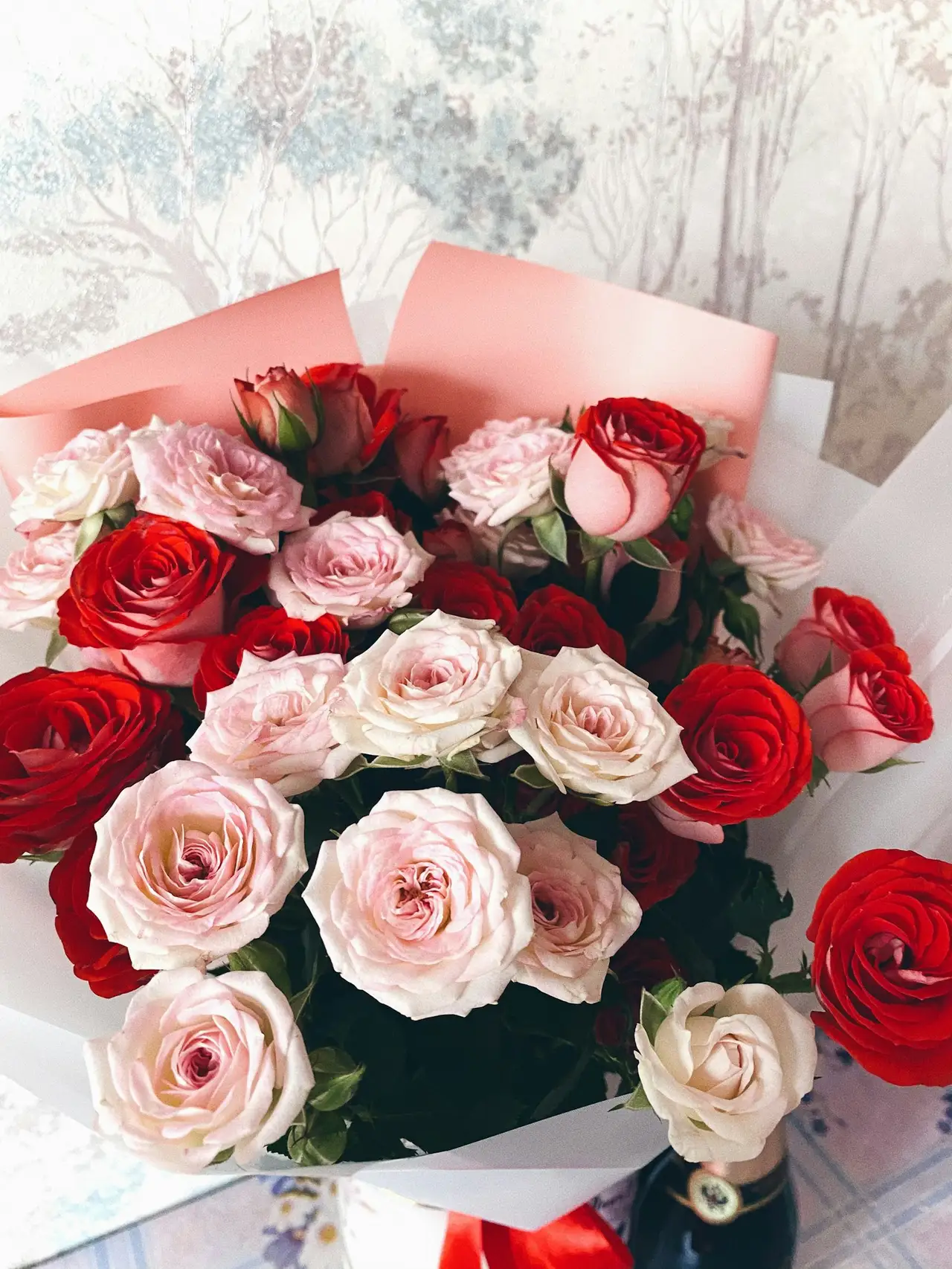
- Roses (Rosa species) are non-toxic to cats per the ASPCA. This is the most reliable cat-safe cut flower there is: available year-round, in every color, at every price point, with a 7 to 10 day vase life. The only caveat is physical, not toxic: strip the thorns so a cat batting the stem does not scratch a paw or mouth. See our full guide on whether roses are toxic to cats.
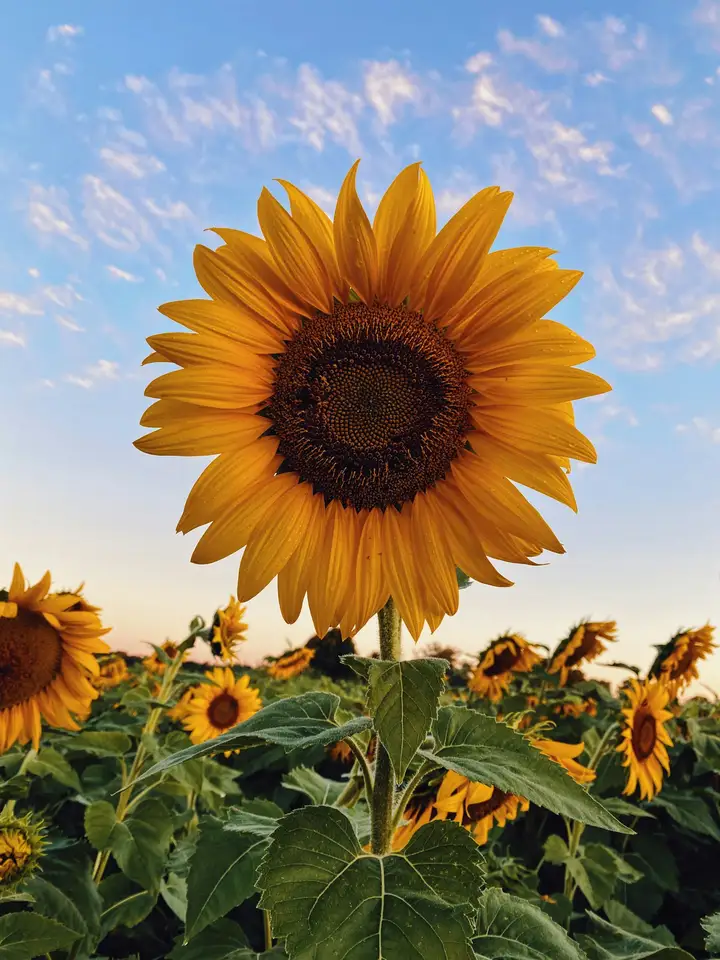
- Sunflowers (Helianthus) are non-toxic to cats per the ASPCA. Sturdy, cheerful, and dramatic as a single-stem focal. Our guide on whether sunflowers are toxic to cats covers the seeds and pollen question.
- Gerbera daisies (Gerbera jamesonii) are non-toxic to cats per the ASPCA. Bold single blooms on long stems, and a workhorse focal or accent in mixed arrangements. The one caveat: gerberas are the only daisy verified safe, so a “daisy” substitution from a florist is not automatically fine; our daisies and cats guide covers which is which.
- Orchids are non-toxic to cats. The ASPCA’s plant database confirms the Phalaenopsis (moth orchid), and the ASPCA’s Mother’s Day bouquet guidance additionally names Cymbidium, Dendrobium, and Oncidium orchids as safe. Our orchids and cats guide has the potting-bark hazard most owners miss.
For the full per-flower sourcing on these and four more database-verified safe flowers (zinnia, alstroemeria, petunia, African violet), see our companion reference on cat-safe flowers. That page is the “is this specific flower safe” lookup; this page is how to assemble them into a bouquet.
Safe supporting flowers and fillers
This is where a cat-safe bouquet is won or lost, because the safe alternatives to baby’s breath are not obvious. The good news is that the ASPCA’s own Mother’s Day bouquet guidance names several fillers and supporting flowers as non-toxic, and VCA’s veterinary guidance corroborates them. These do not each have a dedicated page in the ASPCA plant database, but being named safe in ASPCA editorial guidance and by a veterinary authority is enough sourcing for us to recommend them.
Non-toxic filler flowers (use these instead of baby’s breath):
- Freesia is named non-toxic and specifically called a filler flower in the ASPCA’s Mother’s Day guidance. Fragrant, and it adds the airy charm baby’s breath is used for.
- Limonium and statice (Limonium species) are named “safe filler flowers” in the same ASPCA guidance. This is the papery, long-lasting purple or white spray you have seen in a hundred grocery bouquets.
- Waxflower is named a safe filler in the ASPCA guidance too. Small, delicate blooms that read as texture rather than a focal flower.
Non-toxic supporting flowers (the mid-layer between focal and filler):
- Alstroemeria (Peruvian lily) is non-toxic to cats per the ASPCA plant database. Despite the word “lily” in its common name, it is not a true lily and shares none of the danger. It is the single most-used stem in commercial mixed bouquets and lasts 10 to 14 days.
- Snapdragons (Antirrhinum majus) are named non-toxic in the ASPCA’s Mother’s Day guidance and by VCA. A cat may drool briefly from the bitter taste if it chews one, which is a taste reaction, not toxicity.
- Lisianthus (Eustoma) is named non-toxic in the ASPCA guidance, prized for rose-like blooms and a two-week vase life.
- Stock (Matthiola incana) and Madagascar jasmine (Stephanotis) are both named non-toxic in the ASPCA guidance.
One honest note on confidence: the eight flowers with their own ASPCA plant-database pages (rose, sunflower, gerbera daisy, Phalaenopsis orchid, zinnia, alstroemeria, petunia, African violet) are the highest-confidence tier. The fillers and supporting flowers in this section are sourced to ASPCA editorial guidance and VCA rather than an individual database page. Both are legitimate sourcing. We flag the distinction so you know which is which, rather than lumping everything into one undifferentiated “safe” list the way most guides do.
Flowers and greenery to keep out
True lilies: not a “keep out,” an emergency
True lilies (Lilium and Hemerocallis, which includes Easter, Tiger, Asiatic, Oriental, Stargazer, and Daylily) are in a category by themselves. They are not mildly toxic. Even pollen brushed onto a cat’s fur and then groomed off can cause acute kidney failure within 12 to 72 hours, and treatment must begin within about 6 hours of exposure to be reliably effective. Vase water from a lily bouquet is dangerous on its own.
There is no safe placement for a true lily in a cat home. The “keep it in another room” approach fails because pollen travels and vase water gets knocked over. If a bouquet contains a true lily, the bouquet does not belong in a house with a cat. For the full emergency protocol and symptom timeline, see our guide to lilies and cats.
If your cat has had any contact with a true lily, this is not a wait-and-see situation. Call one of these now:
- Pet Poison Helpline: 855-764-7661 (24/7)
- ASPCA Animal Poison Control Center: 888-426-4435 (24/7)
The mildly toxic flowers to leave out
These are genuinely toxic per the ASPCA or VCA, but in the mild-GI-upset category rather than the emergency category. Leave them out of a bouquet meant for a cat household:
- Carnation (Dianthus caryophyllus) is toxic to cats per the ASPCA: mild gastrointestinal signs and mild dermatitis. It is frequently and wrongly listed as cat-safe on other sites. See our carnations and cats guide for the full Dianthus family.
- Chrysanthemum (mum) is toxic to cats per the ASPCA, via pyrethrins. Usually mild GI upset. Details in our chrysanthemums and cats guide.
- Tulip, hyacinth, and daffodil are spring-bulb flowers that are toxic to cats per the ASPCA, with the toxin concentrated in the bulb but present in the cut flower. See tulips and cats and hyacinths and cats.
- Hydrangea is toxic to cats per the ASPCA. Usually mild GI signs. See hydrangea and cats.
- VCA additionally names amaryllis, azalea, buttercup (ranunculus), gladiolus, iris, oleander, and peony as toxic to cats. Ranunculus in particular has become a popular wedding and event flower, so it is worth knowing.
Where to buy a cat-safe bouquet
You do not need a specialty florist. You need to give any florist one clear instruction. The single sentence that covers the catastrophic tier, the mildly toxic tier, and the greenery all at once:
“No lilies, no carnations, no baby’s breath, and no eucalyptus. Roses, gerbera daisies, sunflowers, alstroemeria, and freesia are all welcome.”
That gives the florist a “no” list and a positive “yes” list to build from. Most florists handle it without a markup; cat-safe requests are common now.
Local florists: say the sentence above, or write it on the order. Ask specifically what greenery and filler they plan to use, since that is the part most likely to be a toxic default (eucalyptus or asparagus fern).
Online and delivery services: every major service has a “notes to florist” or “special instructions” field at checkout, and the local fulfilling florist does read it. Paste the same sentence. FTD maintains a pet-friendly collection you can order from directly. UrbanStems, The Bouqs, BloomThat, and FromYouFlowers all have notes fields and honor substitution requests. An all-rose order is the most foolproof, because it removes filler and greenery ambiguity entirely.
Supermarket bouquets (Whole Foods, Trader Joe’s, grocery): there is no florist to instruct, so you audit the bunch yourself before it comes home. Grocery mixed bouquets very often pair alstroemeria (safe) with baby’s breath filler (toxic), so pulling the baby’s breath is usually the one move that makes a grocery bunch safe.
Sending flowers to someone who has a cat
If you are the gift-giver, the safest single choice is a dozen roses. Rose is ASPCA non-toxic, and an all-rose bouquet has no filler or greenery to worry about, so you cannot accidentally send something toxic. It is the reliable move when you do not know the recipient’s flowers well enough to vet a mixed arrangement.
If you want a mixed bouquet, order roses, gerbera daisies, or sunflowers as the focal, add alstroemeria and freesia, and put the no-lily-no-carnation-no-babys-breath-no-eucalyptus note in the delivery instructions. You are not being fussy: a thoughtful gift to a cat owner is one they do not have to dismantle over the sink before they can enjoy it.
Skip anything labeled “designer’s choice” or “florist’s choice” for a cat household unless you can add the safety note, because those give the florist free rein to add whatever greenery and filler is on hand, which is often eucalyptus or baby’s breath.
Cat-safe bouquets by occasion
Valentine’s Day is the easiest. A dozen roses, single-color or mixed, is both the classic Valentine’s order and the safest cat-household order. Avoid “mixed” Valentine’s arrangements that fold in carnations or baby’s breath.
Mother’s Day mixed bouquets are the ones most likely to hide a lily, so specify “no lilies” clearly. A safe Mother’s Day build: alstroemeria, roses, gerbera daisies, and sunflowers, with freesia or limonium as filler.
Sympathy and funeral arrangements are dominated by Stargazer and Casablanca lilies, which are true lilies. If a sympathy arrangement is being sent to a cat owner’s home, treat it as a true-lily situation until proven otherwise, and consider requesting a lily-free arrangement when you order one for someone with a cat. It is the kind of quiet thoughtfulness that spares a grieving person a poisoning scare.
How to make a bouquet you already received safe
Someone sent you flowers, you have a cat, and now you are reading the stems trying to figure out what is in there. The workflow:
- Look for true lilies first. Any six-petaled trumpet shape or recurved spotted star is a candidate. If you find one, the whole bouquet, vase water included, is contaminated for cat-safety purposes. Get it out of the house.
- Pull the baby’s breath and any eucalyptus or feathery asparagus fern. These are the toxic components most likely to be present, and removing them is usually the biggest single safety improvement.
- Identify each remaining flower and check it against the safe and keep-out lists above. Keep the safe ones, remove carnations, mums, tulips, and the rest of the mild-toxic list.
- Change the vase water and rinse the vase, especially if a lily was in the original arrangement.
- Place the audited bouquet out of reach. Even an all-safe bouquet does not need to sit at cat-chewing height. A high shelf keeps mild stomach upset off the table entirely.
If you want a deeper system for living with plants and a curious cat, our guide on how to keep cats away from plants covers placement and deterrents.
What to skip
- Do not trust a bouquet just because the focal flowers are safe. The filler and greenery are where the toxic component usually is. Check them specifically.
- Do not assume “greenery” is neutral. Eucalyptus and asparagus fern are both toxic to cats, and both are default greenery in modern arrangements.
- Do not accept “designer’s choice” for a cat home without a safety note. It hands the florist permission to add whatever filler is on the bench.
- Do not try to keep a true lily “in another room.” Pollen and vase water defeat it. Lilies leave the house.
- Do not induce vomiting at home if a cat eats a flower. Hydrogen peroxide is unsafe for cats. Call a helpline and let a professional decide.
- Do not panic over one chewed rose petal and a single vomit. A non-toxic flower can still cause brief stomach upset if a cat eats a lot of it. Non-toxic means no organ damage or poisoning, not that a cat should be grazing.
Frequently asked questions
What flower bouquets are cat friendly? A cat-friendly bouquet is built entirely from non-toxic flowers and non-toxic filler, with no true lily anywhere in it. A reliable build: roses, sunflowers, gerbera daisies, or orchids as focal; alstroemeria, snapdragons, or lisianthus as support; freesia, limonium, or waxflower as filler. Skip carnations, baby’s breath, chrysanthemums, eucalyptus, and asparagus fern.
What flowers are 100 percent cat safe? The flowers with an individual ASPCA plant-database entry confirming non-toxic status are rose, sunflower, gerbera daisy, Phalaenopsis orchid, zinnia, alstroemeria, petunia, and African violet. Any flower can still cause mild, temporary stomach upset if a cat eats a lot of it.
How do you make a cat-safe bouquet? Non-toxic focal (roses, sunflowers, gerbera daisies, orchids), non-toxic support (alstroemeria, snapdragons, lisianthus), non-toxic filler (freesia, limonium, waxflower), safe greenery or none. Leave out every true lily, plus carnations and chrysanthemums, and never use eucalyptus or asparagus fern.
What flowers can I get for someone who has a cat? A dozen roses is the safest gift, because rose is non-toxic and an all-rose bouquet has no filler or greenery ambiguity. For a mixed arrangement, order roses, gerbera daisies, or sunflowers with alstroemeria and freesia and add a note: no lilies, no carnations, no baby’s breath, no eucalyptus.
Is eucalyptus safe in a cat-safe bouquet? No. Eucalyptus is toxic to cats per the ASPCA, through its essential oils (eucalyptol), causing salivation, vomiting, diarrhea, and weakness. Ask for it to be left out.
Are stock flowers toxic to cats? No. Stock (Matthiola incana) is named non-toxic to pets in the ASPCA’s Mother’s Day bouquet guidance and by VCA. It has no dedicated ASPCA plant-database page, but it is explicitly listed as safe in that editorial guidance.
Related articles
- Cat-Safe Flowers: 8 ASPCA-Verified Picks, the per-flower reference for which individual stems are safe
- Are Lilies Toxic to Cats?, the emergency-response guide for true-lily exposure
- Are Carnations Toxic to Cats?, the most commonly mis-listed bouquet flower
- Is Eucalyptus Safe for Cats?, the greenery that has quietly become a default toxic addition
Sources
- ASPCA: Mother’s Day Bouquets: What’s Safe for Pets?, the source for the safe focal and filler flowers named as non-toxic
- ASPCA: Toxic and Non-Toxic Plant List for Cats
- ASPCA: Eucalyptus (toxic)
- ASPCA: Asparagus Fern (toxic)
- VCA Animal Hospitals: How to Pick a Cat-Safe Bouquet
- Pet Poison Helpline, 855-764-7661, 24/7 veterinary toxicology line
The reliable summary: safe focal flowers are easy, and the risk in a bouquet almost always lives in the filler and the greenery. Build with roses, sunflowers, gerbera daisies, or orchids; fill with freesia, limonium, or waxflower instead of baby’s breath; skip eucalyptus and asparagus fern; and keep every true lily out of the house entirely.