If you love succulents and live with a cat, the good news is that you mostly do not have to choose. Are succulents toxic to cats? Some are and many are not, the toxic ones usually cause nothing worse than an upset stomach, and only one common succulent (kalanchoe) is genuinely worth worrying about. The trick is knowing which plant is which, because “succulent” covers everything from the harmless hens and chicks on your windowsill to the cardiac-toxin-carrying kalanchoe at the garden center.
This guide sorts the popular succulents into a clear safe-and-toxic list, calibrates how dangerous each toxic one really is, and tells you what to do if your cat takes a bite. Every classification here is sourced to the ASPCA or veterinarian-authored references.
TL;DR
- Some succulents are toxic to cats, many are safe. The label “toxic” hides a wide range of severity.
- Most toxic succulents (jade, aloe, snake plant, string of pearls, pencil cactus) cause only mild stomach upset: vomiting, diarrhea, drooling, lethargy.
- Kalanchoe is the dangerous exception. It contains cardiac toxins (bufadienolides) and can, rarely, cause an abnormal heart rhythm. Treat it most seriously.
- Cat-safe succulents per the ASPCA: hens and chicks (Sempervivum), echeveria, Chinese money plant (Pilea), bunny ear cactus, and the holiday christmas cactus. Haworthia and burro’s tail are also widely listed as safe.
- Non-toxic does not mean no problem: any plant can cause mild GI upset, and common names overlap, so check scientific names.
- If your cat ate a succulent and shows strong signs (especially after kalanchoe): call your vet, ASPCA Animal Poison Control (888-426-4435), or Pet Poison Helpline (855-764-7661).
Are succulents toxic to cats? The short answer
“Succulent” is not a single plant, it is a growth habit shared by thousands of species across many plant families, so a blanket yes or no fails. The accurate answer has three parts.
First, a meaningful number of popular succulents are classified as toxic to cats by the ASPCA, including jade, aloe, snake plant, string of pearls, the euphorbias, and kalanchoe. Second, for almost all of them, “toxic” means gastrointestinal upset: an unhappy, possibly vomiting cat that recovers, not a poisoning emergency. Third, there is one real exception. Kalanchoe carries cardiac toxins, and while serious heart effects are rare, it is the succulent that earns genuine caution.
The ASPCA frames the whole category honestly, noting that “non-toxic does not mean no problem,” because any plant can give a cat mild stomach upset that is not part of its normal diet. That calibrated middle ground, neither “succulents are deadly” nor “succulents are fine,” is the truth this guide is built on.
The toxic succulents (and how dangerous each really is)
Here are the common toxic succulents, each with its actual severity. Notice how similar most of them are: mild GI upset, recover at home or with a quick vet check. Kalanchoe is the one that breaks the pattern.
Jade plant (Crassula ovata)
One of the most popular houseplants there is, and toxic to cats. The ASPCA notes jade can cause “vomiting, diarrhea, lethargy and inappetence” if ingested. It goes by several confusing common names, including lucky plant, money tree, and money plant (not to be confused with Pachira aquatica, a different “money tree”). The toxic principle is not fully characterized, but the practical reality is GI upset, not organ damage. Because jade tolerates both low and bright light, the ASPCA suggests keeping it up high where your cat cannot reach.
Aloe vera
Aloe is a toxic succulent for cats, though with an important nuance: the part that matters is the latex, not the inner gel. Aloe causes vomiting, lethargy, and diarrhea. We cover the gel-versus-latex distinction and what actually happens in detail in our guide to whether aloe vera is toxic to cats. For the purposes of this list: aloe is a mild-GI toxic succulent, common enough that it is worth knowing.
Snake plant (Sansevieria)
Also called mother-in-law’s tongue, the snake plant is a beginner-favorite houseplant and a toxic succulent. The ASPCA lists its signs as “vomiting, diarrhea, drooling and lethargy.” The toxin is saponins, which irritate the gut. Like jade, it handles low or bright light, so a high shelf solves the problem. Our full write-up on whether snake plants are toxic to cats goes deeper on the saponin mechanism and the calibrated symptom picture.
String of pearls (Senecio rowleyanus)
The trendy trailing succulent with bead-like leaves. The ASPCA notes that if ingested it “can cause stomach upset, predominately vomiting, and lethargy.” Its real risk factor is its shape: a cascading vine of round green beads is exactly the kind of dangling, battable thing cats cannot resist. The ASPCA’s own tip is to grow it as a hanging plant, which keeps it out of reach while showing it off.
Pencil cactus and other euphorbias
The pencil cactus (Euphorbia tirucalli) and its relatives carry an irritant latex sap. The ASPCA classifies it as toxic, with signs “irritating to the mouth and stomach, sometimes causing vomiting,” then adds a calibrating phrase it reserves for over-feared plants: “generally over-rated in toxicity.” The euphorbia family is large and includes the poinsettia, which we cover in our guide to whether poinsettias are poisonous to cats. The sap can also irritate skin and eyes, so wear gloves when pruning and wipe up drips.
Kalanchoe (the one to worry about most)
This is the exception, and the reason a succulent-and-cats guide has to be specific rather than reassuring across the board. Kalanchoe (Kalanchoe spp., family Crassulaceae) contains bufadienolides, a class of cardiac toxins. The ASPCA lists its clinical signs as “vomiting, diarrhea, abnormal heart rhythm (rare).”
Read that carefully, because the calibration matters in both directions. The cardiac risk is real, which is what separates kalanchoe from every other plant on this list. But the ASPCA itself flags the abnormal heart rhythm as rare, so this is not a plant that routinely kills cats. PetMD’s veterinarian-authored guidance puts it the same way: most succulents cause mild to moderate stomach upset, but kalanchoe “can lead to serious heart and neurologic complications.” The honest takeaway: most kalanchoe ingestions stay limited to GI signs, but because the heart is on the table, kalanchoe is the succulent to call your vet about promptly rather than monitor casually. If you want one succulent out of your cat’s reach entirely, make it this one.
The cat-safe succulents (non-toxic per ASPCA)
Plenty of succulents are classified as non-toxic, so you can build a real collection without anxiety. The ASPCA specifically names these as safe around pets:
- Hens and chicks (Sempervivum sp.): the classic hardy rosette succulent, non-toxic and easy to grow.
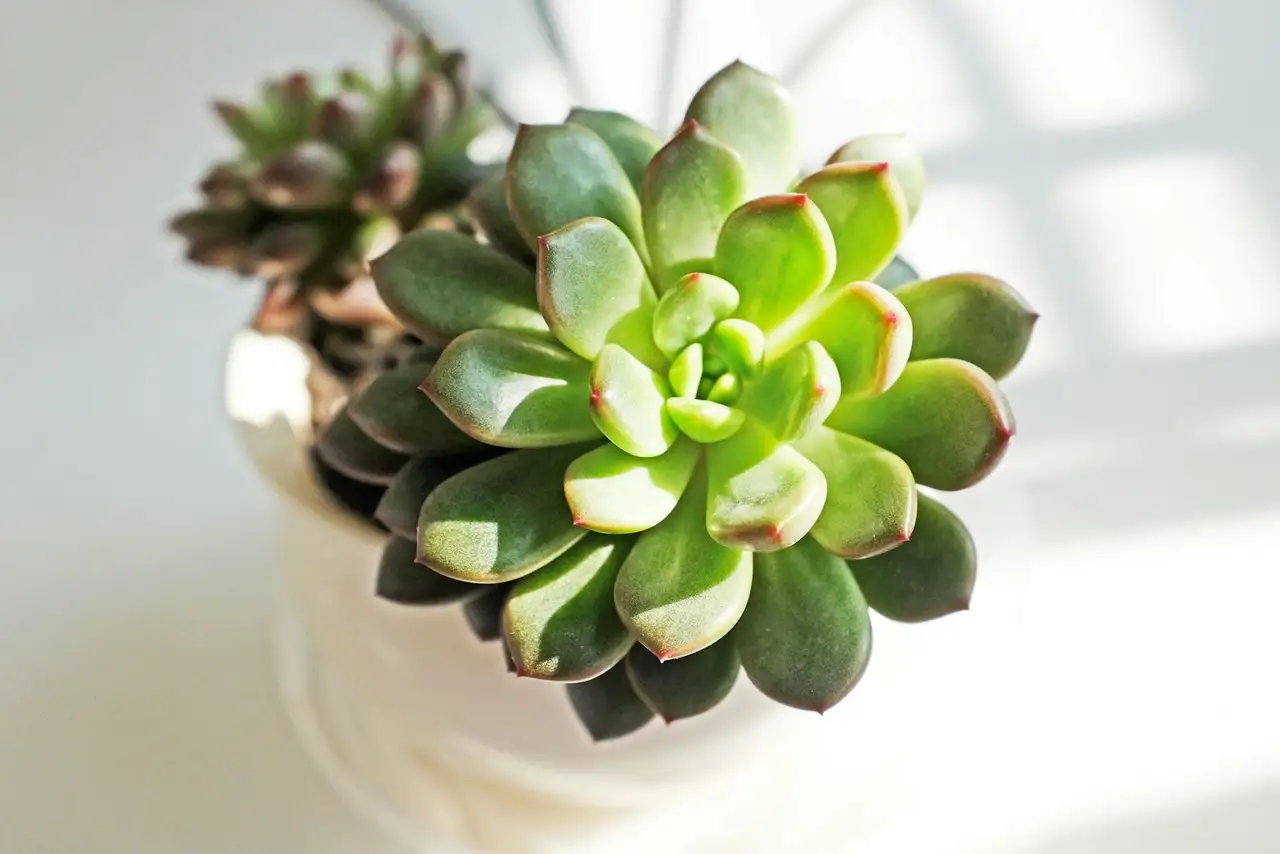
- Echeveria (the variegated wax plant): the photogenic rosette succulents in every plant shop, non-toxic.
- Chinese money plant (Pilea peperomioides): the round-leaved “pancake plant,” non-toxic and cat-friendly.
- Bunny ear cactus (Opuntia microdasys): non-toxic, though its tiny barbed glochids can physically irritate, so it is safe chemically but still a poke risk.
Two more that are widely listed as non-toxic and commonly recommended for cat homes are haworthia (the zebra-striped lookalike to aloe) and burro’s tail (Sedum morganianum). With these, follow the ASPCA’s own advice and confirm the scientific name on your plant’s tag, because common names overlap across species and toxicity can vary. When you have the botanical name, you can check any plant against the ASPCA’s database directly.
One honest caveat the ASPCA stresses: non-toxic does not mean a cat can eat unlimited amounts with zero effect. Any plant material can cause mild stomach upset because it is not part of a cat’s normal diet. Non-toxic means no poisoning, not no nibbling consequences. For a broader set of genuinely cat-friendly greenery beyond succulents, see our roundup of cat-safe plants vetted against the ASPCA list.
Symptoms of succulent poisoning in cats
For the mild-GI succulents (jade, aloe, snake plant, string of pearls, pencil cactus), watch for:
- Vomiting
- Diarrhea
- Drooling
- Lethargy or low energy
- Reduced appetite
These usually appear within a few hours and resolve as the irritant passes. A single small nibble often causes little or nothing; a larger ingestion causes more pronounced stomach upset.
For kalanchoe specifically, watch for the GI signs above plus any sign of cardiac trouble:
- Weakness or collapse
- Rapid, slow, or irregular heartbeat
- Unusual lethargy out of proportion to mild stomach upset
Cardiac signs are rare, but they are the reason kalanchoe gets a faster call to the vet than the others.
What to do if your cat ate a succulent
Work the steps calmly. Most succulent ingestions end fine.
- Identify the plant. This is the single most useful thing you can do, because it determines everything. A jade or echeveria is a different conversation from a kalanchoe. Find the plant tag or take a clear photo, and note the scientific name if you have it.
- Remove the plant and any pieces from your cat’s mouth and clear the area so it cannot eat more.
- Assess the ingestion. How much, how long ago, and which plant. A nibble of a safe echeveria needs only monitoring; a chewed kalanchoe warrants a prompt call.
- Call a professional if it was a toxic variety, if signs are strong, or if you are unsure. Reach your veterinarian, ASPCA Animal Poison Control (888-426-4435), or Pet Poison Helpline (855-764-7661). For any real kalanchoe ingestion, call promptly rather than waiting.
- Do not induce vomiting at home. Cats are not dogs, and at-home methods that are used for dogs are not safe for cats. Let the vet or poison control decide and, if needed, use medical-grade emetics.
- Monitor and note timing. Track when symptoms start and what you see, which helps the vet gauge severity.
At a clinic, care for the mild succulents is usually supportive: anti-nausea medication, fluids if there has been a lot of vomiting, and monitoring. For kalanchoe, the vet may add heart-rhythm monitoring (an ECG) and treat any cardiac signs directly. Most cats recover fully.
How to keep cats away from succulents
You do not have to give up succulents, you just have to manage access, especially for the toxic ones and the trailing varieties.
- Choose safe varieties for accessible spots. Put echeveria, haworthia, and hens and chicks where your cat roams, and reserve the toxic ones for genuinely out-of-reach places.
- Hang the trailing ones. String of pearls and burro’s tail are most tempting because they dangle. Grown as hanging plants, they are both safer and better displayed.
- Elevate or banish kalanchoe. Of all the succulents, this is the one to put well out of reach or simply not keep in a cat household.
- Redirect the urge to chew. A pot of cat grass gives your cat a legal target. For the full set of deterrent and placement tactics, see our guide on how to keep cats away from plants.
What to skip
- Skip the panic that “succulent” equals poison. Most toxic succulents are mild-GI plants, and many succulents are non-toxic. Calibrate to the specific plant.
- Skip relying on common names. “Money plant,” “mother-in-law’s tongue,” and the like overlap across unrelated species. The scientific name on the tag is what tells you the real toxicity.
- Skip essential-oil or coffee-ground “deterrent” hacks. Some popular DIY repellents are themselves unsafe for cats. Use placement and safe-variety choices instead (covered in our deterrent guide above).
- Skip kalanchoe in a cat home. It is the one succulent where the easy call is simply to leave it at the store.
Frequently asked questions
What succulents are toxic to cats?
The most common toxic succulents are jade plant (Crassula ovata), aloe vera, snake plant (Sansevieria), string of pearls (Senecio rowleyanus), pencil cactus and other euphorbias, and kalanchoe. Per the ASPCA, most of these cause only mild stomach upset (vomiting, diarrhea, drooling, lethargy) in cats. Kalanchoe is the one exception worth real caution, because it contains cardiac toxins that can rarely affect the heart rhythm.
What is the most dangerous succulent for cats?
Kalanchoe. Unlike most toxic succulents, which cause only gastrointestinal upset, kalanchoe contains bufadienolides (cardiac toxins). The ASPCA lists its clinical signs as vomiting, diarrhea, and abnormal heart rhythm, though it notes the heart-rhythm effect is rare. Most cases stay limited to stomach upset, but kalanchoe is the succulent to treat with the most urgency if your cat eats it.
Which succulents are safe for cats?
Per the ASPCA, cat-safe (non-toxic) succulents include hens and chicks (Sempervivum), echeveria (the variegated wax plant), Chinese money plant (Pilea peperomioides), and bunny ear cactus (Opuntia microdasys). Haworthia and burro’s tail are also widely listed as non-toxic. Remember that non-toxic does not mean no problem: any plant can cause mild stomach upset if a cat eats enough of it.
Can I have succulents indoors with a cat?
Yes. Choose cat-safe varieties like echeveria, haworthia, and hens and chicks, and keep any toxic ones (especially kalanchoe) out of reach or out of the house entirely. Even with safe succulents, placement helps, because trailing types like string of pearls dangle invitingly. A cat household and a succulent collection coexist easily once you know which plants are which.
Will cats leave succulents alone?
Not reliably. Cats are drawn to succulents for the same reasons they bother other plants: trailing varieties like string of pearls and burro’s tail dangle like toys, and the plump leaves are satisfying to bat and chew. Do not count on your cat ignoring them. Use placement, redirection with cat grass, and safe-variety choices rather than hoping for restraint.
The bottom line
Succulents and cats are a manageable combination once you stop treating “succulent” as one thing. Fill the accessible spots with the non-toxic rosettes (echeveria, haworthia, hens and chicks), hang the trailing ones, and keep the genuinely toxic varieties out of reach. Treat the mild-GI succulents (jade, aloe, snake plant, string of pearls, pencil cactus) as nuisances rather than emergencies, and give kalanchoe the single dose of real caution it deserves. Know the plant, manage the access, and your collection and your cat can share the windowsill.
Emergency numbers, save them now: ASPCA Animal Poison Control 888-426-4435 and Pet Poison Helpline 855-764-7661. Both are staffed 24/7 by veterinary toxicology experts. A consultation fee may apply, and it is worth it.
Sources: ASPCA, Are Succulents Safe to Have Around Pets? | ASPCA Toxic Plants, Kalanchoe | ASPCA Toxic Plants, Pencil Cactus | PetMD, Are Succulents Poisonous to Cats?