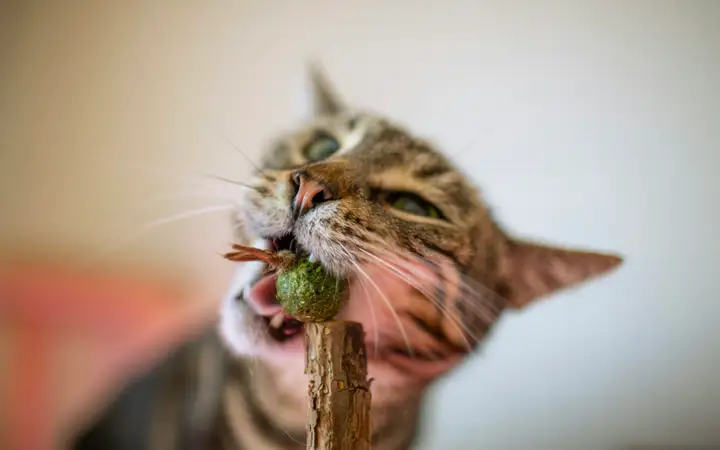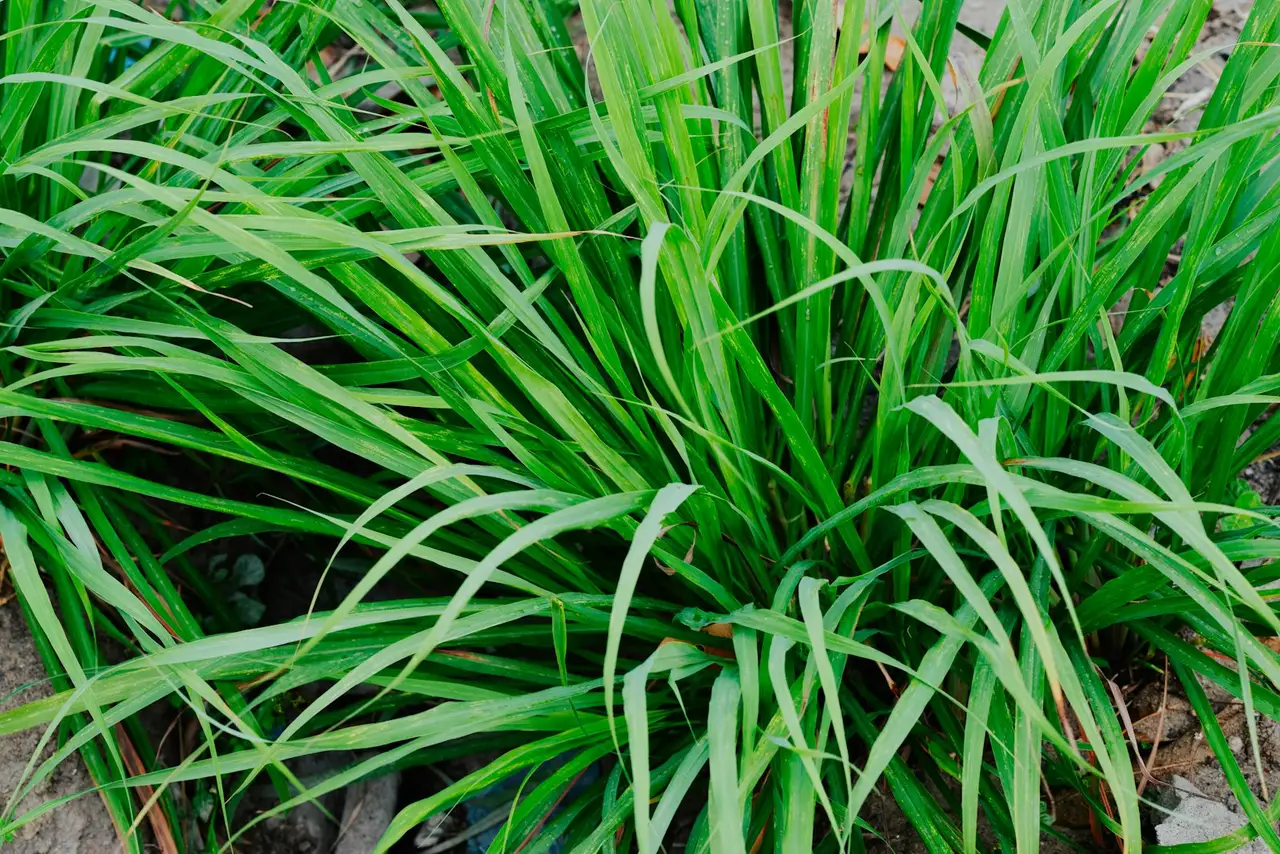
If your cat chewed your lemongrass, or you just switched on a lemongrass diffuser, here is the short answer. Is lemongrass safe for cats? Not fully, but the plant and the oil are two different problems. The ASPCA’s lemon grass entry lists it as toxic to cats and dogs, and the only sign it names for them is “stomach upset.” Concentrated lemongrass essential oil is the form to keep away from your pets, cats above all.
So a chewed leaf usually means a queasy pet, not an emergency. Oil on the fur, a licked spill, or a “natural” bug spray is a phone call. Below, every kind of exposure is sorted by risk and tied to its source, including two popular claims we could not verify.
Pet got into lemongrass oil? Move your pet away, wipe the oil off the fur, and call ASPCA Animal Poison Control at 888-426-4435 or Pet Poison Helpline at 855-764-7661 (both 24/7, a fee may apply). Do not give hydrogen peroxide.
TL;DR
- The plant is mildly toxic. The ASPCA lists lemon grass as toxic to dogs and cats, with “stomach upset” as the only sign for them.
- The oil is the real risk, especially for cats. It is concentrated, and European regulators set a lower limit for cats than for any other named animal because cats clear these compounds poorly.
- Never put lemongrass oil on a cat, and do not run a diffuser around one.
- “Natural” does not mean checked. Lemongrass oil is exempt from EPA registration in “minimum risk” products, and poison center records show adverse effects even with products used as labeled.
- Dogs: the same ASPCA entry applies to the plant. Talk to your vet before using lemongrass oil on a dog.
- Blockage and “catnip-like” claims: both are all over the web, and we could not find a published case or study behind either.
- Lemon balm is the look-alike name that is safe: the ASPCA lists it as non-toxic. Lemon verbena and citrus are listed as toxic.
- Swaps: cat grass for chewing, lemon balm and basil for the herb shelf.
Is lemongrass safe for cats?
Not entirely. The ASPCA lists lemongrass (Cymbopogon citratus) as toxic to cats, but the only sign it names is stomach upset, so a nibbled leaf is usually minor. Lemongrass essential oil is the serious form: keep oils, diffusers, and oil-based sprays away from cats.
Here is how much each exposure should worry you.
| What happened | Risk | What to do |
|---|---|---|
| Sniffing the plant or brushing past it | Very low | Nothing |
| Chewing a few leaves | Low | Watch for vomiting. Call your vet if it repeats |
| Eating a lot of leaves | Low to moderate | Call your vet, and watch for vomiting or appetite loss |
| A bite of food cooked with lemongrass | Low for the lemongrass | Check the dish for garlic and onion, which are the bigger hazard |
| Passive diffuser in the room (reed, plug-in, warmer) | Moderate for cats | Move your cat to fresh air if it coughs, wheezes, or drools |
| Ultrasonic or nebulizing diffuser | Higher | Oil droplets can land on fur. Do not run one around cats |
| Lemongrass oil on fur, or licked | High | Wipe it off and call a hotline now |
| ”Natural” flea or bug spray with lemongrass oil | High for cats | Remove it and call a hotline, with the label in hand |
What the ASPCA says about lemongrass
Here is the entry, as of November 2026:
Lemon Grass (Oil Grass). Cymbopogon citratus, family Poaceae. Toxicity: Toxic to Dogs, Toxic to Cats, Toxic to Horses. Toxic Principles: Essential oils, cyanogenic glycosides. Clinical Signs: “Dogs, cats: Stomach upset; Horses: difficulty breathing, weakness, death (rare).”
Two words cover dogs and cats. The alarming part of that line is about horses.
Cyanogenic glycosides are compounds that can release cyanide, which sounds worse than the entry’s own dog and cat signs suggest. “Toxic” in this database spans everything from a plant that upsets a stomach to one that shuts down kidneys. The plant sits near the mild end, in the same territory as catnip, which the ASPCA also labels toxic to cats.
Why lemongrass oil is riskier for cats than dogs
A leaf holds a little oil. A bottle holds nothing else. And cats are poorly equipped to deal with it.
The clearest evidence comes from Europe. In a 2023 safety opinion on lemongrass oil, the European Food Safety Authority (EFSA) assessed the oil as a flavoring in animal feed. It accepted 50 mg of oil per kg of complete feed for dogs and calculated just 33 mg/kg for cats, the lowest figure for any animal it named.
The reason is written into the opinion: “cats have an unusually low capacity for glucuronidation,” a liver pathway that helps the body excrete the oil’s components. EFSA raised the safety margin for cats to 500, compared with 100 for other animals. Genetic work backs this up: a key enzyme in that pathway, UGT1A6, is a non-working gene in cats. Pet Poison Helpline says the same thing in plain terms: cats “have difficulty metabolizing and eliminating certain toxins like essential oils.”
EFSA also classed the oil as “an irritant to skin and eyes and as a dermal and respiratory sensitiser,” which matters for anything sprayed or diffused.
What those numbers do not mean. They are not a safe dose for a bottle of oil. By our arithmetic from EFSA’s own model, the cat ceiling works out to about 2 mg of oil a day for a 3 kg cat. A single drop of essential oil weighs tens of milligrams. And that ceiling is a long-term feed limit with a large margin built in, not the point where poisoning begins. No one has published a toxic dose of lemongrass oil for cats.
Two more honest notes. EFSA assessed oil from Cymbopogon flexuosus, a different species in the same genus as the ASPCA’s C. citratus. And the lemon smell is citral, not citronella as some pet sites say: in EFSA’s data, geranial and neral (the two forms of citral) make up about 72% of the oil.
Is lemongrass oil safe for cats? Diffusers, sprays, and flea products
No. Treat it like the other concentrated oils we have covered, including peppermint oil, eucalyptus, and lavender.
A caveat in fairness to the data: Pet Poison Helpline’s list of oils known to poison cats does not name lemongrass, and we found no published case series on it. Our advice rests on how cats handle essential oils as a group, on EFSA’s lemongrass-specific margin, and on the poison center records below. Pet Poison Helpline’s rule covers it regardless: “concentrated essential oils should never be directly applied to cats.”
Signs after an oil exposure depend on the oil and the dose. Pet Poison Helpline lists drooling, vomiting, tremors, wobbliness, respiratory distress, low heart rate, low body temperature, and liver failure.
Diffusers
Pet Poison Helpline separates diffusers into two groups:
- Passive diffusers (reeds, plug-ins, candle warmers, fan models): “the main hazard to cats… is respiratory irritation,” unless oil gets on the cat or the unit tips over. Watch for watery eyes, drooling, vomiting, and labored or fast breathing, panting, coughing, or wheezing.
- Active diffusers (ultrasonic and nebulizing): these emit microdroplets that “may collect on the cat’s fur,” where the oil can be absorbed through the skin or swallowed during grooming.
Cats with asthma or airborne allergies are at greater risk. If your cat is coughing or breathing hard, move it to fresh air. Pet Poison Helpline says these cats need emergency care if the signs do not quickly resolve.
”Natural” flea and bug sprays
This is the exposure we would worry about most, because it looks safe. Lemongrass oil appears in the federal list of active ingredients allowed in “minimum risk” pesticides, which EPA exempts from registration. “Exempt” means the product skips that review. It does not mean someone tested it on your cat.
One owner on Petco’s vet Q&A described exactly this: a bedbug spray with 3% lemongrass oil whose bottle said it was safe around pets.
The best data come from the ASPCA poison center. A review of its records covered 39 cats and 9 dogs exposed to EPA-exempt flea products containing mixtures of essential oils:
- 92% of the animals had adverse effects. Agitation and drooling were common in cats, lethargy and vomiting in dogs.
- In 77% of the animals, the product was used as the label directed.
- Signs began within 24 hours in 39 of 44 affected animals and lasted from 30 minutes to 149 hours.
- Of 28 animals with a known outcome, half recovered with bathing alone. Others needed intravenous fluids, muscle relaxants, or seizure medication. One cat died, and one cat and one dog were euthanized.
Read that with care: these are calls to a poison center, so the 92% is not how often such products cause problems overall, and the study did not single out lemongrass. For timing, the closest comparison is concentrated tea tree oil, a different oil, where 443 poison center cases showed signs within 2 to 12 hours, lasting up to 72 hours, with younger and smaller cats at higher risk of major illness.
Is lemongrass safe for dogs?
Mostly the same answer. The ASPCA lists lemongrass as toxic to dogs, with stomach upset as the only sign, so a dog that chews a few leaves usually needs nothing more than watching. Concentrated oil is the form to treat with caution.
Dogs have more room than cats here, not immunity. EFSA accepted 50 mg/kg in dog feed, and Pet Poison Helpline reports that the essential oil poisonings it sees most in dogs involve tea tree, pennyroyal, wintergreen, and pine oils, not lemongrass. It also says its tea tree cases often come from concentrated oil applied by well-meaning owners, which is a good reason not to dab lemongrass oil on a dog.
Pest-control and oil-selling sites promote lemongrass oil as a flea and tick deterrent for dogs. The flea-product records above included dogs, so ask your vet before trying one, and use a preventive with safety data behind it. In a house with both pets, remember that your cat can pick up what is on your dog.
Can dogs eat lemongrass? A little in a dropped bite of food is unlikely to matter, for the same reasons as cats, below. For how other aromatic oils affect dogs, see our guides to lavender and eucalyptus.
Can cats eat lemongrass? Leaves, tea, and cooked food
A nibble is unlikely to need a vet, but there is no reason to feed it.
Fresh leaves: expect, at most, the stomach upset the ASPCA describes. Stop further access and watch your pet.
Cooked food: a lick of lemongrass curry is rarely about the lemongrass. The dishes that use it often contain garlic and onion, which the ASPCA lists as toxic to cats and dogs because they break down red blood cells. Check the recipe before you relax.
Tea: we found no studies of lemongrass tea in cats. Do not offer it as a remedy.
Can lemongrass cause an intestinal blockage?
Possibly, but this claim is thinner than it looks. Vet-reviewed pages from Wag! and Hepper warn that large amounts of the tough, fibrous leaves could block the gut, and Google’s AI Overview repeats it. The ASPCA entry does not mention blockage, and our searches of PubMed and the web turned up no published case.
So treat it as plausible, not documented. If your pet ate a lot of leaves, the signs to call about are the general ones: vomiting and lack of appetite, plus pain, low energy, and pooing less. A true blockage is an emergency that often needs surgery.
Why do cats like lemongrass?
Nobody has studied it, as far as we can find. Reddit and Facebook are full of cats that chew lemongrass, and the AI Overview calls the reaction “catnip-like,” but we found no research showing that lemongrass works the way catnip does.
What is well established is the real catnip reaction and that many cats simply like chewing grass, and lemongrass is a grass. If yours keeps going back to the pot, give it something meant for chewing: cat grass is the easy fix.
My pet got into lemongrass: what to do now
- Stop the exposure. Move your pet away from the plant, spill, or diffuser. If breathing looks labored, get to fresh air first.
- Remove what you can. Wipe oil or sap off the fur and paws with a damp cloth so your pet cannot groom off more. Bathing helped in the poison center flea-product cases, so ask the hotline how to wash your pet.
- Do not induce vomiting. Never give hydrogen peroxide to a cat: one case report describes severe stomach ulceration, and the authors concluded its use in cats “is not recommended.”
- Call for advice:
- ASPCA Animal Poison Control Center: (888) 426-4435
- Pet Poison Helpline: (855) 764-7661
- Or your own vet. Both hotlines run 24/7 and may charge a consultation fee.
- Have the details ready: your pet’s weight, what it got into, how much, when, and any signs. Keep the bottle or spray, because the oil concentration changes the advice.
Leaf vs. oil: how urgent is it?
| What happened | What to do |
|---|---|
| Sniffed or brushed the plant | Nothing |
| Chewed a few leaves, seems normal | Watch at home |
| Vomited once or twice after chewing, otherwise normal | Keep watching, and call your vet if it repeats or your pet stops eating |
| Ate a large amount of leaves | Call your vet |
| Lemongrass oil licked or on the fur, any amount | Call a hotline now, even if your pet seems fine |
| Sprayed with a “natural” flea or bug product and acting off | Call a hotline now, and ask about bathing |
| Tremors, wobbliness, collapse, seizure, or trouble breathing | Emergency vet now |
Be quicker to call for kittens and small cats, given the higher risk seen in small, young cats in the tea tree oil cases, and for any cat with asthma.
Growing lemongrass in a home with cats
The plant is a manageable risk for most households. Lemongrass grows as a big clump, so it does better on a patio than on a shelf anyway, and NC State Extension notes it can overwinter as a container plant.
- Keep it where your cat is not: outdoors, or in a room with the door shut. A high shelf is not out of reach for a cat that jumps.
- For a persistent chewer, skip it and buy lemongrass from the grocery store when you cook.
- Offer a legal alternative nearby, like a pot of cat grass.
Our guide to keeping cats away from plants has more placement ideas. One warning: do not use citrus or lemongrass oil sprays as your deterrent.
Lemon-scented plants: which are safe for cats?
“Lemon” in a plant’s name tells you nothing. Here is how the ASPCA lists them.
| Plant | ASPCA status for cats | Notes |
|---|---|---|
| Lemon balm (Melissa officinalis) | Non-toxic | The safe lemon herb. More in our mint guide |
| Lemon button fern (Nephrolepis cordifolia ‘Duffii’) | Non-toxic | See ferns and cats |
| Lemon grass (Cymbopogon citratus) | Toxic | Stomach upset |
| Lemon verbena (Aloysia triphylla) | Toxic | Stomach upset, colic. “No concerns if small amounts used in cooking” |
| Lemon tree (Citrus) | Toxic | ”Fruit is edible, skins and plant material can cause problems” |
| Scented geranium (Pelargonium) | Toxic | ”Cats are most sensitive.” See geraniums and cats |
If you want a lemony herb on the shelf, lemon balm is the swap. Basil is another easy cat-safe kitchen herb.
What about citronella?
Citronella is a related grass, Cymbopogon nardus, and the ASPCA’s cat plant list has no entry for it. EFSA’s 2024 opinion on citronella oil is stricter than the lemongrass one: 2.0 mg/kg of feed for cats against 10 mg/kg for dogs.
The “mosquito plant” sold at garden centers is something else. UF/IFAS Extension describes it as a hybrid with the growth habits of a geranium and the scent of citronella, so the scented geranium row above is the one to read. For citronella candles, torch fuel, and bark collars, see is citronella safe for dogs, which covers cats too.
What to skip
- Do not panic over a chewed leaf. The ASPCA’s dog and cat signs stop at stomach upset.
- Do not put lemongrass oil on a cat, diluted or not, and do not run a diffuser in a room your cat cannot leave.
- Do not trust “pet safe” on a natural spray without asking your vet. Most of the animals in the poison center review had products used as labeled.
- Do not treat EFSA’s numbers as a dose. They are feed limits, not a recipe.
- Do not feed lemongrass tea or oil as a remedy for digestion, fleas, or anxiety.
- Do not assume “lemon” means the same thing across plants. Lemon balm is non-toxic; lemon verbena is not.
- Do not make your cat vomit at home.
Frequently asked questions
Is lemongrass safe for cats to smell?
Smelling the plant is fine. Sniffing a growing lemongrass plant is not a poisoning risk. Concentrated oil in the air is different: Pet Poison Helpline says strong fragrances from essential oils can irritate a cat’s airways, causing watery eyes, drooling, or trouble breathing, and cats with asthma are at greater risk.
Is lemongrass safe to diffuse around cats and dogs?
We would not diffuse it around cats. Pet Poison Helpline says passive diffusers mainly risk respiratory irritation, while ultrasonic and nebulizing diffusers release oil droplets that can land on a cat’s fur and be absorbed or groomed off. For dogs, use it only with the dog free to leave the room, and never where it can be knocked over or licked.
Can I use lemongrass spray on my dog for fleas?
Ask your vet first, and expect a better option. In ASPCA poison center records on plant-based flea products, adverse effects occurred even when products were used as labeled, and some animals needed intravenous fluids or seizure medication. Your vet can recommend a flea preventive with safety data behind it.
Is lemongrass tea safe for cats?
There is no reason to offer it. We found no study of lemongrass tea in cats, and the ASPCA lists the plant as toxic to cats because of stomach upset. A lick from your mug is unlikely to cause a problem, but do not give it as a remedy.
Is lemongrass the same as citronella?
No. They are related grasses in the genus Cymbopogon, but the oils differ. Lemongrass oil is mostly citral, and citronella oil comes from Cymbopogon nardus. The ASPCA has an entry for lemon grass and none for citronella. The “mosquito plant” sold at garden centers is a different plant again, a geranium with a citronella scent.
How much lemongrass oil is toxic to cats?
No one has published a toxic dose. The European Food Safety Authority set a ceiling of 33 mg of lemongrass oil per kg of cat feed, but that is a long-term feed limit with a large safety margin, not a poisoning threshold. Treat any licked or spilled oil as a reason to call a poison hotline.
What should I do if my cat licked lemongrass oil?
Stop further exposure, wipe the oil from the fur so your cat cannot groom off more, and call ASPCA Animal Poison Control at 888-426-4435 or Pet Poison Helpline at 855-764-7661. Do not induce vomiting or give hydrogen peroxide. Have the bottle ready, since the concentration matters.
The bottom line
Lemongrass the plant is a mild problem: the ASPCA’s dog and cat signs stop at stomach upset, so a chewed leaf rarely calls for more than watching. Lemongrass the oil is a different thing, and cats get the strictest limit of any animal European regulators named. Keep oils, diffusers, and “natural” sprays away from your cat, ask your vet before using them on a dog, and if you want a lemony herb around pets, grow lemon balm.
Emergency numbers (24/7, a fee may apply):
- ASPCA Animal Poison Control Center: (888) 426-4435
- Pet Poison Helpline: (855) 764-7661
Related articles
- Is Peppermint Oil Safe for Cats?, another essential oil cats handle badly
- Is Eucalyptus Safe for Cats?, plant, oil, and shower bundles
- Is Lavender Safe for Cats?, the same plant-versus-oil question
- Is Catnip Bad for Cats?, the herb cats actually respond to
- Is Mint Toxic to Cats?, including the lemon balm verdict
- Cat Grass: A Complete Guide, the greenery cats are meant to chew
Sources
Every verdict above was checked against the linked page on 2026-11-05.
- ASPCA: Lemon Grass; Lemon Balm; Lemon Verbena; Lemon; Scented Geranium; Duffii Fern; Garlic; Onion; Toxic and Non-Toxic Plant List for Cats (no citronella entry)
- Pet Poison Helpline: Essential Oils and Cats; Essential Oils and Dogs; 855-764-7661, 24/7
- EFSA FEEDAP Panel. Safety and efficacy of a feed additive consisting of an essential oil derived from the aerial parts of Cymbopogon flexuosus (lemongrass oil) for use in all animal species. EFSA Journal, 2023.
- EFSA FEEDAP Panel. Safety and efficacy of a feed additive consisting of an essential oil derived from the leaves of Cymbopogon nardus (citronella oil) for use in all animal species. EFSA Journal, 2024.
- Genovese AG, et al. Adverse reactions from essential oil-containing natural flea products exempted from Environmental Protection Agency regulations in dogs and cats. Journal of Veterinary Emergency and Critical Care, 2012.
- Khan SA, et al. Concentrated tea tree oil toxicosis in dogs and cats: 443 cases (2002-2012). JAVMA, 2014.
- Court MH, Greenblatt DJ. Molecular genetic basis for deficient acetaminophen glucuronidation by cats. Pharmacogenetics, 2000.
- Obr TD, et al. Necroulcerative hemorrhagic gastritis in a cat secondary to the administration of 3% hydrogen peroxide as an emetic agent. Journal of Veterinary Emergency and Critical Care, 2017.
- US regulations and EPA: 40 CFR 152.25; Minimum Risk Pesticides Exempted from FIFRA Registration
- NC State Extension Gardener Plant Toolbox: Cymbopogon citratus
- UF/IFAS Extension Nassau County: Q: Do those mosquito plants work?
- PetMD: Cat Intestinal Blockage; PDSA: Bowel Obstruction/Intestinal Blockage in Cats
- Wag!: Lemongrass Poisoning in Cats; Hepper: Can Cats Eat Lemongrass?; Petco: Vet Q&A on a 3% lemongrass oil spray